The Short Answer
In a 2015 trial by Panahi and colleagues, about 100 men with pattern hair loss used rosemary oil or 2% minoxidil for six months, and hair counts rose similarly in both groups, with less scalp itching on rosemary. But it was one small study without a placebo group, against the weaker 2% strength. Minoxidil, especially 5%, has decades of larger trials behind it, so it remains the stronger evidence-based choice.
Top Picks: Best Rosemary Oil for Hair Growth
 Check Price
Best Overall
Plant Therapy Rosemary Essential Oil (30 mL)
 Check Price
Best Value Pure Oil
NOW Essential Oils Rosemary Oil, Steam Distilled (1 fl oz)
 Check Price
Best Ready-to-Use Blend
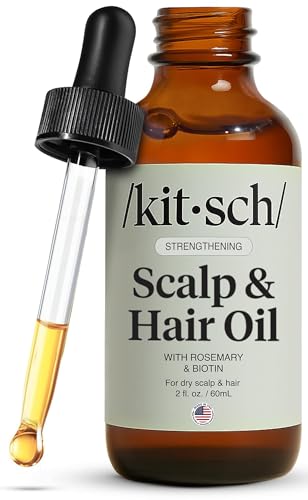
Kitsch Rosemary Oil for Hair with Castor Oil, Biotin & Jojoba (60 mL)
Written by HairGrowthReviews Editorial Team
Reviewed by Ernesta Malinauskytė, PhD, Director of Hair Research, TRI Princeton
Updated 2026-11-24 · Independently researched · How we review
We may earn a commission when you buy through our links, at no cost to you. As an Amazon Associate we earn from qualifying purchases. How we research
The Short Version
- The 2015 Panahi trial randomized about 100 men with androgenetic alopecia to rosemary oil or 2% minoxidil for six months.
- Neither group changed much at three months. At six months both had significant hair count gains, and the difference between them was not statistically significant.
- Scalp itching was reported more often with minoxidil, which is plausible since many minoxidil solutions contain propylene glycol.
- The study had no placebo arm, used the 2% strength rather than the 5% standard for men, ran only six months and has not been repeated in a large trial.
- Minoxidil is FDA-approved for pattern hair loss, and Rogaine is simply a brand of it. Rosemary is a reasonable add-on or alternative for people who cannot use minoxidil.
On This Page · 10 sections
Rosemary oil vs. minoxidil is one of the most searched hair loss comparisons online, and for good reason. Social media posts often claim that rosemary oil works as well as minoxidil, the active ingredient in Rogaine. That claim comes from a real study, but the headline leaves out details that matter a great deal if you are deciding how to treat thinning hair.
Minoxidil is a drug that has been studied in thousands of people since the 1980s and is approved in the United States for male and female pattern hair loss. Rosemary oil is an essential oil distilled from the leaves of Salvia rosmarinus, long used in traditional remedies and now one of the most popular natural scalp treatments. Comparing them fairly means looking closely at the single trial that links them.
Below, we walk through what the 2015 study did and found, its limits, how the two treatments work, how they compare on results, side effects, cost and convenience, and who should choose which. We also answer the common questions about Rogaine versus generic minoxidil and whether over-the-counter minoxidil only works on the crown. If you decide to try rosemary, our guide to the best rosemary oil for hair growth compares pure oils and ready-made blends, and our guide to the best minoxidil for men ranks the minoxidil options on vehicle, cost and comfort.
The 2015 Panahi Trial: What It Actually Tested
The study behind the rosemary oil vs. minoxidil comparison was published in 2015 in the journal SKINmed by Panahi and colleagues in Iran. It was a randomized comparative trial of about 100 men with androgenetic alopecia, the common genetic pattern of hair loss. Roughly half were assigned to apply rosemary oil to the scalp and half to apply 2% minoxidil solution, and they continued for six months.
The researchers measured hair counts in a defined area of the scalp at the start, at three months and at six months. At three months, neither group showed a meaningful change. At six months, both groups had a significant increase in hair count compared with their starting point, and the difference between the rosemary and minoxidil groups was not statistically significant.
the difference between the rosemary and minoxidil groups was not statistically significant
The study also tracked side effects. Scalp itching was reported more often in the minoxidil group than in the rosemary group. Many minoxidil solutions contain propylene glycol, a common cause of itching, which makes that difference plausible.
That is the whole basis of the claim that rosemary oil works as well as minoxidil. It is a genuinely interesting result for a cheap plant oil, and it is why rosemary moved from the spice rack to the bathroom shelf. It is also a much narrower result than the headline suggests.
| Rosemary Oil Group | 2% Minoxidil Group | |
|---|---|---|
| Participants | About 50 men with pattern hair loss | About 50 men with pattern hair loss |
| At three months | No meaningful change | No meaningful change |
| At six months | Significant hair count increase | Significant hair count increase |
| Between groups | No statistically significant difference | No statistically significant difference |
| Scalp itching | Reported less often | Reported more often |
The Limits of the Rosemary Oil Study
There was no placebo group. Every participant used an active treatment, so the trial cannot tell us how much of the improvement in either group came from the treatment itself rather than from natural variation, measurement differences or simply being in a study. When two treatments look similar without a placebo, it is possible that both worked, that both worked only modestly, or that the study was too small to detect a real difference between them.
The comparison was 2% minoxidil, not 5%. For men, 5% minoxidil is the standard over-the-counter strength, and trials have found it more effective than 2%. Matching the weaker strength is not the same as matching the treatment most men actually use, so rosemary oil has not been shown to equal a 5% routine.
rosemary oil has not been shown to equal a 5% routine
It was small, short and has not been replicated. About 100 men over six months is a modest trial, and pattern hair loss is a lifelong condition. Minoxidil's evidence comes from many trials over decades, in men and women, with long-term follow-up. As of our last review, no comparably sized follow-up trial of rosemary oil against minoxidil has confirmed the 2015 result.
The product and population were specific. The study used a particular rosemary oil preparation, and home blends vary widely in concentration and quality. It included only men, so the result cannot be assumed to apply to women with female pattern hair loss, although women commonly use rosemary on the scalp.
How Rosemary Oil and Minoxidil Work
Minoxidil was first developed as a blood pressure tablet, and hair growth was noticed as a side effect. Applied to the scalp, it is converted in the follicle to minoxidil sulfate, its active form. It appears to lengthen the growth phase of the hair cycle and enlarge shrunken follicles, which is why it can thicken existing hairs and regrow some lost ones. It does not block DHT, the hormone behind pattern hair loss, so it works best alongside the slow, ongoing process rather than stopping it.
Rosemary's mechanism is much less clear. Laboratory and animal studies have suggested that rosemary extracts may have anti-inflammatory and antioxidant activity, may improve local circulation and may have some anti-androgen effects, but these findings come from cells and animals rather than from human scalps. Researchers have not established how rosemary oil might affect hair follicles in people.
Researchers have not established how rosemary oil might affect hair follicles in people.
That difference matters for expectations. Minoxidil has a known active ingredient at a known dose that has been tested repeatedly. Rosemary oil is a mixture of compounds such as 1,8-cineole, camphor and alpha-pinene whose proportions vary by plant and distillation, and its hair effects rest mainly on one trial.
One practical overlap is massage. Rosemary oil is usually massaged into the scalp, and daily scalp massage has small studies of its own suggesting it may thicken existing hairs. Part of any benefit from a rosemary routine could come from the massage itself, which is a good reason to make it a gentle, regular habit either way.
Rosemary Oil vs. Minoxidil, Side by Side
On evidence, minoxidil wins clearly. It is FDA-approved for pattern hair loss in men and women, with many randomized, placebo-controlled trials behind it. Rosemary oil has one comparative trial against 2% minoxidil and no placebo-controlled trial of similar size.
On comfort, rosemary may have the edge for some people. In the 2015 trial, scalp itching was less common with rosemary. Minoxidil solutions can cause itching, dryness and flaking, often from propylene glycol, and foam versions without propylene glycol are usually gentler. Rosemary can cause irritation or allergy too, especially undiluted, so neither is free of side effects.
On evidence, minoxidil wins clearly.
On timeline, they are similar. Both need around six months for a fair judgment, and neither showed much at three months in the trial. Minoxidil can also cause a temporary increase in shedding in the first couple of months as follicles reset, which some people find alarming but which usually settles.
On commitment, minoxidil is a long-term treatment. If you stop, the hair it was supporting typically sheds over the following months. Whether that applies to rosemary is unknown, because long-term rosemary data does not exist.
| Rosemary Oil | Minoxidil | |
|---|---|---|
| Evidence | One 2015 trial vs. 2% minoxidil, no placebo | Decades of placebo-controlled trials |
| Approval | Cosmetic essential oil, not an approved treatment | FDA-approved for male and female pattern hair loss |
| Strength used | Diluted oil; concentrations vary | 2% or 5% solution, 5% foam |
| Common side effects | Irritation or allergy, mostly when undiluted | Itching, flaking, early shedding, unwanted facial hair |
| Time to judge | About six months | About four to six months, sometimes longer |
| If you stop | Unknown | Gains typically shed over the following months |
Our #1 pick for rosemary oil for hair growth
Plant Therapy Rosemary Essential Oil (30 mL)
The best rosemary oil if you will mix your own: pure, well documented and very cheap per application.
Rogaine vs. Minoxidil, and Is OTC Minoxidil Only for the Crown?
Rogaine is a brand name for topical minoxidil, the same active ingredient found in generic and store-brand products at the same strengths. A 5% generic solution contains the same drug at the same concentration as 5% Rogaine solution. The differences are in the inactive ingredients, the vehicle, the applicator and the price. Our guide on whether Rogaine is the same as minoxidil compares them in detail.
On whether over-the-counter minoxidil is only good for the crown: the label for men's minoxidil says it is for hair regrowth on the top of the scalp, called the vertex, and that it is not intended for frontal baldness or a receding hairline. That wording reflects where the original approval studies measured results, because hair counts at the crown were the standard endpoint.
Rogaine is a brand name for topical minoxidil
In practice, minoxidil tends to work best at the crown and mid-scalp, and results at the temples and front hairline are usually more modest. Many dermatologists do use it more broadly, and some people see improvement further forward, but you should expect the crown to respond best. Women's minoxidil is labeled for thinning on the top of the scalp, which is where female pattern hair loss usually shows.
None of this changes the rosemary comparison much. The 2015 trial also focused on men with pattern hair loss, and there is no evidence that rosemary oil works better than minoxidil at the hairline.
Which Should You Choose?
If you have pattern hair loss and want the best chance of keeping and regrowing hair without a prescription, start with minoxidil. Men usually use 5% solution or foam, and women 5% foam or 2% solution as directed on the label. Men can also ask a doctor about finasteride, which targets DHT and pairs well with minoxidil.
If you cannot tolerate minoxidil, even after trying a propylene-glycol-free foam, rosemary oil is a reasonable, low-cost alternative to try, with realistic expectations. Use it diluted, massage it in consistently and judge it after six months with photos.
start with minoxidil
If you are already on minoxidil and enjoy a scalp ritual, adding rosemary is a popular choice. There are no trials of the combination, so think of rosemary as an optional extra rather than a booster, and keep the two at separate times so the oil does not interfere with how minoxidil is absorbed.
If your hair loss is sudden, patchy, scaly, painful or comes with other symptoms, neither product is the first step. See a doctor or dermatologist, because conditions such as alopecia areata, thyroid disease, iron deficiency and scarring alopecias need their own diagnosis and treatment.
How to Use Rosemary Oil and Minoxidil Together
Apply minoxidil to a clean, dry scalp at the dose on the label, usually twice a day for solution or as directed for foam, and let it dry fully. Wash your hands afterward, and keep it away from pets, since minoxidil is highly toxic to cats.
Use rosemary oil at a different time, ideally as a pre-wash treatment. Dilute rosemary essential oil to about 1 to 2 percent in a carrier oil, which is roughly 6 to 12 drops per ounce, part your hair, massage a small amount into the scalp for a few minutes, leave it on for an hour or more and then shampoo. Ready-made rosemary blends are already diluted, so follow their labels.
Avoid layering oil directly under or over minoxidil.
Avoid layering oil directly under or over minoxidil. Oil on the scalp can dilute minoxidil or change how much is absorbed, and there is no evidence that mixing them improves results. Separating them by several hours, or using rosemary on wash days only, keeps things simple.
Patch test any new rosemary blend on the inner arm for 24 to 48 hours first. Avoid concentrated rosemary oil if you have epilepsy or a history of seizures, and check with a doctor before using essential oils or minoxidil if you are pregnant or breastfeeding, since minoxidil is not recommended in pregnancy. Our guide on how to use rosemary oil for hair growth covers dilution in more detail.
Frequently Asked Questions
Is rosemary oil as good as minoxidil?
In one 2015 trial of about 100 men, rosemary oil produced similar hair count gains to 2% minoxidil after six months. That trial had no placebo group, did not test the stronger 5% minoxidil and has not been repeated at a similar scale, so minoxidil remains the better-proven choice.
Can rosemary oil replace minoxidil?
It is not a proven replacement. If minoxidil works for you, switching to rosemary risks losing the hair minoxidil was supporting. Rosemary is a reasonable alternative for people who cannot tolerate minoxidil, and an optional add-on for those who can.
What is the difference between topical Rogaine and minoxidil?
Rogaine is a brand of topical minoxidil. Generic products contain the same active ingredient at the same strengths. They can differ in inactive ingredients, vehicle, applicator and price, but the drug itself is the same.
Is over-the-counter Rogaine only good for the crown?
The men's label says it is for regrowth on the top of the scalp and is not intended for a receding hairline, because that is where approval studies measured results. It tends to work best at the crown and mid-scalp, though some people see modest improvement further forward. A dermatologist can advise on hairline options.
How long does rosemary oil take to work compared with minoxidil?
Both need about six months. In the 2015 trial, neither group changed much at three months, and both improved by six months. Minoxidil may also cause temporary shedding in the first couple of months.
Can I use rosemary oil and minoxidil at the same time?
Many people use both, at different times of day. Apply minoxidil to a clean, dry scalp and use diluted rosemary oil as a pre-wash treatment, so the oil does not interfere with minoxidil absorption. There are no trials of the combination.
Does rosemary oil work for women?
The 2015 trial included only men, so evidence in women is lacking. Women widely use diluted rosemary as a scalp treatment, and 5% minoxidil foam is the approved over-the-counter option for female pattern hair loss.
The Bottom Line
Rosemary oil's reputation rests on one 2015 trial in about 100 men, in which it kept pace with 2% minoxidil at six months and caused less itching. Without a placebo group, a 5% comparator or a large replication, that is promising but not proof. For pattern hair loss, minoxidil remains the evidence-based first choice, and Rogaine is simply a brand of it. Rosemary is a reasonable alternative if minoxidil does not suit you, or a pleasant extra used at a different time.
Related Questions
- Does Rosemary Oil Really Grow Hair? →
- How to Use Rosemary Oil for Hair Growth (and How to Make It) →
- Is Rogaine the Same as Minoxidil? Brand vs Generic Explained →
- How Long Does Minoxidil Take to Work? →
- How Does Minoxidil Work? The Science of Regrowth, Explained →
- Minoxidil Foam vs Liquid: Which Works Better? →
- How to Use a Scalp Massager for Hair Growth →
Buyer's Guides
Hair Growth & Hair Loss
Best Hair Growth Oil for Men
Most hair growth oils sold to men have no studies behind them. A few have a small trial or two. Here is which oils have evidence, the bottles worth buying, and where an oil fits next to minoxidil and finasteride.
Hair Growth & Hair Loss
Best Minoxidil Foam
Minoxidil foam is the gentler, faster-drying way to use the most proven over-the-counter hair loss treatment. Here are the foams worth buying for men and women, how brand-name Rogaine compares with generics, and what the crown-only question really means.
Hair Growth & Hair Loss
Best Minoxidil for Men
Every product here contains 5% minoxidil, the only topical hair regrowth drug the FDA has approved for men. What separates them is the vehicle, how gentle they are on your scalp, and the value per month.
Hair Growth & Hair Loss
Best Minoxidil for Women
Minoxidil is the only topical drug the FDA has approved to regrow hair in women. It comes in two women's forms, a 2% solution used twice a day and a 5% foam used once, and the choice between them matters more than the brand on the box.
Hair Growth & Hair Loss
Best Rosemary Shampoo for Hair Growth
Rosemary is the scalp-care ingredient of the moment, and a good rosemary shampoo is the easiest way to bring it into your routine every single wash day. Here are the six best bottles for every hair type and budget.