The Short Answer
Possibly, but the evidence is thin. One small 2015 trial found rosemary oil increased hair counts about as much as 2% minoxidil after six months in men with pattern hair loss. It had no placebo group and has not been confirmed by larger studies, so rosemary is a promising experiment, not a proven treatment.
Top Picks: Best Rosemary Oil for Hair Growth
 Check Price
Best Overall
Plant Therapy Rosemary Essential Oil (30 mL)
 Check Price
Best Value Pure Oil
NOW Essential Oils Rosemary Oil, Steam Distilled (1 fl oz)
 Check Price
Best Ready-to-Use Blend
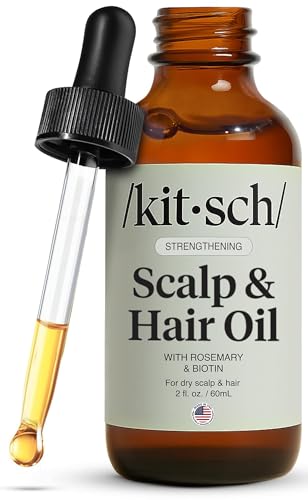
Kitsch Rosemary Oil for Hair with Castor Oil, Biotin & Jojoba (60 mL)
Written by HairGrowthReviews Editorial Team
Reviewed by Ernesta Malinauskytė, PhD, Director of Hair Research, TRI Princeton
Updated 2026-10-14 · Independently researched · How we review
We may earn a commission when you buy through our links, at no cost to you. As an Amazon Associate we earn from qualifying purchases. How we research
The Short Version
- Rosemary oil's reputation comes almost entirely from one 2015 trial of roughly 100 men comparing it with 2% minoxidil.
- Both groups improved at six months and neither at three months, but with no placebo group the true effect of either treatment in that study is unclear.
- The study compared rosemary with 2% minoxidil, not the stronger 5% that most men use, so it does not show rosemary matches standard treatment.
- Pure rosemary essential oil must be diluted, around 1 to 2 percent in a carrier oil, and patch tested before use on the scalp.
- If minoxidil is working for you, do not swap it for rosemary. Give rosemary at least six months if you try it.
On This Page · 10 sections
Does rosemary oil really grow hair? Social media would have you believe it is a natural minoxidil that works for everyone, and that idea has sent rosemary oil sales soaring. The reality is more modest and more interesting. There is one genuine clinical trial behind the claim, and its result was encouraging. There is also a long list of reasons that one trial cannot carry the weight that has been placed on it.
The difference matters because hair loss is progressive and time is not free. Someone who swaps a working treatment for rosemary, or spends a year on rosemary instead of starting something proven, can lose hair they will not get back. At the same time, rosemary oil is inexpensive, generally well tolerated when properly diluted, and reasonable to try as long as your expectations match the evidence.
Below, we walk through what the 2015 study found, why it is not proof, how rosemary might work, how to dilute and use it safely, and how it compares with minoxidil. If you have already decided to try it and want to choose between a pure essential oil and a ready-made blend, our guide to the best rosemary oil for hair growth compares the options.
The One Study Behind the Rosemary Oil Hype
Almost every claim about rosemary oil and hair traces back to a randomized trial by Panahi and colleagues, published in 2015. It enrolled roughly 100 men with androgenetic alopecia, the common genetic pattern of hair loss. Half applied rosemary oil to the scalp, and half applied 2% minoxidil solution, and the researchers counted hairs at the start, at three months and at six months.
At three months, neither group showed a significant improvement. At six months, both groups had a significant increase in hair count compared with where they started, and the difference between the two groups was not statistically significant. That is the basis of the widely shared claim that rosemary oil works as well as minoxidil.
At three months, neither group showed a significant improvement.
The study also reported that scalp itching was more common in the minoxidil group than in the rosemary group. Minoxidil solutions often contain propylene glycol, a common cause of itching, so that finding is plausible. It is one reason rosemary appeals to people who find minoxidil uncomfortable to use.
Taken on its own terms, the result is genuinely encouraging. A cheap, widely available plant oil performed similarly to an approved drug in a randomized trial. The problem is not the result itself; it is how far that single result has been stretched in the retelling, and what the study was never designed to show.
Why One Small Trial Is Not Proof
The biggest limitation is that there was no placebo group. Without one, we cannot tell how much of the improvement in either group came from the treatment and how much came from other factors, such as more careful scalp care, regular massage, seasonal changes in shedding or simply measuring hair more closely. A placebo group is how researchers separate a real effect from everything else.
The comparison itself is also limited. The study used 2% minoxidil, the weaker strength. For men, 5% minoxidil is the standard and has been shown to work better than 2%. So even if rosemary truly matched 2% minoxidil, that would not mean it matches the treatment most men are actually advised to use.
A placebo group is how researchers separate a real effect from everything else.
Then there is the question of confirmation. A single trial of roughly 100 people, however well run, is a starting point. Medical findings become reliable when independent researchers repeat them in larger groups and get similar results. As of this writing, rosemary oil has not had a large, independent, placebo-controlled trial for hair loss confirming the 2015 result.
Finally, the trial included only men with pattern hair loss. It tells us nothing directly about women, about other types of hair loss such as shedding after illness or alopecia areata, or about rosemary water, sprays and shampoos, which contain very different amounts of rosemary. Claims that extend the result to all of those are going beyond the data.
| What the Study Shows | What It Does Not Show | |
|---|---|---|
| Comparison | Similar to 2% minoxidil at six months | Equal to 5% minoxidil |
| Design | Randomized, two active groups | Better than placebo |
| Population | Men with pattern hair loss | Results in women or other hair loss types |
| Product | Rosemary oil applied to the scalp | Rosemary water, sprays or shampoos |
| Confirmation | One trial of roughly 100 men | Replication in larger trials |
How Rosemary Oil Might Work
Researchers have proposed several ways rosemary could affect hair, but most of that work comes from lab dishes and animal studies. Some lab and mouse research has suggested rosemary leaf extract may interfere with 5-alpha reductase, the enzyme that converts testosterone into DHT, the hormone behind pattern hair loss. Other proposed effects include anti-inflammatory and antioxidant activity and improved blood flow in the scalp.
These ideas are plausible, but lab and animal results rarely translate neatly to human scalps. The amount of active compounds that reaches the follicle from a diluted oil is unknown, and products vary widely in their composition. Rosemary has not been shown in people to lower DHT in the way finasteride does.
Rosemary has not been shown in people to lower DHT in the way finasteride does.
The act of applying the oil may also matter. Scalp massage has a small body of research of its own, and nearly every rosemary routine involves massaging the oil into the scalp for a few minutes. It is possible that some of the benefit people report comes from the massage, the ritual and the extra attention to scalp care rather than from the rosemary itself.
None of this rules rosemary out. It simply means the honest description is a plausible, low-cost option with an incomplete explanation and limited human evidence. That is a reasonable thing to experiment with, as long as it is not presented as settled science or used to delay treatments that have far stronger support.
How to Use Rosemary Oil for Hair: Dilution and Routine
Never apply pure rosemary essential oil directly to your scalp. A common scalp dilution is around 1 to 2 percent, which works out to roughly six to twelve drops of rosemary essential oil per ounce, about 30 mL, of carrier oil, or one to two drops per teaspoon. Start at the low end, especially if you have sensitive skin. Jojoba suits fine hair or oily scalps; castor oil suits dry, coarse or textured hair.
Patch test every new blend before using it on your scalp. Apply a small amount to the inner arm or behind the ear and wait 24 to 48 hours. Redness, itching, burning or bumps mean you should not use it, and a reaction to a diluted blend usually means stopping that oil altogether rather than diluting it further.
Never apply pure rosemary essential oil directly to your scalp.
Apply the diluted oil to the scalp, not the lengths of your hair. Part your hair in sections, place a few drops along each part and massage gently with your fingertips. Many people leave it on for a few hours or overnight before washing; others use it two or three times a week as a pre-wash treatment. Pick a schedule you will keep, because consistency matters more than quantity.
Be patient and measure honestly. In the trial, neither group improved at three months, so a fair verdict takes at least six months of regular use. Take photos of your hairline, part or crown in the same light before you start and once a month after. If nothing has changed by six months, move on to a treatment with stronger evidence.
| Rosemary Essential Oil | Approximate Strength | |
|---|---|---|
| 1 teaspoon (5 mL) carrier | 1 to 2 drops | About 1 to 2 percent |
| 1 ounce (30 mL) carrier | 6 to 12 drops | About 1 to 2 percent |
| Ready-made blend | Already diluted | Usually not disclosed |
| Undiluted oil | Do not use on skin | Risk of burns and allergy |
Our #1 pick for rosemary oil for hair growth
Plant Therapy Rosemary Essential Oil (30 mL)
The best rosemary oil if you will mix your own: pure, well documented and very cheap per application.
Pure Oil, Blends, Water or Shampoo: Which Is Closest to the Study?
If you want to try what was actually studied, a pure rosemary essential oil diluted in a carrier is the closest match. It is also the cheapest per use and lets you control the strength. The trade-off is that you have to mix it yourself and get the dilution right. Plant Therapy Rosemary Essential Oil is our best overall pick for this route because of its purity and clear documentation.
Ready-made rosemary blends do the diluting for you, usually in castor, jojoba or coconut oil. They are easier and safer for beginners, but very few disclose how much rosemary they contain, and many add fragrance, biotin or other botanicals that add more to the marketing than to the evidence. You are trading precision for convenience.
You are trading precision for convenience.
Rosemary water, mists and shampoos are furthest from the trial. Water-based products contain only small amounts of the oil's aromatic compounds, and shampoos rinse off within a minute or two. They can be pleasant parts of a routine, especially for fine or oily hair that oils weigh down, but they should not be expected to reproduce the 2015 result.
Whichever format you choose, buy from a brand that names the plant species and the extraction method, sells oil in dark glass and lists every ingredient. Avoid products that promise guaranteed regrowth or claim to be clinically proven to match minoxidil, because no rosemary product has evidence that strong.
Rosemary Oil vs. Minoxidil: Which Should You Use?
Minoxidil is the only over-the-counter treatment the FDA has approved for regrowing hair. It has been tested in large trials over decades, in both men and women, and its effects are well understood. Rosemary has one small trial against the weaker 2% strength. On evidence alone, there is no contest, and that should shape your decision.
If minoxidil is working for you, do not swap it for rosemary oil. Stopping minoxidil typically means the hair it was supporting sheds over the following months, and rosemary's evidence is nowhere near strong enough to justify that risk. If you want to try rosemary as well, use it as a separate step rather than a replacement.
If minoxidil is working for you, do not swap it for rosemary oil.
Rosemary makes the most sense in three situations: if minoxidil irritates your scalp even in a propylene glycol-free foam, if you want a drug-free option and accept weaker evidence, or as an add-on for people who enjoy a scalp massage routine. Keep the two apart: use rosemary as a pre-wash treatment, then apply minoxidil to a clean, dry scalp, and never mix essential oils into a minoxidil bottle.
For men with progressing pattern hair loss, prescription finasteride combined with minoxidil remains the most effective non-surgical approach. For women, 5% minoxidil foam is approved for female pattern hair loss. A dermatologist can confirm your diagnosis and help you decide whether rosemary has a place alongside those options.
Who Should Be Careful With Rosemary Oil
Properly diluted rosemary oil is well tolerated by most people, but it is a concentrated plant extract, not a harmless kitchen ingredient. The most common problems are scalp irritation and allergic contact dermatitis. These are more likely with undiluted oil, high concentrations, old oxidized oil or use on broken skin. Stop if you notice new itching, redness, burning or flaking, since scalp inflammation can make shedding worse.
Rosemary essential oil contains compounds such as camphor and 1,8-cineole, and it is traditionally avoided by people with epilepsy or a history of seizures. Pregnant and breastfeeding people should check with their doctor before using concentrated essential oils. Keep it away from the eyes and from young children's faces, and store it away from pets, since many essential oils are toxic to cats.
it is a concentrated plant extract, not a harmless kitchen ingredient
Do not apply rosemary oil to broken, sunburned or inflamed skin, or right after microneedling, when the skin absorbs far more than usual. Store bottles tightly capped, away from heat and light, and replace oil that smells noticeably different from when you bought it, because oxidized essential oils are more likely to cause reactions.
Finally, make sure rosemary is aimed at the right problem. Sudden shedding, patchy bald spots, scaling, pain or redness, and hair loss with fatigue or weight changes need a doctor, because causes such as alopecia areata, thyroid disease and low iron will not respond to any oil. Get a diagnosis first if your hair loss does not look like gradual pattern thinning.
Frequently Asked Questions
Is rosemary oil as good as minoxidil?
Not as far as the evidence shows. One small 2015 trial found rosemary oil and 2% minoxidil produced similar hair count gains at six months, but it had no placebo group, used the weaker 2% strength and has not been confirmed by larger trials. Minoxidil has far stronger evidence.
How long does rosemary oil take to grow hair?
Plan on at least six months. In the 2015 trial, neither rosemary nor minoxidil showed meaningful change at three months, and improvements appeared at six months. Use it regularly, take monthly photos in the same light, and judge it after six months rather than a few weeks.
Does rosemary oil work for women's hair loss?
There is no good clinical evidence either way, because the main trial included only men. Rosemary may be worth trying as a low-cost add-on, but 5% minoxidil foam is the approved treatment for female pattern hair loss. Women who are pregnant or breastfeeding should check with a doctor before using essential oils.
Can I put rosemary oil directly on my scalp?
Not if it is pure essential oil. Undiluted essential oil can burn the skin and trigger allergies that make you sensitive to rosemary for good. Dilute it to around 1 to 2 percent, roughly six to twelve drops per ounce of carrier oil, or use a ready-made blend, and patch test first.
Does rosemary water work as well as rosemary oil?
Probably not. Rosemary water and sprays contain far less of the oil's aromatic compounds and are further from what was studied. They are pleasant and lightweight, which suits fine hair, but expect less from them than from a properly diluted oil.
Can rosemary oil cause hair loss?
Not directly, but irritation can. Undiluted or overly strong rosemary oil can inflame the scalp, and scalp inflammation can worsen shedding. If you notice new itching, redness or flaking after starting it, stop, let your scalp settle, and only retry at a lower dilution after a fresh patch test.
Can I use rosemary oil and minoxidil together?
Yes, as long as you apply them separately. Use rosemary as a pre-wash treatment and apply minoxidil to a clean, dry scalp afterward, or use them at different times of day. Never mix essential oils into minoxidil, and do not stop minoxidil to try rosemary if minoxidil is working.
The Bottom Line
Rosemary oil might help some people with pattern hair loss, but its reputation rests on one small trial with no placebo group, compared against the weaker 2% minoxidil. Treat it as a low-cost experiment: dilute it properly, patch test, give it six months, and never drop a minoxidil routine that is working in its favor.