Our Picks at a Glance
- 1
 Check Price →
- 2
 Check Price →
Best for Mixing Your Own
Handcraft Blends Rosemary Essential Oil, Steam Distilled (1 fl oz) - 3
 Check Price →
Best Pumpkin Seed Oil
Leven Rose Organic Pumpkin Seed Oil, Cold Pressed (4 oz) - 4
 Check Price →
Best Budget Rosemary Oil
Mielle Organics Rosemary Mint Scalp & Hair Strengthening Oil with Biotin (2 oz) - 5
 Check Price →
Best Organic Blend
Leven Rose Organic Rosemary Hair Growth Oil with Castor, Peppermint, Jojoba, Argan & Pumpkin Seed (2 oz) - 6
 Check Price →
Best Lightweight Oil
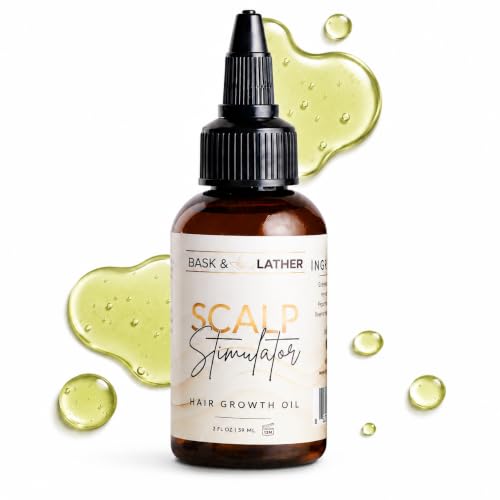
Bask & Lather Scalp Stimulator Oil with Rosemary & Mint, Grapeseed Base (2 fl oz) - 7
 Check Price →
Best Hair and Beard Oil
SFC Natural King Pro-Growth Hair & Beard Oil with Jamaican Black Castor Oil (7.1 oz)
The Short Version
- Rosemary oil has the best evidence of any hair oil for men: one small 2015 trial found results similar to 2% minoxidil after six months.
- Botanic Hearth Rosemary Oil is our best overall ready-to-use oil; Handcraft Blends Rosemary Essential Oil is best if you want to dilute your own.
- Pumpkin seed oil is the second-best-studied option, but its strongest result came from capsules, not oil on the scalp.
- Castor, argan and most beard-and-hair oils have no human studies showing hair growth; buy them for conditioning.
- Minoxidil and finasteride remain the most proven treatments for male pattern hair loss. Use an oil alongside them, at a different time of day.
On This Page · 11 sections
The best hair growth oil for men is a rosemary oil, used diluted on the scalp most days of the week, as an add-on to minoxidil or finasteride rather than a replacement for them. Rosemary is the only common hair oil that has been compared head to head with a hair loss drug in men with pattern hair loss, and pumpkin seed oil is the only other one with a human trial worth mentioning. Most other men's hair oils are conditioning oils with growth claims on the label.
That is not a reason to skip oils altogether. A good scalp oil is cheap, pleasant to use, and can make hair feel thicker and less brittle. The point is to buy one for the right reasons, with the right expectations, and to keep doing the things that actually change the course of male pattern hair loss. Searches like best men's hair growth products and evidence based hair oil for men hair growth studies suggest that is what a lot of men are trying to work out.
We ranked the oils below first on the strength of the evidence for their main ingredient, then on formula, label transparency, how easy they are to use on short hair, and price. We read each product's Amazon listing in November 2026; this is research-based, not a hands-on test, and no oil here is a substitute for a doctor's advice. For the broader category, see our guide to the best hair growth oil, and for drugs and devices, our guide to the best hair growth products for men.
What the Studies Actually Show, Oil by Oil
Rosemary oil is the only common hair oil that has been tested against a hair loss drug in men. In the 2015 trial by Panahi and colleagues, about 100 men with androgenetic alopecia applied either rosemary oil or 2% minoxidil for six months. Hair counts had not changed meaningfully at three months, but at six months both groups showed a similar increase, and scalp itching was more common with minoxidil. It is encouraging, but it was a small study, had no placebo group, and used the weaker 2% minoxidil rather than the 5% strength most men use today.
Pumpkin seed oil comes second. Its best evidence is a 2014 randomized, placebo-controlled trial in 76 Korean men, who took 400 mg of pumpkin seed oil a day by mouth for 24 weeks and saw a larger increase in hair count than the placebo group. The capsules also contained other plant ingredients, so the result cannot be pinned on pumpkin seed oil alone. On the scalp, pumpkin seed oil has a small comparative study in women. That makes it a reasonable topical carrier, but the men's evidence points to capsules.
Rosemary oil is the only common hair oil that has been tested against a hair loss drug in men.
Peppermint oil has encouraging results only in early animal research. Castor, argan, coconut, jojoba and batana oils have no human trials showing that they grow scalp hair; their real benefits are conditioning the hair shaft and soothing a dry scalp. That does not make them useless, but it means they belong in the conditioning column, not the growth column.
| Best Human Evidence | Form Studied | Our Take | |
|---|---|---|---|
| Rosemary oil | Small 2015 trial vs 2% minoxidil in men | Topical oil | Best oil to try |
| Pumpkin seed oil | 2014 placebo-controlled trial in men | Oral capsules | Take capsules; oil is a good carrier |
| Peppermint oil | Animal research only | Topical | Pleasant extra |
| Castor oil | No hair growth trials | N/A | Conditioning only |
| Argan, jojoba, coconut | No hair growth trials | N/A | Conditioning only |
Where a Hair Oil Fits Next to Minoxidil and Finasteride
Male pattern hair loss is driven by DHT, a hormone that gradually shrinks genetically sensitive follicles on the top and crown of the head. The two treatments with the strongest evidence for slowing and partly reversing that process are topical minoxidil, available over the counter, and finasteride, a prescription tablet that lowers DHT. Decades of trials stand behind both. No hair oil comes close to that level of evidence.
The best way to think about a hair oil is as an optional extra. If you are already using minoxidil, adding rosemary oil is a low-risk experiment that might help a little and will probably make your scalp feel nicer. If you cannot tolerate minoxidil because of itching or flaking, rosemary is a sensible thing to try, ideally after talking to a doctor about finasteride or other options. If you are not using anything yet, start with the proven treatments and add an oil if you like.
The best way to think about a hair oil is as an optional extra.
Our guide comparing rosemary oil vs minoxidil goes through the 2015 study and its limits in detail, and our guide to the best minoxidil for men compares foams and liquids on cost and comfort. If you are a man in his twenties or thirties with early thinning, acting early with a proven treatment matters far more than which oil you choose.
The Best Hair Growth Oils for Men, Ranked
Rosemary oils rank first because rosemary has the best human evidence. Pumpkin seed oil follows, then blends ranked on formula and value, then castor-based conditioning oils.
Botanic Hearth Rosemary Oil for Hair Growth with Biotin, Castor & Jojoba (4 fl oz)
Ready-to-Use Rosemary Blend
Best for: Men who want a rosemary scalp oil they can use straight from the bottle
- Key oils
- Rosemary, castor, jojoba, plus biotin
- Size
- 4 fl oz
- Free from (per listing)
- Parabens, sulfates; cruelty-free
- Use
- Scalp massage, leave in or rinse
Botanic Hearth's rosemary oil is the simplest way to follow the rosemary evidence without mixing anything yourself. It is a ready-to-use blend of rosemary with castor and jojoba oils and biotin, and the listing describes it as cold pressed and made with organic rosemary. You massage a few drops into the thinning areas, leave it on, and wash it out the next time you shampoo.
Rosemary is the right headline ingredient for men. In the 2015 trial by Panahi and colleagues, about 100 men with pattern hair loss used rosemary oil or 2% minoxidil for six months, and hair counts rose similarly in both groups, with less scalp itching in the rosemary group. It was a small study with no placebo group and it compared rosemary with the weaker 2% strength, but it is more than almost any other hair oil has.
The catch with any blend is that you do not know the exact rosemary concentration, so you cannot match the study precisely. Castor and jojoba make this oil a little richer than a pure rosemary dilution, which is fine on a buzzed or short cut but can look greasy on longer hair if you use too much. At around $10 for 4 ounces it is cheap enough to use for the six months it takes to judge.
What We Liked
- Rosemary-led formula ready to use
- Low price for a six-month trial
- Castor and jojoba condition the scalp
What We Didn't
- Rosemary concentration not stated
- Can look greasy if overapplied on longer hair
The Bottom Line
The easiest way for most men to try rosemary oil properly: a few drops on the scalp, most days, for six months.
Handcraft Blends Rosemary Essential Oil, Steam Distilled (1 fl oz)
Pure Rosemary Essential Oil
Best for: Men who want to control the rosemary dilution and pick their own carrier oil
- Contents
- 100% rosemary essential oil (per listing)
- Size
- 1 fl oz, amber glass with dropper
- Must be diluted
- About 6 to 12 drops per ounce of carrier
- Bottled in
- USA (per listing)
If you want to get closer to how rosemary was studied, a pure rosemary essential oil plus a carrier oil you choose is the most flexible option. Handcraft Blends sells steam-distilled rosemary essential oil in an amber glass bottle with a glass dropper, which makes it easy to measure drops and protects the oil from light.
Pure essential oil must never go on the scalp undiluted. A common scalp dilution is about 1 to 2 percent, which works out to roughly six to twelve drops of rosemary essential oil per ounce of carrier oil. For men with short hair or an oily scalp, a light carrier such as jojoba or grapeseed works well; for a dry scalp, add a little castor or argan. Mix a small batch, patch test it on your inner arm for a day or two, and keep it in a dark bottle.
One ounce of essential oil at that dilution makes many months of scalp oil, so this is also the cheapest way to use rosemary. The trade-off is effort: you need a carrier oil, a bottle and a few minutes to mix. If that sounds like a chore you will not keep up with, buy a ready-made blend instead, because consistency matters more than precision.
What We Liked
- You control the dilution and the carrier oil
- Very low cost per month
- Amber glass bottle with glass dropper
What We Didn't
- Must be diluted before use
- Needs a separate carrier oil
The Bottom Line
The best-value, most controllable way to use rosemary oil, if you are willing to mix it yourself.
Leven Rose Organic Pumpkin Seed Oil, Cold Pressed (4 oz)
Pure Pumpkin Seed Oil
Best for: Men interested in pumpkin seed oil who want a light, single-ingredient scalp oil
- Contents
- 100% pumpkin seed oil (per listing)
- Processing
- Cold pressed, unrefined, hexane free
- Size
- 4 oz amber glass
- Seeds
- USA grown (per listing)
Leven Rose's pumpkin seed oil is a single-ingredient, organic, cold-pressed and unrefined oil made in the USA from US-grown seeds, according to the listing. There are no fillers or additives, which makes it a clean base on its own or a carrier for a few drops of rosemary essential oil.
Pumpkin seed oil has a better research story than most hair oils, but you need to read it carefully. The best-known result is a 2014 Korean trial in which 76 men with pattern hair loss took 400 mg of pumpkin seed oil a day by mouth for 24 weeks, and saw a larger rise in hair count than placebo. That was capsules, not oil on the scalp. Topical pumpkin seed oil has a small comparative study in women. If the men's trial is your reason for trying pumpkin seed oil, capsules are the form that matches it.
Used on the scalp, pumpkin seed oil is light, absorbs reasonably well and suits men who find castor-based oils too heavy. A sensible approach is to use this as your carrier and add rosemary essential oil, which gives you the two best-studied hair oils in one bottle. Store it somewhere cool and dark, because unrefined seed oils can go rancid.
What We Liked
- Organic, cold pressed, single ingredient
- Light enough for short hair
- Good carrier for rosemary essential oil
What We Didn't
- The men's evidence is for capsules, not topical oil
- Unrefined oil has a shorter shelf life
The Bottom Line
A clean, light pumpkin seed oil and the best carrier for a homemade rosemary blend.
Mielle Organics Rosemary Mint Scalp & Hair Strengthening Oil with Biotin (2 oz)
Rosemary Mint Blend
Best for: Men on a tight budget who want a widely available rosemary blend
- Key oils
- Rosemary, peppermint, castor, tea tree, jojoba, coconut
- Extras
- Biotin, mint
- Size
- 2 oz
- Use (per listing)
- Scalp oil, pre-wash, or split-end care
Mielle's Rosemary Mint oil is one of the best-selling hair oils on Amazon, and it is popular with men as well as women because it is cheap, easy to find and pleasant to use. The blend combines rosemary with peppermint, castor, tea tree, jojoba and coconut oils plus biotin, and the mint gives a cooling tingle that many people like during a scalp massage.
The formula is broader than a simple rosemary dilution, which cuts both ways. Peppermint has encouraging results only in early animal research, tea tree is mainly useful for a flaky scalp, and biotin on the skin has no evidence for growth. Rosemary is the ingredient doing the evidence-based work, and as with other blends, its concentration is not stated.
For men, the bigger practical issue is weight. Castor and coconut make this a fairly rich oil, so use only a few drops on a short haircut, focus on the scalp, and wash it out with your next shampoo. Mielle also makes a lighter version of the same blend, which we cover in our guide to the best hair oil for thinning hair.
What We Liked
- Very low price, widely available
- Rosemary plus a cooling peppermint feel
- Doubles as a pre-wash treatment
What We Didn't
- Rich oil can look greasy on short hair
- Many extras with little evidence
The Bottom Line
A cheap, pleasant rosemary blend. Use a few drops on the scalp, not a palmful.
Leven Rose Organic Rosemary Hair Growth Oil with Castor, Peppermint, Jojoba, Argan & Pumpkin Seed (2 oz)
Organic Rosemary Blend
Best for: Men who want rosemary and pumpkin seed oil in one certified organic bottle
- Key oils
- Rosemary, Jamaican black castor, peppermint, jojoba, argan, pumpkin seed
- Extras
- Horsetail extract, evening primrose
- Certification (per listing)
- USDA certified organic
- Directions
- Leave 30 minutes or overnight
Leven Rose's rosemary blend puts the two best-studied hair oils, rosemary and pumpkin seed, in one bottle alongside Jamaican black castor oil, peppermint, jojoba, argan, horsetail extract and evening primrose. The listing describes it as USDA-certified organic and free of parabens, sulfates and synthetic additives, which will appeal to men who care about a clean label.
Directions are to warm a few drops, massage them into the scalp and leave the oil for 30 minutes or overnight. That flexibility is useful: on a work night you can apply it after a shower and wash it out the next morning, and on weekends you can leave it longer. Peppermint gives a noticeable tingle, which some men enjoy and others find too much on a sensitive scalp.
It ranks below Botanic Hearth mainly on value. At 2 ounces for a higher price, it costs more per month, and the long ingredient list does not add evidence beyond the rosemary and pumpkin seed already in cheaper options. If organic certification matters to you, it is a well-made choice.
What We Liked
- Rosemary and pumpkin seed oil in one blend
- USDA certified organic per the listing
- Flexible 30-minute or overnight use
What We Didn't
- Higher cost per ounce
- Peppermint tingle may bother sensitive scalps
The Bottom Line
A clean, organic rosemary and pumpkin seed blend for men who are happy to pay a little more.
Bask & Lather Scalp Stimulator Oil with Rosemary & Mint, Grapeseed Base (2 fl oz)
Lightweight Rosemary Mint Oil
Best for: Men with oily scalps or short hair who dislike heavy castor-based oils
- Base
- Cold-pressed grapeseed oil
- Key botanicals
- Rosemary, mint
- Directions (per listing)
- Apply 3 to 4 times a week; leave 24 hours
- Size
- 2 fl oz
Most popular hair growth oils lean on castor oil, which is thick and sticky. Bask & Lather's Scalp Stimulator uses cold-pressed grapeseed oil as its base, infused with rosemary, mint and other botanicals, which makes it one of the lighter options here and a better fit for men with an oily scalp, fine hair or a short cut that shows grease quickly.
The listing recommends applying it to the scalp and edges three to four times a week and leaving it in for at least 24 hours before washing, and suggests pairing it with a scalp massager. Gentle daily scalp massage is a reasonable habit in its own right, and our guide on how to use a scalp massager for hair growth explains what the evidence for massage does and does not show.
It ranks lower because the rosemary is an infusion within a blend, so the dose is likely modest and is not stated, and because the price per ounce is higher than the budget picks. The brand also recommends a patch test before use, which is good advice for every oil on this list.
What We Liked
- Grapeseed base is lighter than castor blends
- Good for oily scalps and short hair
- Clear directions per the listing
What We Didn't
- Rosemary amount not stated
- Higher cost per ounce
The Bottom Line
The pick for men who want a rosemary scalp oil that does not feel greasy.
SFC Natural King Pro-Growth Hair & Beard Oil with Jamaican Black Castor Oil (7.1 oz)
Castor Hair and Beard Oil
Best for: Men who want one inexpensive conditioning oil for both scalp and beard
- Key oil
- Jamaican black castor oil blend
- Natural (per listing)
- 99% natural
- Free from (per listing)
- Petroleum, alcohol, mineral oil, preservatives
- Size
- 7.1 oz
SFC's Natural King oil is a large, inexpensive Jamaican black castor oil blend marketed to men for both hair and beard. The listing describes it as 99% natural with no petroleum, alcohol, mineral oil or preservatives, and the 7.1-ounce bottle lasts a long time. For men who want one oil on the shelf for scalp and beard, it is the most practical option here.
Be clear about what castor oil can and cannot do. Castor oil is an excellent conditioning and sealing oil for the hair shaft and beard, but there are no human studies showing it grows scalp or beard hair. Its reputation for growth comes from tradition and anecdote, and our guide on whether castor oil grows hair walks through the evidence in detail.
That is why it ranks last for growth, even though it may be the oil many men enjoy using most. If you want an oil with some evidence for pattern hair loss, choose rosemary. If you want a beard that grows in thicker, topical minoxidil is the option with actual studies, which our guide to whether minoxidil works for beard growth covers.
What We Liked
- One oil for scalp and beard
- Large bottle, low cost per use
- No petroleum, alcohol or mineral oil per the listing
What We Didn't
- No human evidence that castor oil grows hair
- Thick and heavy on the scalp
The Bottom Line
A good conditioning oil for hair and beard. Do not buy it expecting regrowth.
How Men Should Use a Hair Growth Oil
Apply a small amount to the thinning areas, not the whole head. On a short haircut, three to six drops is usually enough to cover the crown or temples; part the hair with your fingers, drop the oil onto the scalp and massage it in with your fingertips for a minute or two. Using more does not help and just makes your hair look greasy.
Timing matters if you use minoxidil. Minoxidil goes on a clean, dry scalp, and a layer of oil can get in the way of even absorption. The simplest routine is minoxidil in the morning and at least a few hours before bed, then oil at night once the minoxidil has dried, washed out with your next shampoo. Alternatively, use the oil as a pre-wash treatment an hour before showering.
Using more does not help and just makes your hair look greasy.
Give it time. In the 2015 rosemary trial, hair counts had not changed meaningfully at three months and only rose by six months. Use the oil most days for six months, take photos of the crown and hairline in the same light every two months, and judge the result then rather than after a few weeks.
| What to Do | Why | |
|---|---|---|
| Amount | 3 to 6 drops on thinning areas | Enough to cover the scalp without grease |
| Dilution (pure essential oil) | About 6 to 12 drops per ounce of carrier | Undiluted essential oil can irritate |
| With minoxidil | Oil at a different time, on a dry scalp | Avoid interfering with absorption |
| How often | Most days | Consistency matters more than amount |
| How long to judge | 6 months | Hair counts rose only by month six in the trial |
How to Choose a Hair Oil if You Are a Man
Start with the main ingredient. If the oil is sold for hair growth, rosemary should be near the top of the ingredient list, or you should be adding rosemary essential oil yourself. Blends that list a dozen oils and extracts are not more effective; they just make it harder to know how much of the useful ingredient you are getting.
Then match the base oil to your hair and scalp. Men with short hair, fine hair or oily scalps do better with light bases such as jojoba, grapeseed or pumpkin seed oil. Men with dry, coarse or textured hair can handle richer castor or coconut blends. If an oil makes your hair look flat and greasy, that makes thinning look worse, so lighter is usually better.
Blends that list a dozen oils and extracts are not more effective
Finally, think about how you will actually use it. A ready-made blend you apply every night beats a carefully mixed dilution that sits in the cabinet. Pick the format you will stick with for six months, and buy a size that lasts that long without going stale.
Safety and Who Should Check With a Doctor
Hair oils are generally low risk, but essential oils can irritate the skin, especially undiluted. Patch test any new oil on the inside of your forearm for 24 to 48 hours, and stop if you notice redness, itching or a rash. Peppermint and tea tree are the most common culprits in men's scalp oils.
Oils can also clog pores and cause small bumps along the hairline or forehead in acne-prone men. If that happens, use less, keep the oil away from the hairline and forehead, and wash it out sooner. Any scalp that is red, scaly and itchy may have seborrheic dermatitis, which a ketoconazole shampoo usually helps more than an oil.
Patch test any new oil on the inside of your forearm for 24 to 48 hours
See a doctor or dermatologist if your hair loss is sudden, patchy, or accompanied by other symptoms, or if you are under 18. And talk to a doctor before starting finasteride, which is the most effective option for many men but needs a prescription and a conversation about side effects.
Compared Side by Side
| Product | Main Ingredient | Weight | Evidence for Main Ingredient | Best For |
|---|---|---|---|---|
| Botanic Hearth Rosemary Oil | Rosemary | Medium | Small men's trial | Best overall |
| Handcraft Blends Rosemary EO | Rosemary (dilute) | Depends on carrier | Small men's trial | DIY dilution |
| Leven Rose Pumpkin Seed Oil | Pumpkin seed | Light | Oral trial in men | Carrier oil |
| Mielle Rosemary Mint | Rosemary blend | Rich | Small men's trial | Budget |
| Leven Rose Rosemary Blend | Rosemary + pumpkin seed | Medium | Small trials | Organic |
| Bask & Lather Scalp Stimulator | Rosemary infusion | Light | Small men's trial | Oily scalps |
| SFC Natural King | Castor | Heavy | None for growth | Hair and beard |
Ready to Buy? Our Picks Again
- 1Check Price →
- 2Check Price →
Best for Mixing Your Own
Handcraft Blends Rosemary Essential Oil, Steam Distilled (1 fl oz) - 3Check Price →
Best Pumpkin Seed Oil
Leven Rose Organic Pumpkin Seed Oil, Cold Pressed (4 oz) - 4Check Price →
Best Budget Rosemary Oil
Mielle Organics Rosemary Mint Scalp & Hair Strengthening Oil with Biotin (2 oz) - 5Check Price →
Best Organic Blend
Leven Rose Organic Rosemary Hair Growth Oil with Castor, Peppermint, Jojoba, Argan & Pumpkin Seed (2 oz) - 6Check Price →
Best Lightweight Oil
Bask & Lather Scalp Stimulator Oil with Rosemary & Mint, Grapeseed Base (2 fl oz) - 7Check Price →
Best Hair and Beard Oil
SFC Natural King Pro-Growth Hair & Beard Oil with Jamaican Black Castor Oil (7.1 oz)
Common Mistakes to Avoid
Replacing Minoxidil or Finasteride With an Oil
Rosemary oil has one small trial; minoxidil and finasteride have decades of larger ones. Dropping a proven treatment for an oil can cost you hair you will not get back. Keep the proven treatment and add an oil if you want to.
Using Undiluted Essential Oil
Pure rosemary, peppermint or tea tree essential oil can irritate or burn the scalp. Always dilute it to roughly 1 to 2 percent, about six to twelve drops per ounce of carrier oil, or buy a ready-made blend that is already diluted.
Applying Oil Right Before Minoxidil
Minoxidil should go on a clean, dry scalp. A layer of oil underneath can interfere with how evenly it is absorbed. Use the oil at a different time, such as at night after the minoxidil has dried, or as a pre-wash treatment.
Using Too Much on Short Hair
A greasy scalp makes thinning hair look thinner, because the strands clump together and the scalp shows through. A few drops massaged into the thinning areas is enough. If your hair looks wet the next morning, you used too much.
Quitting After a Month
In the rosemary trial, hair counts had barely changed at three months and only rose by six months. Judging an oil after a few weeks tells you nothing. Use it consistently for six months and compare photos taken in the same light.
Frequently Asked Questions
What is the best hair growth oil for men?
A rosemary oil. Botanic Hearth Rosemary Oil is our best ready-to-use pick, and Handcraft Blends Rosemary Essential Oil is best if you want to dilute your own. Rosemary is the only common hair oil compared head to head with minoxidil in men with pattern hair loss.
Is there an evidence-based hair oil for men?
Rosemary oil has the best evidence: a small 2015 trial in about 100 men found results similar to 2% minoxidil after six months, with less itching. It had no placebo group, so the evidence is limited. Pumpkin seed oil's strongest result came from capsules taken by mouth.
Does rosemary oil work as well as minoxidil for men?
In one small study it performed similarly to 2% minoxidil, but most men use 5% minoxidil, which is stronger, and minoxidil has far more research behind it. Rosemary is a reasonable add-on or alternative for men who cannot tolerate minoxidil, not a proven equal.
Can I use hair growth oil with minoxidil?
Yes, at different times. Apply minoxidil to a clean, dry scalp, and use the oil at night once the minoxidil has dried or as a pre-wash treatment. There are no trials of the combination, so treat the oil as an optional extra.
Does castor oil grow hair for men?
There is no human study showing castor oil grows scalp or beard hair. It is a good conditioning oil that can reduce breakage and make hair and beards feel softer, but if you want growth, rosemary oil or minoxidil has better evidence.
How long does hair growth oil take to work?
Plan on about six months. In the 2015 rosemary trial, hair counts had not changed meaningfully at three months and rose by six months. Take photos at the start and every two months so you can judge fairly.
Is pumpkin seed oil good for men's hair loss?
It is promising. A 2014 trial in men found that 400 mg a day of pumpkin seed oil taken by mouth increased hair count more than placebo over 24 weeks. Capsules match that study best; topical pumpkin seed oil is a good light carrier for rosemary.
Will hair oil make my hair look greasy?
It can if you use too much or choose a heavy oil. Use three to six drops on the thinning areas, pick a light base such as jojoba, grapeseed or pumpkin seed oil if your scalp is oily, and wash it out with your next shampoo.
The Bottom Line
The best hair growth oil for men is a rosemary oil, because rosemary is the only common hair oil with a men's trial behind it. Botanic Hearth is the easiest ready-to-use choice, Handcraft Blends is the best value if you dilute your own, and pumpkin seed oil makes a good light carrier. Use a few drops most days for six months, at a different time from minoxidil, and keep minoxidil or finasteride as the foundation of your routine.
Common Questions, Answered
More Buyer's Guides
Hair Growth & Hair Loss
Best Hair Growth Oil
Oils are brilliant at protecting hair from breakage, nourishing a dry scalp and turning scalp massage into a relaxing ritual. Here is how to pick the one that suits your hair and get the best results from it.
Hair Growth & Hair Loss
Best Hair Growth Products for Men
Male pattern hair loss has two cornerstone treatments and a range of helpful add-ons that round out a routine. We picked the best product in each category and ranked them in the order that builds the strongest routine.
Hair Growth & Hair Loss
Best Rosemary Oil for Hair Growth
Rosemary oil earned its following from a 2015 trial that put it head to head with 2% minoxidil. It is a promising, low-cost, drug-free scalp ritual. Here is how to choose a pure oil or a ready-made blend, and how to use it safely.
Hair Growth & Hair Loss
Best Pumpkin Seed Oil for Hair Loss
Pumpkin seed oil is one of the few natural hair supplements with a placebo-controlled trial behind it, which is why so many people add it to their routine. Here is how to pick a great one, in capsules or as a topical oil, and how to get the best results.
Hair Growth & Hair Loss
Best Minoxidil for Men
Every product here contains 5% minoxidil, the only topical hair regrowth drug the FDA has approved for men. What separates them is the vehicle, how gentle they are on your scalp, and the value per month.
Hair Growth & Hair Loss
Best Hair Oil for Thinning Hair
Thinning hair needs an oil that helps without weighing strands down. Here are the light scalp oils worth buying, which of the ten most popular hair growth oils have real evidence, and how to use oil so thin hair looks fuller, not flatter.
Hair Growth & Hair Loss
Best Saw Palmetto Shampoo
Saw palmetto is the most popular natural DHT blocker, and it now appears in dozens of shampoos and sprays. Here are the saw palmetto shampoos worth buying, what a rinse-off product can realistically do, and how to build it into a routine that actually treats hair loss.
Hair Growth & Hair Loss
Best Hair Growth Products
From FDA-approved minoxidil to laser helmets, supplements and instant cover-ups: the standout product in each category, what each one does best, and how to combine them into a routine that fits your cause of thinning.
Hair Growth & Hair Loss
Best Minoxidil Foam
Minoxidil foam is the gentler, faster-drying way to use the most proven over-the-counter hair loss treatment. Here are the foams worth buying for men and women, how brand-name Rogaine compares with generics, and what the crown-only question really means.