The Short Answer
Rosemary oil takes about six months to show results for thinning hair. In the 2015 trial behind its reputation, about 100 men with pattern hair loss used rosemary oil or 2% minoxidil, and neither group improved significantly at three months, but both had higher hair counts at six months. Your scalp may feel better sooner, but plan on six months before judging it.
Top Picks: Best Rosemary Oil for Hair Growth
 Check Price
Best Overall
Plant Therapy Rosemary Essential Oil (30 mL)
 Check Price
Best Value Pure Oil
NOW Essential Oils Rosemary Oil, Steam Distilled (1 fl oz)
 Check Price
Best Ready-to-Use Blend
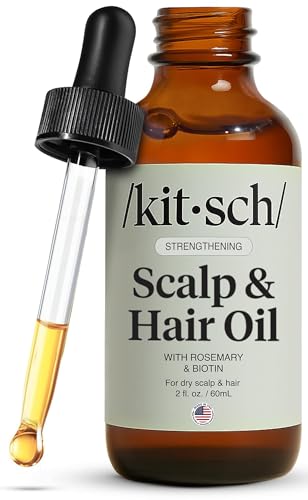
Kitsch Rosemary Oil for Hair with Castor Oil, Biotin & Jojoba (60 mL)
Written by HairGrowthReviews Editorial Team
Reviewed by Ernesta Malinauskytė, PhD, Director of Hair Research, TRI Princeton
Updated 2026-11-27 · Independently researched · How we review
We may earn a commission when you buy through our links, at no cost to you. As an Amazon Associate we earn from qualifying purchases. How we research
The Short Version
- The main rosemary oil trial measured hair counts at three and six months. Neither rosemary nor 2% minoxidil showed a significant improvement at three months; both did at six.
- A scalp massage with diluted rosemary oil can feel soothing from the first use, but that is comfort, not regrowth.
- Hair grows about half an inch a month and thinning follicles need several months to produce thicker hairs, so the first visible changes, if they come, usually appear between months four and six.
- Using more oil, a stronger dilution or daily applications has not been shown to speed things up, and it raises the risk of irritation.
- Take dated photos of your part, crown and hairline before you start and every month after, then make a fair keep-or-drop decision at six months.
On This Page · 10 sections
How long does rosemary oil take to work? It is the question almost everyone asks a few weeks after starting, usually while staring at the same part line in the bathroom mirror. Rosemary oil has become one of the most popular natural options for thinning hair, largely because of a single trial that compared it with minoxidil, and that same trial happens to give a fairly clear answer about timing.
The short version is that rosemary oil is slow. In the study that made it famous, neither rosemary nor minoxidil had done much at the three-month mark, and the improvements researchers measured showed up at six months. That pattern is not a quirk of rosemary. Anything that aims to change how follicles grow has to work through the hair growth cycle, which runs on a timescale of months.
This guide walks through a realistic rosemary oil timeline, from the first week to six months and beyond, explains why results take the time they do, covers what helps and what gets in the way, and shows you how to track progress so you can judge it fairly. If you are still choosing a bottle, our guide to the best rosemary oil for hair growth compares ready-made blends and pure essential oils, and our step-by-step guide on how to use rosemary oil for hair growth covers dilution and routine in detail.
What the Rosemary Oil Trial Says About Timing
Almost everything we know about rosemary oil's timeline comes from a randomized trial by Panahi and colleagues, published in 2015 in the journal SKINmed. About 100 men with androgenetic alopecia, the common genetic pattern of hair loss, applied either rosemary oil or 2% minoxidil solution to the scalp for six months. Researchers counted hairs in a defined area at the start, at three months and at six months.
At three months, neither group showed a significant improvement in hair count. At six months, both groups had a significant increase compared with where they started, and the difference between rosemary and minoxidil was not statistically significant. Scalp itching was reported more often in the minoxidil group. That is the whole basis for the popular six-month rule of thumb.
At three months, neither group showed a significant improvement in hair count.
The three-month result is the part most people miss. Minoxidil is an approved, well-studied treatment, and it was also flat at three months in this trial. So if rosemary has not visibly changed your hair after eight or ten weeks, that is exactly what the best available evidence would predict, not a sign that it has failed.
It is worth keeping the limits in mind too. This was one trial, in men only, with no placebo group, compared against the gentler 2% strength of minoxidil. It tells us rosemary kept pace with 2% minoxidil over six months; it does not promise that everyone will see the same result. Our article on whether rosemary oil really grows hair looks at the evidence in more depth.
A Realistic Rosemary Oil Timeline, Month by Month
Weeks one and two: the main thing you will notice is how your scalp feels. A gentle massage with a properly diluted blend often leaves the scalp feeling refreshed and less tight, and the herbal scent is part of the appeal for many people. This is also the window to watch for irritation. Redness, burning or new itching mean the blend is too strong or does not suit you.
Months one to three: the habit is forming, and your hair will probably look the same. That is normal. Some people feel they shed a little less, while others notice no difference at all. Because the trial found no significant change at three months, this period is about consistency, not results. Retake your photos at the end of each month and resist the urge to judge them yet.
this period is about consistency, not results
Months three to six: this is the window in which the trial's gains appeared. If rosemary is helping, you may notice small, fine new hairs along the part or hairline, slightly less scalp showing under bright light, or less hair in the drain. These changes are subtle, which is why side-by-side photos matter more than the mirror.
Month six: this is your decision point. Compare your month-zero and month-six photos in the same light. Slightly fuller-looking hair is a good result, and holding steady also counts, since pattern hair loss tends to progress over time. If your thinning has clearly continued, it is time to add or switch to a treatment with stronger evidence.
| What You Might Notice | What to Do | |
|---|---|---|
| Weeks 1 to 2 | Refreshed, comfortable scalp; no hair change | Take baseline photos and watch for irritation |
| Months 1 to 3 | Hair looks about the same | Stay consistent and retake photos monthly |
| Months 3 to 6 | Possible fine new hairs or less shedding | Compare photos side by side |
| Month 6 | Fuller-looking hair or a stable part in responders | Decide whether to continue, add or switch |
| Never from rosemary alone | Regrowth on smooth, long-bald areas | Follicles that are gone cannot respond to any oil |
Why Rosemary Oil Takes Around Six Months
Hair grows from the follicle at roughly half an inch, or about 1 cm, a month, and no oil changes that pace in a meaningful way. Each follicle also runs through a cycle: a growing phase that lasts years, a short transition and a resting phase of around three months, after which the old hair sheds and a new one starts. Any change to how a follicle behaves only becomes visible once new hairs have had time to grow out.
Pattern hair loss works by shrinking follicles a little with each cycle, a process called miniaturization. The hairs they produce get thinner, shorter and lighter until they barely show. Reversing or slowing that process, even partly, means waiting for those follicles to complete a cycle and grow a sturdier hair, and a new hair starts out short and fine before it thickens and lengthens.
Rosemary is not unusually slow; hair is.
How rosemary might influence this is still being worked out. Proposed explanations include better blood flow from massage and the oil itself, anti-inflammatory effects on the scalp, and possible effects on DHT activity that have been seen mainly in laboratory and animal studies. None of these would act overnight, because they all depend on the follicle's own slow rhythm.
This is also why minoxidil, finasteride and supplements such as pumpkin seed oil all ask for months of patience. Rosemary is not unusually slow; hair is. A fair test needs at least six months, and for any treatment aimed at pattern hair loss, a full year gives an even clearer picture.
What Helps Rosemary Oil Work Its Best
Consistency matters more than strength. A properly diluted blend used two to three times a week, every week, is far more useful than a strong blend used whenever you remember. Many people tie their rosemary massage to wash days, applying it a few hours before shampooing, so it becomes part of a routine rather than an extra chore.
Put it on the scalp, not the lengths. Rosemary is a scalp treatment, so part your hair in sections and apply a few drops along each part, focusing on the areas that are thinning. Then massage with your fingertips for a few minutes. Massage may help in its own right, and it spreads the oil evenly without wasting it on your ends.
Stronger is not faster.
Keep the dilution sensible. A blend of around 1 to 2 percent, roughly 6 to 12 drops of rosemary essential oil per ounce of carrier oil, is the range most guides recommend. Stronger is not faster. A higher concentration mainly raises the chance of irritation, and an irritated, inflamed scalp is a poor environment for healthy hair.
Use a format close to what was studied. The trial used rosemary oil applied to the scalp. Rosemary waters, sprays and shampoos are pleasant and lighter, but they contain less of the oil, or rinse away quickly, so they are further from the tested approach. If your thinning is clearly progressing, adding minoxidil, applied separately to a clean, dry scalp, gives you a tested treatment alongside your rosemary ritual.
Our #1 pick for rosemary oil for hair growth
Plant Therapy Rosemary Essential Oil (30 mL)
The best rosemary oil if you will mix your own: pure, well documented and very cheap per application.
Why Rosemary Oil Might Not Seem to Work
The most common reason is simply time. Many people stop at two or three months, which is exactly the point at which the trial found no change in either group. If your scalp feels good and your hair looks the same at three months, the evidence suggests patience rather than a new product.
The type of hair loss matters. The trial studied pattern hair loss in men. Sudden, heavy shedding after illness, surgery, childbirth or stress, known as telogen effluvium, usually settles on its own once the trigger passes, whatever you put on your scalp. Low iron, thyroid problems, patchy alopecia areata and scarring conditions all need a diagnosis and their own treatment, not an oil.
Rosemary, like minoxidil, is best at helping follicles that are shrinking but still active.
How far the thinning has progressed matters too. Rosemary, like minoxidil, is best at helping follicles that are shrinking but still active. Areas that have been smooth and bald for years have few working follicles left, and no topical oil is likely to bring them back.
Finally, irritation can work against you. Undiluted oil, a strong blend or old, oxidized oil can leave the scalp red, itchy and flaky, and scalp inflammation can make shedding worse. If your scalp has been uncomfortable since starting, pause, let it settle and read our guide to rosemary oil side effects before trying again at a gentler dilution.
How to Track Whether Rosemary Oil Is Working
Take baseline photos before your first application. Use the same room, the same light and the same angles every time, with hair dry and styled the same way. Photograph your hairline from the front with hair pulled back, both temples, your crown from above and your usual part. Repeat once a month on the same date.
Watch your part width and crown. These are the places where pattern thinning shows most clearly, and small changes in how much scalp shows under an overhead light are easier to compare in photos than in person. A phone on a timer, or a partner, makes the crown shot much easier.
Change one thing at a time.
Note shedding, but do not obsess over it. Everyone loses dozens of hairs a day as part of the normal cycle, and shedding naturally rises and falls with the seasons. A rough weekly note of whether shedding feels normal, higher or lower is enough. Shed hairs have a small white bulb at the root, while broken hairs are short pieces without one.
Change one thing at a time. If you start rosemary oil, a new shampoo, a supplement and minoxidil in the same week, you will not know which one helped or which one caused a problem. Starting rosemary on its own for a couple of months before layering other steps keeps your results easy to read.
How Rosemary's Timeline Compares With Other Treatments
Minoxidil follows a similar curve. It typically takes about two to four months to see the first changes and around six months or longer to judge the result, and it can cause a temporary shed in the first couple of months as follicles reset. Our guide on how long minoxidil takes to work covers that timeline, and our comparison of rosemary oil vs minoxidil explains how the two stack up.
Pumpkin seed oil, taken as a daily softgel, also runs on a six-month clock. Its main placebo-controlled trial measured results after 24 weeks. Many people pair the two, taking pumpkin seed oil by mouth and using rosemary on the scalp, and our guide on how long pumpkin seed oil takes to work explains what to expect from the supplement side.
almost everything that targets pattern hair loss is a months-long project
Conditioning oils such as batana, castor and argan work on a different clock. They make hair feel softer from the first wash and help reduce breakage over a few months, but they are not aimed at thinning follicles. That is why they can seem to work faster than rosemary even though they are doing a different job.
Prescription treatments such as finasteride for men also take months, often six to twelve, to show their full effect. In other words, almost everything that targets pattern hair loss is a months-long project, and rosemary oil fits right in.
Frequently Asked Questions
How long does rosemary oil take to grow hair?
Plan on about six months. In the 2015 trial, neither rosemary oil nor 2% minoxidil produced a significant improvement in hair count at three months, and both showed gains at six months. Use it consistently, take monthly photos and make your decision at six months rather than after a few weeks.
Can you see rosemary oil results in a month?
Not in your hair count. In the first month, you may notice that your scalp feels more comfortable and refreshed after a massage, but hair grows too slowly for any change in thickness to show that quickly. Treat the first three months as habit-building.
How often should I use rosemary oil to see results?
Two to three times a week suits most people. Massage a few drops of a 1 to 2 percent blend into the scalp, leave it on for a few hours or overnight, then shampoo. Daily use is not needed, and it raises the risk of irritation and buildup.
Does rosemary oil cause shedding at first?
There is no good evidence that rosemary oil causes the kind of temporary early shed linked to minoxidil. If you notice more shedding after starting it, consider whether your scalp is irritated, whether you started other products at the same time, or whether the season or a recent illness could explain it. See a doctor if heavy shedding continues.
Is rosemary oil faster than minoxidil?
Not according to the trial that compared them. Both were flat at three months and both improved by six months, with no significant difference between them. Minoxidil, especially at 5%, has far more research behind it, so many people use rosemary alongside it rather than instead of it.
Does rosemary water or rosemary shampoo work faster?
There is no evidence that either works faster, and both are further from what was studied. Rosemary water contains far less of the oil's aromatic compounds, and shampoo is rinsed off within minutes. They are pleasant extras, but a diluted oil massaged into the scalp is the closest match to the trial.
What if rosemary oil is not working after six months?
Compare your month-zero and month-six photos first, since small gains are easy to miss. If your thinning has clearly progressed, talk to a doctor or dermatologist about the cause and consider minoxidil or, for men, finasteride. You can keep rosemary in your routine as a scalp-care step if you enjoy it.
The Bottom Line
Rosemary oil is a slow treatment, and that is by the book. In the trial behind its reputation, neither rosemary nor 2% minoxidil had improved hair counts at three months, while both had at six. Use a 1 to 2 percent blend on the scalp two to three times a week, take monthly photos, judge it at six months, and add a treatment with stronger evidence if your thinning keeps progressing.
Related Questions
- Does Rosemary Oil Really Grow Hair? →
- How to Use Rosemary Oil for Hair Growth (and How to Make It) →
- Rosemary Oil Side Effects: Is Rosemary Oil Safe for Your Scalp? →
- Rosemary Oil vs. Minoxidil: Which Is Better for Hair Loss? →
- How Long Does Pumpkin Seed Oil Take to Work for Hair Loss? →
- Pumpkin Seed Oil vs Rosemary Oil for Hair Growth: Which Works Better? →
- How Long Does Minoxidil Take to Work? →
Buyer's Guides
Hair Growth & Hair Loss
Best Rosemary Shampoo for Hair Growth
Rosemary is the scalp-care ingredient of the moment, and a good rosemary shampoo is the easiest way to bring it into your routine every single wash day. Here are the six best bottles for every hair type and budget.
Hair Growth & Hair Loss
Best Essential Oils for Hair Growth
Rosemary, peppermint, lavender, tea tree and cedarwood are the five essential oils people reach for most for their scalp. Here are the best bottles of each, plus exactly how to dilute them.
Hair Growth & Hair Loss
Best Hair Growth Oil for Men
Most hair growth oils sold to men have no studies behind them. A few have a small trial or two. Here is which oils have evidence, the bottles worth buying, and where an oil fits next to minoxidil and finasteride.