Our Picks at a Glance
- 1
 Check Price →
 - 2
 Check Price →
 - 3
 Check Price →
Best for Textured Hair
Tropic Isle Living Jamaican Black Castor Oil (8 fl oz) - 4
 Check Price →
Best Pre-Wash Treatment
Fable & Mane HoliRoots Hair Oil Strengthening Pre-Wash Treatment (1.8 fl oz) - 5
 Check Price →
Best Pumpkin Seed Oil
PURA D'OR Organic Pumpkin Seed Oil, Cold-Pressed (4 oz) - 6
 Check Price →
Best for Fine or Oily Hair
NOW Solutions Organic Jojoba Oil (4 fl oz)
The Short Version
- No oil is proven to regrow hair; their real, well-supported benefit is protecting hair from breakage so you keep more of the length you grow.
- Mielle Rosemary Mint Oil is our best overall pick: an affordable, ready-to-use blend that suits most hair types as a scalp and ends treatment.
- Sky Organics castor oil is the best value, but castor's growth reputation is folklore; buy it as a heavy sealing and conditioning oil, not a treatment.
- Pick the oil to suit your scalp: light oils like jojoba for oily or fine hair, rich oils like castor for thick, dry or textured hair.
- If you have pattern hair loss, use minoxidil first and keep oils for pre-wash treatments or the opposite time of day.
On This Page · 12 sections
The best hair growth oil is less about growth than its name suggests. Oils have a long and genuine place in hair care: they coat the hair shaft, reduce friction and breakage, soften a dry scalp and make regular scalp massage pleasant. For people whose hair seems to stop at the same length year after year, that protection can mean visibly longer, fuller hair, because the hair is no longer snapping off as fast as it grows. What oils have not shown, in any convincing trial, is the ability to wake up shrinking follicles or reverse pattern hair loss.
We think that distinction is worth being upfront about, because this is one of the most hyped corners of the hair aisle. Castor oil, in particular, is sold with claims that have no clinical evidence behind them at all. Rosemary oil has one small, interesting trial. Pumpkin seed oil has a small trial, but of capsules taken by mouth, not oil rubbed on the scalp. None is approved to treat hair loss; topical minoxidil remains the only over-the-counter drug that is.
We ranked the oils below on what the evidence actually supports, how well they suit different hair and scalp types, purity and sourcing, cost per month and buyer feedback. This page covers the full range of hair oils, from single-ingredient carrier oils to ready-made blends. If you are specifically interested in rosemary, including pure essential oil and how to dilute it, our guide to the best rosemary oil for hair growth covers it in depth, and our hair growth serum roundup covers lightweight leave-on serums.
What Hair Oils Can and Can't Do for Growth
Hair grows from follicles under the skin, and the parts you can see are dead protein. Most oils work on that visible part. They coat the shaft, smooth the cuticle and reduce friction, which makes hair less likely to tangle, fray and snap. Research on coconut oil, for example, has shown it can reduce protein loss from hair when used before washing. That is real, useful science, but it is about protecting hair rather than growing it.
Protection matters more than it sounds. If hair is breaking at roughly the rate it grows, it seems to stall at a certain length no matter what you do. Reduce breakage and the same growth rate shows up as longer, fuller hair. This is why many people swear that an oil grew their hair: often it preserved hair that would otherwise have broken off.
Reduce breakage and the same growth rate shows up as longer, fuller hair.
Oils also make scalp massage easier and more pleasant. A small 2016 study of nine men found that daily standardized scalp massage was associated with thicker hair after 24 weeks. It is a tiny study with no control group, so it proves little, but it suggests that the habit of massage may matter as much as the oil you use.
What oils have not shown is the ability to reverse pattern hair loss, where hormones gradually shrink follicles. For that, minoxidil is the over-the-counter treatment with real evidence, and prescription options such as finasteride exist for men. An oil can sit alongside those; it should not replace them.
The Evidence, Oil by Oil
Castor oil, including Jamaican black castor oil, has the biggest reputation and the least evidence. We are not aware of any good clinical trial showing it increases scalp hair growth in people. The claims usually rest on tradition, testimonials and theories about ricinoleic acid that have not been tested properly in humans. It is still a good heavy conditioning and sealing oil.
Rosemary oil has the most-cited trial, a small 2015 study comparing it with 2% minoxidil over six months, which found similar hair count improvements in both groups. With no placebo group and a modest size, it is a promising signal rather than proof. We cover it in detail in our rosemary oil guide. Peppermint oil has encouraging results in mice, but animal studies often fail to translate to people.
Pumpkin seed oil has a small placebo-controlled trial showing benefit in men, but participants took capsules by mouth. Whether rubbing it on the scalp does anything is unknown. Coconut oil has good evidence for reducing protein loss and breakage, but not for growth. Jojoba and argan oils are excellent conditioners with no growth evidence.
The takeaway is that you should choose an oil mainly for how it suits your hair and scalp, and treat any growth effect as a possible bonus. If the oil feels good and you will use it consistently for massage, that is already most of the benefit you can realistically expect.
| Growth Evidence | Best Use | |
|---|---|---|
| Castor / JBCO | None in human trials | Sealing dry, thick or coily hair |
| Rosemary | One small trial vs 2% minoxidil | Diluted scalp treatment |
| Pumpkin seed | Small trial, oral capsules only | Light scalp oil or carrier |
| Peppermint | Animal studies only | Diluted, for a cooling scalp feel |
| Coconut | Reduces breakage, not growth | Pre-wash protection |
| Jojoba | None | Light carrier for fine or oily hair |
The 6 Best Hair Growth Oils
No oil here is FDA-approved to regrow hair. They are ranked on evidence, how well they suit different hair and scalp types, purity and sourcing, cost per month and buyer feedback, so you can pick the one that will genuinely help your hair.
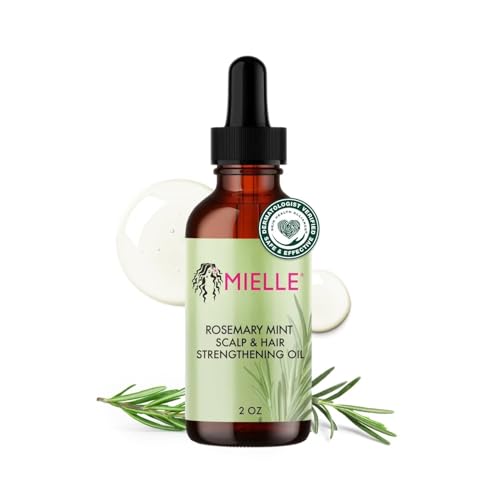
Mielle Organics Rosemary Mint Hair Oil with Biotin (2 oz)
Rosemary and Mint Oil Blend
Best for: Most people who want an affordable, ready-to-use scalp and hair oil
- Type
- Ready-to-use oil blend
- Size
- 2 oz
- Key ingredients
- Rosemary, mint, biotin
- Dilution needed
- No
Mielle's Rosemary Mint oil is the hair oil that most buyers end up liking, and it earns the top spot for being practical rather than miraculous. It is a ready-to-use blend, so the rosemary and mint are already diluted in carrier oils and you can apply it straight to the scalp and ends without measuring drops. The applicator tip makes it easy to place along parts, and the cooling mint makes scalp massage feel pleasant, which helps people actually keep doing it.
The evidence is the honest weak point. Rosemary has one small trial behind it, and biotin applied to the scalp has no good evidence of doing anything for hair growth; biotin only matters when taken orally by people who are genuinely deficient. What Mielle does reliably is condition the scalp and hair and reduce dryness and breakage, which buyers with curly, coily and dry hair especially notice.
Skip it if you have a sensitive scalp or a known reaction to essential oils, and patch test first. If your hair is very fine and oily, a little goes a long way; a lighter oil such as jojoba may suit you better.
What We Liked
- Pre-diluted, so it is safe and simple to use straight from the bottle
- Applicator tip makes parting and targeting the scalp easy
- Cooling mint makes regular scalp massage pleasant
- Low cost per month
What We Didn't
- Biotin in a topical oil has no meaningful evidence
- Essential oils can irritate sensitive scalps
- Can weigh down very fine hair if overapplied
The Bottom Line
The easiest oil to live with. Buy it for scalp comfort and breakage protection, not for regrowth.
Sky Organics Organic Castor Oil, Cold Pressed (16 oz)
Pure Castor Oil
Best for: Thick, dry or coarse hair that needs a heavy sealing oil on a budget
- Type
- Single-ingredient oil
- Size
- 16 oz
- Processing
- Cold pressed, hexane-free
- Certification
- USDA Organic
Sky Organics' castor oil is the simplest way to buy good castor oil: a large, organic, cold-pressed, hexane-free bottle at a low cost per ounce. Castor oil is unusually thick and sticky, which makes it excellent at sealing moisture into dry ends and coarse hair, and a popular base for mixing your own scalp oil with a few drops of essential oil.
Now the honest part. Castor oil's reputation as a hair grower is built on tradition and social media, not trials. There is no good clinical evidence that applying castor oil makes scalp hair grow faster or thicker. Theories about its main fatty acid, ricinoleic acid, affecting hair loss pathways remain speculative. If it seems to help your hair, the most likely reason is that it reduces breakage and helps you retain length.
Skip it if your hair is fine or your scalp is oily; it is heavy, hard to wash out and can leave hair looking flat. Use it sparingly on long hair, too: there are rare case reports of severe tangling, called hair felting, after heavy castor oil use.
What We Liked
- Organic, cold-pressed and hexane-free at a low price per ounce
- Very effective at sealing moisture into dry, coarse hair
- Large bottle doubles as a carrier for DIY scalp blends
What We Didn't
- No clinical evidence that castor oil regrows hair
- Thick, sticky texture is hard to wash out
- Too heavy for fine or oily hair
The Bottom Line
The best-value castor oil for dry, thick hair. A great sealing oil, but its growth reputation is not backed by evidence.
Tropic Isle Living Jamaican Black Castor Oil (8 fl oz)
Jamaican Black Castor Oil
Best for: Curly, coily and textured hair, edges and protective-style routines
- Type
- Jamaican black castor oil
- Size
- 8 fl oz
- Texture
- Thick
- Best used
- Scalp, edges and ends
Jamaican black castor oil is made by roasting castor beans before pressing them, which gives it its dark color and slightly smoky smell. Tropic Isle Living is one of the longest-established names in the category, and its 8 oz bottle is a staple in many textured hair routines, used on the scalp, along the edges and to seal the ends of twists and braids.
As with all castor oil, the claims about growth outrun the evidence. There are no good trials showing JBCO regrows hair, and no evidence that it outperforms ordinary cold-pressed castor oil. Its value for textured hair is real but different: coily and curly hair is more prone to dryness and breakage, and a rich sealing oil helps protect it, which is often what people experience as better growth.
One important caution: thinning edges are often caused by traction alopecia from tight braids, ponytails, wigs and extensions. No oil fixes that; loosening the styles does, and early action matters because long-term traction damage can become permanent. Skip JBCO if your hair is fine or your scalp is oily.
What We Liked
- Established, widely trusted JBCO brand
- Rich texture seals moisture into coily and curly hair
- Works for scalp, edges and protective styles
What We Didn't
- No evidence it grows hair better than regular castor oil
- Heavy and can build up without regular clarifying
- Smoky scent is not for everyone
The Bottom Line
A trusted JBCO for textured hair care. Use it to protect hair, and loosen tight styles if your edges are thinning.
Fable & Mane HoliRoots Hair Oil Strengthening Pre-Wash Treatment (1.8 fl oz)
Ayurvedic-Inspired Oil Blend
Best for: People who want a luxurious weekly pre-shampoo scalp oil ritual
- Type
- Pre-wash oil blend
- Size
- 1.8 fl oz
- Key ingredients
- Ashwagandha, castor oil
- Use
- Before shampooing
Fable & Mane's HoliRoots oil is built around the Indian tradition of oiling the scalp before washing, and it is designed to be used that way: massage it into the scalp and lengths, leave it on, then shampoo it out. The blend includes ashwagandha and castor oil, it smells pleasant, and buyers consistently describe the routine as relaxing and their hair as softer and shinier afterward.
The evidence for the botanical ingredients helping hair grow is thin, and we would not buy it expecting regrowth. Its real strengths are the experience and the pre-wash format, which protects hair during shampooing and avoids leaving oil on the scalp all day. That also makes it the easiest oil to combine with minoxidil, because it is washed off before you apply your treatment.
Skip it if you are on a tight budget; per ounce it costs several times what Mielle or a plain carrier oil does. People with sensitive scalps should patch test, as blends with fragrance and botanicals can irritate.
What We Liked
- Pre-wash format keeps oil off your scalp during the day
- Pleasant scent and texture make the routine enjoyable
- Easy to fit around a minoxidil routine
What We Didn't
- Expensive per ounce for an oil blend
- Little evidence for its botanicals and hair growth
- Fragrance may bother sensitive scalps
The Bottom Line
A lovely weekly pre-wash ritual. Pay for the experience and breakage protection, not for growth claims.
PURA D'OR Organic Pumpkin Seed Oil, Cold-Pressed (4 oz)
Pure Pumpkin Seed Oil
Best for: Curious buyers who want to try pumpkin seed oil as a light scalp oil
- Type
- Single-ingredient oil
- Size
- 4 oz
- Processing
- Cold pressed
- Texture
- Medium weight
Pumpkin seed oil has a better evidence story than most hair oils, with an important asterisk. A small randomized, placebo-controlled trial published in 2014 found that men with pattern hair loss who took pumpkin seed oil capsules for 24 weeks had a greater increase in hair count than those taking placebo. That is interesting, but it studied oil taken by mouth, not oil applied to the scalp, and it has not been replicated at scale.
So buying a bottle of pumpkin seed oil to rub on your scalp is a reasonable experiment, not a proven treatment. PURA D'OR's organic cold-pressed oil is a good version to try: a medium-weight oil that absorbs better than castor and feels less heavy on the scalp. Some people use it as a base for diluting essential oils.
If you specifically want to replicate the trial, that would mean oral capsules, which is a supplement decision best discussed with your doctor, and our saw palmetto roundup covers that category. Skip topical pumpkin seed oil if you expect it to replace minoxidil for pattern loss.
What We Liked
- Most interesting evidence of any oil here, albeit for oral use
- Lighter and easier to wash out than castor oil
- Works as a carrier for essential oil blends
What We Didn't
- Trial evidence is for capsules, not topical oil
- One small study, not replicated at scale
- Earthy scent and dark color
The Bottom Line
A reasonable experiment as a scalp oil. Just know the promising study was on capsules, not on oil applied to the scalp.
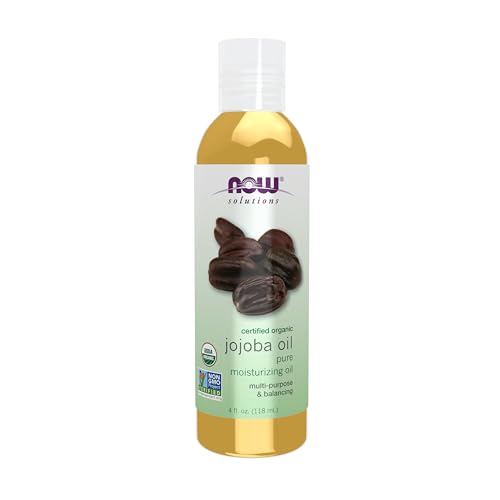
NOW Solutions Organic Jojoba Oil (4 fl oz)
Pure Jojoba Oil
Best for: Fine hair, oily scalps, and anyone mixing their own diluted essential oil blend
- Type
- Single-ingredient oil
- Size
- 4 fl oz
- Texture
- Light
- Certification
- Organic
Jojoba is technically a liquid wax rather than a true oil, and its make-up is often described as similar to the scalp's own sebum. In practice, that makes it one of the lightest, least greasy options for the scalp, and it washes out easily. NOW's organic jojoba is an inexpensive, widely trusted bottle from a large supplement and personal care company.
There is no evidence that jojoba itself grows hair, and we do not rank it here for that. We rank it because it is the best carrier oil for people who want to dilute rosemary or another essential oil themselves, and the best choice for fine or oily hair that heavier oils weigh down. It is also a gentle way to soften dry flakes before shampooing.
Skip it if your hair is very thick, coarse or dry; it may be too light to seal moisture the way castor oil does. And if you are mixing in essential oils, keep the dilution low, test a small patch first and keep blends away from the eyes.
What We Liked
- Light, non-greasy and easy to wash out
- Ideal carrier for diluting essential oils
- Low cost from a large, established brand
What We Didn't
- No evidence it promotes hair growth by itself
- Too light to seal very dry or coarse hair
The Bottom Line
The best carrier oil for fine hair and DIY blends. Buy it as a base, not a treatment.
How to Choose an Oil for Your Hair and Scalp
Start with your scalp. If it gets oily within a day of washing, or you have fine hair that goes flat easily, choose a light oil such as jojoba or a light blend, and use it before washing rather than leaving it in. Heavy oils on an oily scalp tend to cause buildup, limp roots and sometimes breakouts along the hairline.
If your scalp is dry and your hair is thick, coarse, curly or coily, richer oils such as castor or a ready-made blend like Mielle make more sense. Textured hair is more prone to dryness and breakage because natural scalp oils travel down the hair shaft less easily, and sealing oils can noticeably improve length retention.
If you have reacted to products before, start simple.
Think carefully if you have dandruff or seborrheic dermatitis. The yeast involved in those conditions feeds on certain oils, and some people find heavy oiling makes flaking and itching worse. A medicated shampoo with ketoconazole is usually a better first step, with oils used sparingly and washed out.
Finally, decide between a single oil and a blend. Single oils are cheap, pure and let you control exactly what goes on your scalp. Blends are more convenient and often nicer to use, but they add fragrance and essential oils, which increase the chance of irritation. If you have reacted to products before, start simple.
How to Apply Hair Oil for the Best Results
Less is more. For most people, a few drops to half a teaspoon is enough to treat the scalp, and a little more for the lengths if they are long or dry. Part the hair in sections, apply the oil directly to the scalp with your fingertips or an applicator bottle, and massage gently in small circles for several minutes. Use the pads of your fingers, not your nails.
Choose between pre-wash and leave-in. A pre-wash treatment, left on for 30 minutes to a few hours and then shampooed out, gives the conditioning benefits without leaving the scalp oily, and it suits most scalps. Leaving oil in overnight or all day works better for dry and textured hair, but can cause buildup on oily scalps.
Less is more.
Once to three times a week is plenty for most people. Daily oiling of the scalp is rarely needed and makes buildup more likely. If you oil frequently, use a clarifying shampoo every week or two to clear residue, which can otherwise leave hair dull and the scalp itchy.
If you are mixing your own blend with essential oils, always dilute them. Pure essential oils applied straight to the skin can cause burns and allergic reactions. A common rule of thumb is a dilution of around 1 to 2 percent, roughly six to twelve drops of essential oil per ounce of carrier oil, tested on a small patch first.
Using Hair Oils Alongside Minoxidil
If your hair loss is pattern hair loss, minoxidil is the treatment most likely to make a visible difference, and you can use oils alongside it without much difficulty. The key is timing. Minoxidil is designed to be applied to a dry, clean scalp, and a layer of oil sitting on the skin can get in the way of it reaching the follicles.
The simplest approach is to use oil as a pre-wash treatment. Apply it, leave it for a while, shampoo it out, dry your scalp, and then apply minoxidil as normal. Another option is to apply oil to the lengths and ends only, keeping it off the areas you treat with minoxidil.
Avoid mixing oils or essential oils into your minoxidil bottle.
Avoid mixing oils or essential oils into your minoxidil bottle. Minoxidil products are formulated with specific solvents to keep the drug dissolved and absorbed, and adding other ingredients can change how well it works or how much it irritates. If you want a combination, use the products separately.
If you are using a derma roller, skip oils with essential oils on the days you needle, because broken skin absorbs more and is more easily irritated. Our guides to the best minoxidil for men and women and the best derma rollers explain how to build those treatments into a routine.
Safety: Allergies, Buildup and Who Should Be Careful
Natural does not mean risk-free. Essential oils, including rosemary, peppermint, tea tree and many fragrance blends, are common causes of contact dermatitis. Patch test any new oil or blend on the inner arm or behind the ear for 24 to 48 hours, and stop if you notice itching, redness or a rash. Never apply undiluted essential oils to the scalp.
Heavy oils can cause problems of their own. Castor oil in particular can leave stubborn buildup, and there are rare case reports of severe matting, known as hair felting, after heavy castor oil use on long hair. Oils that migrate onto the forehead can also clog pores and cause breakouts along the hairline.
Natural does not mean risk-free.
Pregnant and breastfeeding people should be cautious with concentrated essential oils and check with their doctor, since many have not been studied in pregnancy. Keep essential oils away from children's faces and out of reach, and be aware that many essential oils are toxic to cats and other pets, so store bottles securely.
See a doctor rather than reaching for an oil if your hair loss is sudden, patchy, painful or comes with scaling or redness. Alopecia areata, scalp infections, thyroid problems and iron deficiency are all common, treatable causes of hair loss, and none of them responds to oil.
Compared Side by Side
| Product | Type | Weight | Growth Evidence | Best For |
|---|---|---|---|---|
| Mielle Rosemary Mint Oil | Ready-to-use blend | Medium | Weak | Most hair types |
| Sky Organics Castor Oil | Pure castor oil | Heavy | None in trials | Dry, thick hair on a budget |
| Tropic Isle Living JBCO | Jamaican black castor | Heavy | None in trials | Textured hair |
| Fable & Mane HoliRoots | Pre-wash blend | Medium | Weak | Weekly pre-wash ritual |
| PURA D'OR Pumpkin Seed Oil | Pure pumpkin seed oil | Medium | Oral capsules only | Light scalp oil |
| NOW Organic Jojoba Oil | Pure jojoba | Light | None | Fine hair, DIY blends |
Ready to Buy? Our Picks Again
- 1Check Price →
- 2Check Price →
- 3Check Price →
Best for Textured Hair
Tropic Isle Living Jamaican Black Castor Oil (8 fl oz) - 4Check Price →
Best Pre-Wash Treatment
Fable & Mane HoliRoots Hair Oil Strengthening Pre-Wash Treatment (1.8 fl oz) - 5Check Price →
Best Pumpkin Seed Oil
PURA D'OR Organic Pumpkin Seed Oil, Cold-Pressed (4 oz) - 6Check Price →
Best for Fine or Oily Hair
NOW Solutions Organic Jojoba Oil (4 fl oz)
Common Mistakes to Avoid
Expecting Oil to Reverse Pattern Baldness
Receding temples, a thinning crown or a widening part are usually signs of pattern hair loss, which oils have not been shown to reverse. Waiting a year to see if castor oil works means a year of progression. Start minoxidil for pattern loss and use oils for scalp comfort and breakage protection.
Applying Undiluted Essential Oils
Pure rosemary, peppermint or tea tree oil applied straight to the scalp can cause burns, blistering and allergic reactions. Always dilute essential oils in a carrier oil, at around 1 to 2 percent for the scalp, and patch test the blend before using it widely. Ready-made blends are already diluted.
Using Heavy Oils on an Oily Scalp
Castor oil and other heavy oils can leave an oily scalp greasy, flat and itchy, and may worsen dandruff in some people. If your roots get oily quickly, choose a light oil like jojoba, use it as a pre-wash treatment, and wash it out thoroughly rather than leaving it in.
Never Clarifying
Regular oiling leaves residue that ordinary shampoo does not always remove. Over weeks, buildup makes hair dull and heavy and the scalp itchy. If you oil more than once a week, use a clarifying shampoo every week or two to reset your scalp and keep oils from causing problems.
Blaming Oil for Edges Lost to Tight Styles
Thinning along the hairline and temples in people who wear tight braids, ponytails, extensions or wigs is often traction alopecia. No oil fixes it; reducing tension does. Loosen styles and give your edges breaks early, because long-term traction damage can become permanent.
Frequently Asked Questions
What is the best hair growth oil?
For most people, Mielle Organics Rosemary Mint Hair Oil is the best hair growth oil to start with: it is pre-diluted, affordable and pleasant for regular scalp massage. Be realistic about what it does, though. Oils mainly reduce breakage and condition the scalp; none is proven to regrow hair lost to pattern baldness.
Does castor oil really make hair grow?
There is no good clinical evidence that castor oil makes scalp hair grow faster or thicker. Its reputation is based on tradition and testimonials. It is an excellent heavy sealing oil for dry, thick or textured hair, and reducing breakage can help you keep more length, which many people experience as better growth.
Which oil is best for hair thinning?
No oil is a proven treatment for thinning. Rosemary oil has the most interesting single trial, and pumpkin seed oil has a small trial of oral capsules. If your thinning is pattern hair loss, topical minoxidil has far stronger evidence. Use oils alongside it for scalp comfort, not instead of it.
How often should I oil my scalp?
One to three times a week is plenty for most people. Daily scalp oiling is rarely necessary and makes buildup more likely, especially on oily scalps. Use a few drops, massage them in for several minutes, and wash it out within a few hours or the next morning, clarifying every week or two.
Can I use hair oil with minoxidil?
Yes, but keep them separate. Minoxidil works best on a clean, dry scalp, so use oil as a pre-wash treatment and apply minoxidil after washing and drying, or keep oil on the lengths only. Never mix oils or essential oils into your minoxidil bottle.
Should I leave oil in my hair overnight?
It depends on your hair. Dry, thick, curly and coily hair often benefits from overnight oiling. Fine hair and oily scalps usually do better with a shorter pre-wash treatment of 30 minutes to a couple of hours, which delivers the conditioning benefit without leaving roots greasy or causing buildup.
Is Jamaican black castor oil better than regular castor oil?
There is no evidence that Jamaican black castor oil grows hair better than ordinary cold-pressed castor oil. It is made from roasted beans, which gives it a darker color and smoky scent. Many people with textured hair prefer it, but the choice comes down to preference rather than results.
The Bottom Line
Hair oils are worth buying for what they do well: protecting hair from breakage, conditioning a dry scalp and making massage a pleasant habit. Mielle Rosemary Mint Oil is the best all-round pick, and Sky Organics castor oil is the best value for dry, thick hair. For genuine pattern hair loss, pair any oil with minoxidil rather than relying on it alone.
More Buyer's Guides
Hair Growth & Hair Loss
Best Rosemary Oil for Hair Growth
Rosemary oil's reputation rests on one small trial against 2% minoxidil. It is a promising, low-cost experiment, not a proven treatment. Here is how to choose a pure oil or a ready-made blend, and how to use it safely.
Hair Growth & Hair Loss
Best Hair Growth Serum
Drug-free scalp serums can make hair look fuller and support a healthier scalp, but none of them is an FDA-approved regrowth treatment. Here is which ones are worth the money, and when you should be buying minoxidil instead.
Hair Care
Best Scalp Massager
A good scalp massager costs less than a coffee, feels great, and helps you clean your scalp properly. Whether it grows hair is a much smaller question than the marketing suggests, and the honest answer shapes which one you should buy.
Hair Care
Best Black Hair Care Products
Type 4 and relaxed hair grows like any other hair. What holds length back is dryness and breakage. These are the leave-ins, butters, stylers and treatments that do the most to keep the length you grow.
Hair Growth & Hair Loss
Best Minoxidil for Women
Minoxidil is the only topical drug the FDA has approved to regrow hair in women. It comes in two women's forms, a 2% solution used twice a day and a 5% foam used once, and the choice between them matters more than the brand on the box.
Hair Growth & Hair Loss
Best Minoxidil for Men
Every product here contains 5% minoxidil, the only topical hair regrowth drug the FDA has approved for men. What separates them is the vehicle, the irritation risk, and what you pay per month for the next decade.