Our Picks at a Glance
- 1
 Check Price →
 - 2
 Check Price →
Best Unscented
Viking Revolution Beard Oil, Unscented (1 fl oz) - 3
 Check Price →
Best Lightweight Feel
Jack Black Beard Oil for Men, Leave-In Beard Conditioner (1 fl oz) - 4
 Check Price →
Best Premium Scents
Beardbrand Beard Oil & Face Moisturizer, Lumber Yard Scent (2 fl oz) - 5
 Check Price →
Best Drugstore Pick
Cremo Beard Oil for Men, Cedar Forest (1 fl oz) - 6
 Check Price →
Best for Long or Coarse Beards
Bossman Jelly Beard Oil, Thicker Formula, Magic Scent (4 oz)
The Short Version
- No beard oil has been shown to grow facial hair. Oils condition the beard and skin, reduce itch and flaking, and can make a beard look fuller.
- Honest Amish Beard Oil is the best overall pick: a well-reviewed blend of plant oils, a generous bottle and a low cost per ounce.
- If your skin is sensitive or you dislike fragrance, choose an unscented oil such as Viking Revolution Unscented; essential oils are a common cause of irritation.
- Topical minoxidil is the only beard growth option with any trial evidence, and it is off-label and limited. It is not a beard oil and has real trade-offs.
- Patchy beards often fill in with age into the late twenties and beyond; sudden round bald patches deserve a doctor's look.
On This Page · 12 sections
If you are searching for the best beard growth oil, the most useful thing we can tell you up front is that no beard oil has been shown to grow a beard. Oils condition the hair and the skin underneath. They soften coarse whiskers, calm the itch of a growing beard, reduce flaking, and make a beard look healthier and more groomed, which can make it look fuller. Those are real benefits, and they are why we think most bearded men should own a good beard oil. But the label on a bottle of argan and jojoba oil does not change your genetics or your hormones.
So we ranked the oils below on what they actually do well: how they feel on the beard and skin, how quickly they absorb, whether they leave a greasy shine, how strong and long-lasting the scent is, whether an unscented version exists for sensitive skin, and how much you get for the money. We also looked at buyer feedback for complaints about breakouts, irritation, leaking bottles and fragrance that fades or overpowers. We did not reward growth claims, because there is no evidence to reward.
If you genuinely want more beard rather than a better-looking one, the only option with any clinical trial behind it is topical minoxidil, used off-label on the face. The evidence is limited, and there are trade-offs, which we explain below. Our guide to the best minoxidil for men covers the products themselves. This page is about the oils, and about setting honest expectations for what a beard care routine can do.
What Beard Oil Actually Does (and Doesn't Do)
Beard growth is controlled mainly by genetics and androgens, the hormones testosterone and dihydrotestosterone, or DHT. How many hair follicles you have on your face, how sensitive they are to androgens, and where they are concentrated are largely set by your genes. No oil, however it is marketed, changes those factors, and there is no good clinical evidence that any beard oil increases the number of hairs in a beard.
What beard oil does do is condition. Facial hair is coarser than scalp hair, and the skin underneath can become dry and flaky as a beard grows, especially in the first few weeks, when many men experience intense itching. A good oil coats the hair, softening it and reducing friction, and moisturizes the skin beneath, which helps with itch and the flaking sometimes called beard dandruff.
There is no good clinical evidence that any beard oil increases the number of hairs in a beard.
There is also a visual effect. A dry, wiry beard reflects light unevenly and shows the skin through it. A conditioned beard lies flatter, clumps slightly, and looks darker and denser. That can make a beard look noticeably fuller, which is why before-and-after photos for beard oils can look impressive even though no new hair has grown.
Some oils are marketed with ingredients such as rosemary, peppermint or castor oil, often citing studies on scalp hair. Those studies are small, mostly on scalp rather than face, and in the case of peppermint largely in animals. They do not show that a beard oil containing these ingredients grows facial hair. Buy a beard oil for comfort and appearance, and be skeptical of any bottle that promises growth.
Can Anything Actually Grow a Beard? Minoxidil and the Evidence
The only beard growth option with any clinical trial behind it is topical minoxidil, the same drug that is FDA-approved over the counter for scalp hair loss. A small randomized, placebo-controlled trial in Thailand found that men applying a 3% minoxidil lotion to the beard area for 16 weeks had a modest increase in beard hair count compared with placebo. That is real evidence, but it is a single small trial, the effect was modest, and it did not look at long-term results.
Using minoxidil on the face is off-label. It is not FDA-approved for beard growth, and the face is more sensitive than the scalp. Common side effects include dryness, flaking, redness and irritation, especially with solutions that contain propylene glycol. Because a small amount is absorbed into the bloodstream, it can occasionally cause dizziness, a rapid heartbeat or swelling, and men with heart conditions or low blood pressure should talk to a doctor first.
Using minoxidil on the face is off-label.
There are practical issues too. Minoxidil must be applied once or twice a day for months, it needs to dry before you touch your face or lie on a pillow, and it is toxic to cats even in small amounts, so pet owners need to be careful. It is also unclear how much new beard growth persists if you stop. Some men report keeping much of it once hairs become thicker, but that has not been well studied, and it should not be assumed.
If you want to try it, a standard 5% minoxidil product from our guide to the best minoxidil for men is what most men use, and many start with once-daily application to see how their skin tolerates it. Talk to a doctor or dermatologist first if you have any medical conditions. And keep a beard oil in the routine, applied after the minoxidil has fully dried, to help with the dryness it can cause.
The 6 Best Beard Growth Oils
We ranked these beard oils on feel, absorption, skin comfort, scent, buyer feedback and value per ounce. None of them grows facial hair; they condition the beard and skin so it looks and feels better while it grows.
Honest Amish Beard Oil for Men, 7+ Natural Oils (2 oz)
Plant Oil Blend Beard Oil
Best for: Most bearded men who want a reliable, well-reviewed oil at a low cost per ounce
- Base
- Blend of 7+ plant oils
- Scent
- Light natural scent
- Size
- 2 oz
- Mineral oil
- No
Honest Amish is one of the longest-running names in beard care, and its classic Beard Oil is our top pick for most men. It is a blend of seven-plus plant oils, mineral-oil free, in a two-ounce bottle that is twice the size of many competitors. That combination of a proven formula and a generous bottle gives it one of the lowest costs per ounce of any established beard oil, and buyer feedback is consistently strong on softness, less itch, and a natural, understated scent.
In use, a few drops are enough for a short to medium beard. It works into the hair and skin without leaving the heavy shine of cheaper mineral-oil products, and it helps tame the scratchy feel of a beard in its first few months, which is when many men give up. Like any oil, it will not add hairs, but a softer, healthier-looking beard often appears fuller and neater.
Skip it if you have a tree-nut allergy and the current ingredient list includes nut-derived oils, or if you want no fragrance at all; Honest Amish sells a fragrance-free version, and our unscented pick is another option. Men with very oily or acne-prone skin should also start with a small amount and see how their skin responds.
What We Liked
- Large 2 oz bottle with a low cost per ounce
- Blend of plant oils, mineral-oil free
- Softens coarse hair and reduces beard itch
- Long track record and strong buyer feedback
What We Didn't
- Natural scent will not suit everyone
- Check the label for nut-derived oils if you have allergies
- Like all oils, it conditions rather than grows hair
The Bottom Line
The default beard oil: well-made, well-reviewed and great value. Start here unless you need fragrance-free.
Viking Revolution Beard Oil, Unscented (1 fl oz)
Unscented Beard Oil
Best for: Men with sensitive skin, or anyone who wants beard oil without a competing fragrance
- Base
- Carrier oil blend
- Scent
- Unscented
- Size
- 1 fl oz
- Other scents
- Sandalwood, vanilla and more
Viking Revolution is one of the best-selling budget beard care brands, and its unscented beard oil is our pick for anyone who wants conditioning without fragrance. Leaving out added scent matters more than it sounds: fragrance and essential oils are among the most common causes of contact dermatitis in skin care, and a beard oil sits on your face all day. If your skin goes red or itchy with scented products, unscented is the place to start.
The oil itself is a conventional carrier-oil blend that softens the beard and moisturizes the skin underneath, and buyer feedback is positive on absorption and value. It also means you can wear your usual cologne without a clash. If you do want a scent, Viking Revolution sells the same oil in sandalwood, vanilla and other fragrances, often in multipacks that bring the price down further.
Skip it if you like your beard oil to double as a fragrance, in which case Beardbrand or Jack Black offer more refined scents. And as with any oil, patch-test it on a small area first if your skin reacts easily to new products.
What We Liked
- Fragrance-free, which lowers the risk of irritation
- Low price from a widely available brand
- Does not clash with cologne
What We Didn't
- Smaller 1 fl oz bottle than Honest Amish
- No scent, if you enjoy that part of a beard routine
The Bottom Line
The best choice for sensitive skin or fragrance-free routines, at a budget price.
Jack Black Beard Oil for Men, Leave-In Beard Conditioner (1 fl oz)
Lightweight Beard Oil
Best for: Men who want a quick-absorbing, non-greasy oil from an established grooming brand
- Base
- Lightweight oil blend
- Scent
- Subtle
- Size
- 1 fl oz
- Positioning
- Leave-in beard conditioner
Jack Black is a well-established men's skin care brand, and its Beard Oil is designed as a leave-in conditioner for the beard and the skin beneath it. The standout in buyer feedback is texture: it is lightweight, absorbs quickly, and leaves less of a greasy shine than many beard oils, which makes it a good choice for men who wear their beard to the office or dislike the feel of oil on their skin.
The scent is understated rather than cologne-like, and the formula sits neatly alongside the rest of the brand's shaving and skin care range. As with every oil here, there is no evidence it grows facial hair, but a soft, well-conditioned beard looks denser and neater than a dry, wiry one, and Jack Black does that job with very little fuss.
Skip it if value is the priority. It costs noticeably more per ounce than Honest Amish or Viking Revolution for a similar conditioning effect, so you are paying for the texture and the brand. If your beard is very long or coarse, a heavier oil or balm may also give you more control.
What We Liked
- Lightweight, fast-absorbing and low shine
- Subtle scent suits work and everyday wear
- From a respected men's skin care brand
What We Didn't
- Higher cost per ounce than budget picks
- May feel too light for long or very coarse beards
The Bottom Line
The best pick if you hate a greasy feel and do not mind paying more for it.
Beardbrand Beard Oil & Face Moisturizer, Lumber Yard Scent (2 fl oz)
Premium Beard Oil
Best for: Men who want their beard oil to double as a signature scent
- Base
- Oil blend, beard and face
- Scent
- Lumber Yard (others available)
- Size
- 2 fl oz
- Positioning
- Beard oil and face moisturizer
Beardbrand is one of the best-known beard care brands online, and its oils are as much about scent as conditioning. The Lumber Yard version is one of several fragrances in the range, and the brand positions the product as both a beard oil and a face moisturizer, which makes sense: a good beard oil should look after the skin under the beard as much as the hair itself.
Buyer feedback praises the scents and the feel, with the oil absorbing well and leaving the beard soft without heavy residue. The two-ounce bottle helps the value equation, although it still costs more per ounce than Honest Amish. If you enjoy the ritual of grooming and want something that smells more like a fragrance than a utility product, Beardbrand is the most polished option here.
Skip it if you have sensitive skin, since fragrance is a common irritant and a more strongly scented oil is a bigger risk than an unscented one. Skip it too if you want the most beard care for your money. It is a premium pick for men who value scent and brand experience.
What We Liked
- Distinctive, well-reviewed scents
- Works as a beard oil and face moisturizer
- Generous 2 fl oz bottle
What We Didn't
- Costs more per ounce than budget picks
- Fragrance can irritate sensitive skin
- Scent preference is personal; consider trying a smaller size first
The Bottom Line
The pick for scent lovers. A premium experience, not a growth advantage.
Cremo Beard Oil for Men, Cedar Forest (1 fl oz)
Drugstore Beard Oil
Best for: Men who want a decent, widely available beard oil they can grab at the drugstore
- Base
- Lightweight oil blend
- Scent
- Cedar Forest (others available)
- Size
- 1 fl oz
- Availability
- Drugstores and online
Cremo is a familiar name in drugstore shaving and grooming aisles, and its beard oil is a sensible pick if you want something you can find almost anywhere. The Cedar Forest scent is one of several in the range, and the oil itself is light, easy to spread and quick to absorb. Buyer feedback is broadly positive on softness and scent, with few complaints about greasiness.
It is a straightforward, reliable product rather than a standout. Per ounce it usually lands between the budget brands and the premium picks, and it does the core job of a beard oil well: reducing itch, softening the hair and moisturizing the skin. For men who want to pick up beard oil alongside their regular grooming products, the convenience is a genuine advantage.
Skip it if you want the best value per ounce, where Honest Amish wins, or a fragrance-free formula for sensitive skin, where Viking Revolution Unscented is the better choice. Otherwise, it is an easy, dependable option.
What We Liked
- Widely available in stores
- Light texture that absorbs quickly
- Several scent options
What We Didn't
- Small 1 fl oz bottle
- Not the best value per ounce
- Scented, so less suitable for sensitive skin
The Bottom Line
A dependable drugstore beard oil. Choose it for convenience.
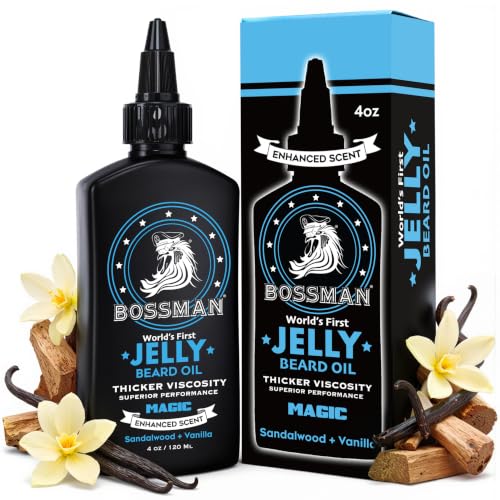
Bossman Jelly Beard Oil, Thicker Formula, Magic Scent (4 oz)
Gel-Texture Beard Oil
Best for: Men with long, thick or coarse beards who find regular oils too thin to control
- Texture
- Thicker jelly formula
- Scent
- Magic (others available)
- Size
- 4 oz
- Made in
- Texas (per listing)
Bossman's Jelly Beard Oil takes a different approach: a thicker, gel-like texture that sits between a traditional oil and a balm. That makes it easier to spread evenly through a long or dense beard without drips, and it gives a little more hold and control than a thin oil. Buyer feedback is especially positive among men with longer, coarser beards who found regular oils disappeared too quickly.
The four-ounce jar is generous, so the cost per ounce is competitive despite the higher upfront price. The texture is the main reason to buy it: it coats the hair well, helps tame flyaways, and keeps a big beard looking neater through the day. As with every product here, that is grooming, not growth.
Skip it if your beard is short or stubble-length, where a thin oil absorbs more easily and the jelly texture can feel heavy. Men with oily or acne-prone skin should also be cautious with richer formulas, and anyone with sensitive skin may want the brand's unscented version rather than a scented one.
What We Liked
- Thicker texture spreads well through long beards
- Adds a little control and tames flyaways
- Large 4 oz jar with competitive cost per ounce
What We Didn't
- Too heavy for short beards and stubble
- Richer texture may not suit acne-prone skin
- Scented versions may irritate sensitive skin
The Bottom Line
The best option for big, coarse beards that need more than a thin oil.
How to Choose a Beard Oil: Carrier Oils, Scent and Skin Type
Most beard oils are blends of carrier oils, such as jojoba, argan, sweet almond, grapeseed and sunflower, with or without added fragrance or essential oils. Jojoba is technically a liquid wax that closely resembles the skin's natural oils, which is why it is popular as a base. Argan and almond are richer and add softness. In practice, differences between well-made blends are modest, and how an oil feels to you matters more than the exact list.
Skin type is the most important filter. Men with oily or acne-prone skin should favor lighter oils and use less of them; heavier oils such as coconut can clog pores in some people. Men with dry or flaky skin under the beard may prefer a richer oil or a balm. If you have a nut allergy, check labels carefully, since almond and other nut-derived oils are common in beard products.
How an oil feels to you matters more than the exact list.
Fragrance is the other big decision. Scented oils smell good, but fragrance and essential oils are a common cause of contact dermatitis, and a beard oil stays on your face all day. If you have sensitive skin, eczema or a history of reactions to scented products, choose an unscented oil and patch-test any new product on a small area of skin for a couple of days before using it all over.
Finally, consider beard length. Short beards and stubble need only a few drops of a light oil that absorbs quickly. Medium beards suit most standard oils. Long or coarse beards often benefit from a thicker oil, a jelly texture like Bossman's, or a balm that adds hold. Price per ounce matters too, since a good oil is something you will use daily for as long as you have a beard.
| Short Beard or Stubble | Medium Beard | Long or Coarse Beard | |
|---|---|---|---|
| Texture | Light oil | Standard oil | Thicker oil, jelly or balm |
| Drops per use | 2 to 3 | 3 to 5 | 5 or more |
| Main benefit | Less itch, skin comfort | Softness, shine control | Control, tame flyaways |
How to Apply Beard Oil Properly
The best time to apply beard oil is after a shower, when the hair is clean and the pores are open, and the beard is towel-dried but still very slightly damp. Damp hair spreads oil more evenly. If you wash your beard with a beard wash or a gentle shampoo, use it two or three times a week rather than daily, since frequent washing strips natural oils and leaves the skin dry.
Put a few drops in your palm, rub your hands together, and work the oil into the beard from the neck upward, then down in the direction of growth. Make sure you reach the skin underneath, not just the outer hairs, because the skin is where itch and flaking start. Use your fingertips to massage it in, especially around the jawline and chin where beards are often densest.
Make sure you reach the skin underneath, not just the outer hairs
Finish with a comb or a beard brush to distribute the oil evenly and train the hair to lie in the direction you want. A boar bristle brush works well for shorter beards, and a wide-tooth comb suits longer ones. If your beard looks greasy afterward, you used too much; start with fewer drops next time and add more only if needed.
Once a day is enough for most men, and some men with oily skin prefer every other day. If you also use minoxidil on your beard, apply minoxidil first to dry skin, let it dry fully, and then use beard oil later in the day or before bed, so the oil does not dilute or spread the minoxidil before it absorbs.
Why Your Beard Is Patchy, and When to See a Doctor
The most common reason for a patchy beard is simply time. Facial hair often continues to thicken and fill in through the late teens and twenties, and for some men into their thirties. Many men who give up on a beard at 22 find it fills in noticeably a few years later. Growing it out for at least six to eight weeks before judging also helps, because longer hairs cover gaps that stubble cannot.
Genetics is the next factor. Beard density and pattern vary widely between individuals and between families and ethnic backgrounds, and that is entirely normal. Some men will never grow a full beard on the cheeks, and no product changes that. In those cases, styling the beard to suit the growth you have, such as a shorter, well-defined beard, often looks better than chasing full coverage.
The most common reason for a patchy beard is simply time.
Some causes need a doctor. Round, smooth bald patches that appear suddenly in a beard can be alopecia barbae, a form of alopecia areata, an autoimmune condition that a dermatologist can assess and treat. Red, itchy, pus-filled bumps may be folliculitis or a fungal infection. Very low testosterone can affect facial hair, but it usually comes with other symptoms, and testosterone supplements sold online are not a beard treatment.
Lifestyle still matters for overall health, even if it is not a beard growth hack. Getting enough sleep, eating a balanced diet, and avoiding smoking support healthy skin and hair. Biotin and other hair supplements have not been shown to grow beards in people who are not deficient. If you suspect a deficiency, get bloodwork rather than guessing.
Beard Oil vs. Balm, Butter and Other Beard Products
Beard oil is the lightest and most versatile beard product. It absorbs quickly, conditions the hair and skin, and suits beards of every length. For most men, an oil is the one product worth owning, and everything else is optional depending on how long and unruly your beard is.
Beard balm combines oils with butters such as shea and waxes such as beeswax. It conditions like an oil but adds light hold, which helps shape a medium or long beard and tame flyaways. Balms can feel heavier and are more likely to leave residue, so men with short beards or oily skin may find them too much. Some men use oil daily and balm only when they want more control.
For most men, an oil is the one product worth owning
Beard wash and conditioner are worth considering if you have a longer beard. Regular shampoo can be harsh on facial skin, and a gentler beard wash two or three times a week helps keep the beard clean without stripping it. A leave-in conditioner can help very coarse beards, but most men get the same benefit from a good oil.
Beard growth kits often bundle an oil, a balm, a comb and sometimes a derma roller, and some are sold with bold claims. Microneedling has some evidence for scalp hair when combined with minoxidil, but evidence for beards is limited, and rolling the face carries infection and irritation risks if done badly. Treat any kit as a grooming set, and judge each item on its own merits.
Compared Side by Side
| Product | Texture | Scent | Size | Best For |
|---|---|---|---|---|
| Honest Amish Beard Oil | Standard oil | Light natural | 2 oz | Best overall |
| Viking Revolution Unscented | Standard oil | None | 1 fl oz | Sensitive skin |
| Jack Black Beard Oil | Lightweight | Subtle | 1 fl oz | Non-greasy feel |
| Beardbrand Lumber Yard | Standard oil | Premium fragrance | 2 fl oz | Scent lovers |
| Cremo Cedar Forest | Lightweight | Woody | 1 fl oz | Drugstore convenience |
| Bossman Jelly Beard Oil | Thick jelly | Scented | 4 oz | Long or coarse beards |
Ready to Buy? Our Picks Again
- 1Check Price →
- 2Check Price →
Best Unscented
Viking Revolution Beard Oil, Unscented (1 fl oz) - 3Check Price →
Best Lightweight Feel
Jack Black Beard Oil for Men, Leave-In Beard Conditioner (1 fl oz) - 4Check Price →
Best Premium Scents
Beardbrand Beard Oil & Face Moisturizer, Lumber Yard Scent (2 fl oz) - 5Check Price →
Best Drugstore Pick
Cremo Beard Oil for Men, Cedar Forest (1 fl oz) - 6Check Price →
Best for Long or Coarse Beards
Bossman Jelly Beard Oil, Thicker Formula, Magic Scent (4 oz)
Common Mistakes to Avoid
Expecting Oil to Grow a Beard
No beard oil has been shown to increase the number of hairs on your face. Oils condition, soften and moisturize, which can make a beard look fuller, but they do not change genetics or hormones. If real growth is the goal, read up on off-label minoxidil and speak to a doctor rather than buying ever more expensive oils.
Applying Oil Only to the Hair
The skin under the beard is where itching, flaking and irritation start, and it is often the part men miss. Work the oil through the beard down to the skin with your fingertips, then brush or comb it through. A beard that looks shiny on top but itches underneath is getting the oil in the wrong place.
Using Too Much
A greasy, shiny beard that leaves marks on your collar is a sign you used too much oil. Start with two or three drops for a short beard and add more only if needed. Excess oil can also clog pores and contribute to breakouts in men with oily or acne-prone skin.
Ignoring Fragrance Reactions
Redness, itching or a rash under the beard after starting a new oil is often a reaction to fragrance or essential oils, not dry skin. Stop the product, let your skin settle, and switch to an unscented oil. Patch-test new products on a small area for a couple of days before using them all over.
Giving Up on the Beard Too Soon
Many men shave off a beard during the itchy, patchy first month, just before it starts to look better. Give it at least six to eight weeks, use a good oil to manage the itch, and remember that beards often fill in with age. Judge your beard's potential on length and time, not week two.
Frequently Asked Questions
What is the best beard growth oil?
For most men, Honest Amish Beard Oil is the best choice: a well-reviewed blend of plant oils in a large bottle at a low cost per ounce. If you have sensitive skin, Viking Revolution Unscented is the best fragrance-free pick. Remember that no beard oil grows new hair; oils condition the beard and skin so it looks and feels better.
Does beard oil actually make your beard grow?
No. There is no good clinical evidence that beard oil increases the number of hairs in a beard. Oil softens and conditions the hair, moisturizes the skin, and reduces itch and flaking. A conditioned beard often looks darker and fuller, which is why before-and-after photos can be convincing, but the change is cosmetic.
Does minoxidil work for beard growth?
There is limited evidence that it can help. A small placebo-controlled trial found a modest increase in beard hair count with 3% minoxidil over 16 weeks. Minoxidil is not FDA-approved for beards, it can irritate facial skin, and it is toxic to cats. Talk to a doctor before trying it, especially if you have heart conditions.
Does rosemary oil help beard growth?
There is no good evidence that rosemary oil grows facial hair. The study often cited compared rosemary oil with minoxidil on the scalp, not the beard, and it was small. Rosemary can be part of a pleasant-smelling beard oil, but essential oils can irritate skin, so dilute them properly and patch-test before using them regularly.
How often should I use beard oil?
Once a day is enough for most men, ideally after a shower when the beard is clean and slightly damp. Men with oily or acne-prone skin may prefer every other day. Use a few drops, work them down to the skin, and brush or comb through. If your beard looks greasy, use less.
Is beard oil or beard balm better?
Beard oil is better for conditioning and suits beards of any length, especially short ones. Beard balm adds light hold from butters and waxes, which helps shape medium and long beards. Many men use oil daily and balm when they need extra control. If you buy only one product, choose an oil.
Can beard oil cause acne?
It can in some people, particularly with heavy oils such as coconut, with too much product, or with fragrances that irritate the skin. If you are acne-prone, choose a light oil, use only a few drops, keep your beard and skin clean, and stop any product that triggers breakouts or redness.
The Bottom Line
Beard oil is one of the best things you can do for a beard, but it is a conditioner, not a growth treatment. Honest Amish Beard Oil is the best overall buy for most men, and Viking Revolution Unscented is the pick for sensitive skin. If you want more hair rather than better-looking hair, the only option with trial evidence is off-label minoxidil, so talk to a doctor first.
More Buyer's Guides
Hair Growth & Hair Loss
Best Minoxidil for Men
Every product here contains 5% minoxidil, the only topical hair regrowth drug the FDA has approved for men. What separates them is the vehicle, the irritation risk, and what you pay per month for the next decade.
Men's Grooming
Best Hair Products for Men
Most men's hair care comes down to two products: a styler that suits your hair and haircut, and a wash routine that keeps it from looking greasy or flat. These are the picks that do each job best.
Hair Growth & Hair Loss
Best Hair Growth Products for Men
Male pattern hair loss has two treatments with strong evidence and a long tail of add-ons with weaker support. We picked the best product in each category and ranked them in the order you should actually spend your money.
Men's Grooming
Best Shampoo for Men
Men's shampoos are mostly marketed on fragrance and packaging, but what actually matters is whether a formula suits an oily, dry or flaky scalp and how often you wash. These are the everyday shampoos that get it right.
Brows, Lashes & Beard
Best Eyebrow Growth Serum
The brow serums with the most visible results usually rely on prostaglandin analogs, the same drug family as prescription lash treatments. That brings real side effects. Here is how to choose with your eyes open.
Hair Growth & Hair Loss
Best Hair Growth Oil
Oils are excellent at protecting hair from breakage and pleasant for scalp massage, but the evidence that any oil regrows hair is thin. Here is how to pick one that suits your hair, and what to expect from it.