Our Picks at a Glance
- 1
 Check Price →
 - 2
 Check Price →
 - 3
 Check Price →
Best Moisture Butter
Camille Rose Curlaide Moisture Butter Curl Cream (8 fl oz) - 4
 Check Price →
Best Styling Foam
The Doux MOUSSE DEF Texture Foam (7 oz) - 5
 Check Price →
Best Protein Treatment for Breakage
Aphogee Two-Step Protein Treatment for Damaged Hair (4 fl oz) - 6
 Check Price →
Best Daily Moisturizer for Relaxed Hair
ORS Olive Oil Incredibly Rich Moisturizing Hair Lotion (23 oz) - 7
 Check Price →
The Short Version
- What limits length for most type 4 and relaxed hair is dryness and breakage, not growth, so moisture and gentle handling matter more than any growth product.
- SheaMoisture Jamaican Black Castor Oil Leave-In is our best overall pick: a rich, detangling leave-in that suits most type 4 and relaxed hair.
- Aunt Jackie's Quench is the best value leave-in for daily moisture, and Aphogee Two-Step is the go-to protein treatment for breakage.
- Rosemary oil has one small promising trial behind it; castor oil and biotin have no good evidence for growth in people who are not deficient.
- Thinning at the crown or edges can be traction alopecia or CCCA. See a dermatologist early, because scarring hair loss cannot be reversed.
On This Page · 12 sections
The best Black hair care products are the ones that solve the two problems textured hair faces most: dryness and breakage. Tightly coiled type 4 hair and relaxed hair grow steadily from the scalp like any other hair, but they are more fragile along their length than straight hair, and that fragility is why so many people feel their hair is stuck at the same length for years. Good products cannot change how fast hair grows. They can change how much of it you keep, and that is where the visible difference comes from.
That is the lens we used for this guide. Every pick is chosen for what it does for moisture, strength or gentle styling, the three things that drive length retention. We include a scalp oil because rosemary oils are hugely popular with natural-hair buyers, but we are honest about what the evidence does and does not show. And we cover relaxed hair as well as natural hair, because their needs overlap but are not identical.
We ranked the products below on how well each suits type 4 natural hair, relaxed hair or both, the consistency of buyer feedback, ease of use, and value. This is a research-based ranking; we did not test products hands-on. If your hair is looser, in the type 2 or type 3 range, our guide to the best hair products for curly hair focuses on definition and frizz for those textures. If your hair is badly damaged from heat or color, our damaged-hair treatment guide goes deeper on repair.
Understanding Type 4 and Textured Hair
Type 4 hair has the tightest curl pattern, from springy 4a coils to densely packed 4b and 4c zigzags. It often has a lot of strands, which makes it look thick, but individual strands can be fine. Every bend and twist in a coil is a point where the strand is slightly weaker and where the cuticle lifts, which is why type 4 hair is more fragile and loses moisture faster than straight hair.
Natural scalp oil also struggles to travel along tightly coiled strands, so the lengths and ends of type 4 hair tend to be dry even when the scalp is not. Dryness makes hair less elastic, and less elastic hair breaks more easily during combing, styling and even sleep. That cycle of dryness and breakage is the main reason textured hair can seem not to grow.
That cycle of dryness and breakage is the main reason textured hair can seem not to grow.
Shrinkage is another feature of type 4 hair. Coils can shrink to a fraction of their stretched length as they dry, so hair that is several inches long can look much shorter. Shrinkage is a sign of healthy elasticity, not a problem, but it explains why stretched styles such as twist-outs and braid-outs are popular for showing length.
Relaxed hair starts with the same texture but has been chemically straightened. The relaxer permanently breaks bonds in the hair to straighten it, which leaves the strand more porous and fragile. New growth comes in with the natural texture, and the point where the two meet is especially prone to breakage.
Length Retention: Growth Is Normal, Breakage Is the Problem
Hair grows from the follicle at a rate set mostly by genetics. Some studies suggest tightly coiled hair grows slightly slower on average, but the difference is modest and not something any product can change. What differs far more is how much of that growth survives. If the ends break off as fast as the roots grow, hair stays the same length no matter how healthy the scalp is.
Length retention comes down to keeping the ends intact. That means consistent moisture so hair stays elastic, gentle detangling, protection of the oldest and most fragile hair at the ends, and avoiding repeated heat and tight styles. Products help mainly by making those habits easier: a leave-in with good slip makes detangling gentler, and a butter or oil slows moisture loss.
Length retention comes down to keeping the ends intact.
The LOC and LCO methods are popular ways to layer moisture. LOC stands for liquid or leave-in, then oil, then cream. LCO swaps the order of the last two. The idea is to hydrate with water or a water-based leave-in, then seal with an oil and a cream or butter. Which order works better depends on your hair, so try both.
Trims are part of retention, not the enemy of it. Split and damaged ends travel up the strand and cause more breakage if they are left. Removing a small amount of damaged hair every few months, or as needed, usually means more length over time.
| What It Does | Example Product Type | |
|---|---|---|
| L: Liquid or leave-in | Hydrates the hair | Water, leave-in conditioner |
| O: Oil | Slows moisture loss | Light plant oil |
| C: Cream | Seals and softens | Butter or curl cream |
The 7 Best Black Hair Care Products
Ranked on how well each product supports moisture, strength and gentle styling for type 4 natural and relaxed hair, plus buyer feedback and value. Most routines need a leave-in, a sealing product and a styler; protein and scalp oils are situational.
SheaMoisture Jamaican Black Castor Oil Strengthen & Grow Leave-In Conditioner (11 oz)
Leave-In Conditioner
Best for: Type 4 natural hair and relaxed hair that needs a rich, detangling leave-in every wash day
- Type
- Cream leave-in conditioner
- Size
- 11 oz
- Hair type
- 4a to 4c, relaxed, transitioning
- Key ingredients
- Jamaican black castor oil, shea butter
SheaMoisture's Jamaican Black Castor Oil Leave-In Conditioner is one of the most widely used leave-ins for textured hair, and it earns the top spot by doing the most important job well. It is a thick, creamy leave-in with shea butter and Jamaican black castor oil that softens dry coils, gives strong slip for detangling, and leaves a moisturized base for twists, braids or a wash-and-go.
Leave-in conditioner is the single most useful product in a type 4 routine, because it is the step that keeps hair soft and manageable between washes. This one suits a wide range of textures, from 4a to 4c and relaxed hair, and it is easy to find and reasonably priced. Many buyers use it as the L in the LOC method, followed by an oil and a cream.
Be clear about the label: the product name references growth, but there is no good evidence that castor oil makes hair grow. What a good leave-in does is reduce breakage, which helps you keep length. Skip it if your hair is fine or low-porosity and tends to feel coated; it can be heavy. The scent is also strong.
What We Liked
- Rich moisture and excellent slip for detangling
- Suits natural, relaxed and transitioning hair
- Works as the base layer for almost any style
- Widely available at a fair price
What We Didn't
- Growth claims on the label are not supported by evidence
- Heavy for fine or low-porosity hair
- Strong scent
The Bottom Line
The best everyday leave-in for most type 4 and relaxed hair. Buy it for moisture and detangling, not for growth.
Aunt Jackie's Curls and Coils Quench Moisture Intensive Leave-In Conditioner (12 oz)
Leave-In Conditioner
Best for: Natural hair on a budget, and anyone who uses a lot of leave-in on wash day
- Type
- Leave-in conditioner
- Size
- 12 oz
- Hair type
- 3c to 4c natural hair
- Key ingredient
- Shea butter
Aunt Jackie's Quench is one of the best-value leave-ins for natural hair, and it is a long-time favorite in the natural-hair community. It is a creamy, shea butter enriched leave-in that adds moisture and makes coils easier to detangle and style, at a price that lets you use as much as thick type 4 hair needs.
Thick, dense coils can go through a bottle of leave-in quickly, which makes price per ounce a real consideration. Quench gives most of the softness and slip of pricier leave-ins for much less, and it is also sold in larger family-size bottles. Buyers commonly use it for twist-outs, braid-outs, wash-and-gos and daily refreshing with a little water.
Skip it if your hair is low-porosity or fine and you find creamy leave-ins sit on top of the hair. Some buyers also find it lighter than SheaMoisture's leave-in and need to seal with an oil or butter on very dry hair. It is designed for natural hair, so relaxed hair may prefer a lighter lotion.
What We Liked
- Excellent price per ounce
- Good moisture and detangling slip
- Versatile for many natural styles
What We Didn't
- May need sealing with an oil or butter on very dry hair
- Can sit on low-porosity hair
- Designed mainly for natural rather than relaxed hair
The Bottom Line
The leave-in to buy if you want salon-level moisture at drugstore prices.
Camille Rose Curlaide Moisture Butter Curl Cream (8 fl oz)
Hair Butter and Curl Cream
Best for: Very dry type 4 hair that needs a rich butter to seal moisture and hold twist-outs and braid-outs
- Type
- Moisture butter
- Size
- 8 fl oz
- Hair type
- 4a to 4c, dry hair
- Role
- Seal and style after leave-in
Camille Rose is a Black-founded natural hair brand with a loyal following, and its Curlaide Moisture Butter is one of its signature products. It is a rich, whipped butter cream designed to soften very dry coils, seal in the moisture from your leave-in, and give stretched styles like twist-outs and braid-outs a soft, defined finish.
In a LOC or LCO routine, a butter like this is the final sealing step that slows moisture loss between wash days. That matters most for 4b and 4c hair, which tends to dry out fastest. Buyers often describe their hair as softer for days after using it, and it pairs well with either leave-in above.
Skip it if your hair is fine or low-porosity and you find butters heavy or greasy. It costs more than drugstore butters and the jar is smaller, so thick, long hair may go through it quickly. If you mainly want hold for wash-and-gos, a gel or foam will serve you better.
What We Liked
- Rich sealing butter for very dry coils
- Great for twist-outs and braid-outs
- Softness that lasts between wash days
- From a Black-founded natural-hair brand
What We Didn't
- Heavy for fine or low-porosity hair
- Pricier per ounce than drugstore butters
- Not a strong-hold styler
The Bottom Line
The best butter for sealing moisture into dry coils and setting soft twist-outs.
The Doux MOUSSE DEF Texture Foam (7 oz)
Styling Mousse
Best for: Short natural cuts, wash-and-gos, twist-outs and roller sets that need light, non-crunchy hold
- Type
- Multi-use styling mousse
- Size
- 7 oz
- Hair type
- Natural, relaxed, short cuts
- Hold
- Light to medium
The Doux is a textured-hair styling brand, and MOUSSE DEF Texture Foam is its best-known product. It is a versatile styling foam that sets twist-outs and roller sets, defines short natural cuts and teeny afros, and smooths relaxed styles, with hold that stays soft rather than crunchy.
Foam is underrated for textured hair. It is lighter than gels and butters, so it defines without weighing hair down or leaving flakes, and it dries quickly. Buyers frequently say it gives their twist-outs better definition and longer life than creams alone. It works on both natural and relaxed hair, which is unusual.
Skip it if your hair is very dry and you are looking for moisture; mousse is a styler, not a moisturizer, and it needs a leave-in underneath. Some mousses contain drying alcohols, so if your hair feels dry after styling, make sure you are sealing moisture in first.
What We Liked
- Light, soft hold that does not flake
- Works on natural and relaxed hair
- Excellent for short cuts and twist-outs
What We Didn't
- Not a moisturizer; needs a leave-in underneath
- Hold may be too light for long wash-and-gos in humidity
The Bottom Line
The most versatile styler on this list, especially for short natural hair and twist-outs.
Aphogee Two-Step Protein Treatment for Damaged Hair (4 fl oz)
Intensive Protein Treatment
Best for: Relaxed, colored or heat-damaged hair that is breaking, especially around chemical services
- Type
- Hardening protein treatment
- Size
- 4 fl oz
- Hair type
- Relaxed, colored, damaged
- Frequency
- Occasional, per label
Aphogee Two-Step Protein Treatment has been a staple for relaxed and chemically treated hair for decades. It is an intensive protein treatment that hardens on the hair as it dries, temporarily reinforcing weak, overprocessed strands, and is followed by a moisturizer to restore softness. Stylists commonly use it around relaxer touch-ups and color services, and many people use it at home when breakage gets out of hand.
Breakage often signals a protein and moisture imbalance. Hair that snaps easily, feels mushy when wet, or stretches without bouncing back may need protein. For that hair, Aphogee is one of the most effective at-home options. It is not glamorous to use: the hair dries hard before you rinse, and you must follow with a moisturizing conditioner.
Use it sparingly and follow the label. Too much protein makes hair stiff and brittle, which causes breakage of its own. Skip it if your hair is healthy, or if it feels dry and straw-like rather than weak; that usually needs moisture, not protein.
What We Liked
- Strong, fast-acting protein treatment for weak hair
- Long track record with relaxed and colored hair
- Small bottle lasts because it is used infrequently
What We Didn't
- Overuse makes hair stiff and brittle
- Must be followed by a moisturizing conditioner
- Hardening process is time-consuming
The Bottom Line
The protein treatment to reach for when relaxed or damaged hair is snapping. Use it occasionally, not weekly.
ORS Olive Oil Incredibly Rich Moisturizing Hair Lotion (23 oz)
Moisturizing Hair Lotion
Best for: Relaxed and transitioning hair that needs a light daily moisturizer without the weight of a butter
- Type
- Daily moisturizing lotion
- Size
- 23 oz
- Hair type
- Relaxed, transitioning, natural
- Key ingredient
- Olive oil
ORS Olive Oil Moisturizing Hair Lotion is a classic daily moisturizer that has been in Black hair care routines for a long time. It is a creamy lotion that softens and adds shine to dry hair without the heaviness of a butter, which makes it particularly well suited to relaxed hair that can look weighed down or greasy under thick natural-hair products.
Relaxed hair is chemically straightened and more porous and fragile than untreated hair, so it needs regular moisture between washes but in lighter doses. A small amount of a lotion like this on the lengths and ends every day or two keeps hair softer and less prone to snapping. It is also popular with women transitioning from relaxed to natural hair, where the two textures meet and break easily.
Skip it if you have very dry 4c natural hair and want a single product to do everything; it is lighter than the leave-ins and butters above. Like many classic formulas, it contains mineral oil and other conventional ingredients, which some natural-hair buyers prefer to avoid.
What We Liked
- Light daily moisture that suits relaxed hair
- Large size at a low price
- Useful for transitioning hair
What We Didn't
- Too light for very dry natural coils on its own
- Conventional formula some buyers avoid
The Bottom Line
A reliable, inexpensive daily moisturizer, best for relaxed and transitioning hair.
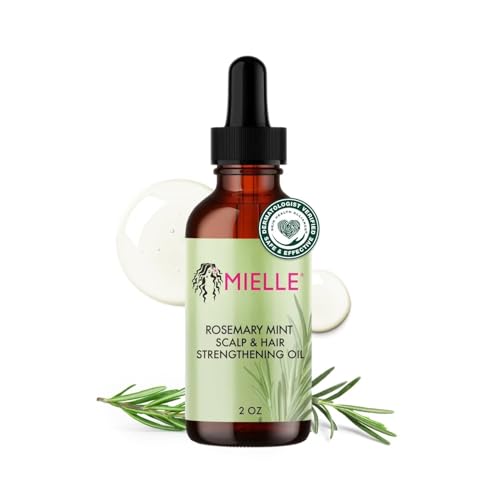
Mielle Organics Rosemary Mint Hair Oil with Biotin (2 oz)
Scalp and Hair Oil
Best for: People who want a pleasant, inexpensive scalp oil and understand that the growth evidence is limited
- Type
- Scalp and hair oil
- Size
- 2 oz
- Key ingredients
- Rosemary and mint oils, biotin
- Evidence
- Limited
Mielle's Rosemary Mint Hair Oil became one of the most talked-about hair products online, driven by the rosemary oil trend. It is a lightweight blend of plant oils with rosemary and mint essential oils and biotin, applied to the scalp and ends. Buyers like its tingling feel, its scent, and that it is affordable.
Here is the honest evidence. Rosemary oil's reputation rests largely on one small trial that found it performed similarly to 2% minoxidil for male pattern hair loss over six months. It was small, had no placebo group, and has not been well replicated. Biotin applied to the scalp has no good evidence, and oral biotin only helps people who are deficient. So treat this as a pleasant scalp oil, not a growth treatment.
Skip it or patch test first if you have a sensitive scalp; essential oils can irritate. If you have seborrheic dermatitis or dandruff, scalp oils can make flaking worse for some people. If you have real thinning, minoxidil is the FDA-approved option.
What We Liked
- Affordable and pleasant to use
- Light enough for scalp application
- Can double as an oil for the ends
What We Didn't
- Growth evidence for rosemary is limited to small studies
- Essential oils can irritate sensitive scalps
- May worsen flaking in some people with seborrheic dermatitis
The Bottom Line
A nice scalp oil with honest limits. Do not rely on it to treat thinning.
A Practical Wash Day Routine for Natural Hair
Most people with type 4 hair wash once a week or every other week. That is often enough to keep the scalp clean without stripping the lengths. If you have an oily scalp, dandruff or an active lifestyle, you may need to wash more often, and that is fine. The scalp's needs should set the schedule.
Start with a sulfate-free shampoo focused on the scalp, or a co-wash for the lengths if your hair is very dry. Some people pre-poo, applying oil or conditioner before shampooing to protect the lengths. Follow with a moisturizing conditioner or deep conditioner, and detangle while it is in, working in sections from the ends up with fingers or a wide-tooth comb.
Working in sections makes every step gentler and more thorough.
After rinsing, apply your leave-in to soaking-wet hair, section by section, then seal with an oil, cream or butter. Style while the hair is still damp: twists, braids, a wash-and-go with a gel or foam, or a protective style. Working in sections makes every step gentler and more thorough.
Between washes, refresh dry hair with water or a light leave-in and reseal the ends. Protect hair at night with a satin bonnet, scarf or pillowcase, which reduces friction and moisture loss. These small habits do as much for length retention as any product.
Caring for Relaxed and Transitioning Hair
Relaxed hair needs a careful balance of protein and moisture. Relaxers weaken the hair's structure, so occasional protein treatments help reinforce it, while daily moisture keeps it soft and flexible. Too much protein makes relaxed hair stiff and brittle; too little leaves it limp and stretchy. Learning how your hair feels when it needs one or the other is the core skill of relaxed hair care.
Relaxer touch-ups are where most damage happens. Overlapping relaxer onto previously relaxed hair overprocesses it and causes breakage. Stylists usually apply relaxer only to new growth and protect previously relaxed hair. Spacing touch-ups out, keeping the scalp unscratched beforehand, and having them done by an experienced stylist all reduce damage and the risk of chemical burns.
Relaxed hair needs a careful balance of protein and moisture.
Transitioning from relaxed to natural hair means managing two textures at once. The line where natural new growth meets relaxed hair is fragile and breaks easily. Gentle detangling, plenty of moisture, low-manipulation styles and gradual trims of the relaxed ends help most people get through the transition without losing much length.
It is worth knowing about health research too. A large US observational study published in 2022 linked frequent use of chemical hair straighteners to a higher risk of uterine cancer. It shows an association rather than proof that straighteners cause cancer, but it is reasonable to factor into how often you relax and to discuss with your doctor if you have concerns.
Protective Styles, Edges and Traction Alopecia
Protective styles such as braids, twists, wigs and buns tuck the ends away, reduce daily handling and can help retain length. They protect hair only when they are not too tight. Braids and extensions that pull on the hairline, especially when heavy or installed tightly, are a leading cause of traction alopecia, hair loss from repeated tension on the follicles.
Warning signs include tenderness, bumps around the hairline, headaches after installation, and thinning edges. Early traction alopecia is often reversible if the tension stops. Long-term traction can scar the follicles and make the loss permanent, so loosen styles at the first sign of pain and give your hairline breaks between installs.
Because scarring is permanent, early diagnosis by a dermatologist matters a great deal.
Central centrifugal cicatricial alopecia, often shortened to CCCA, is a scarring form of hair loss that most commonly affects Black women. It usually starts at the crown and spreads outward, sometimes with itching or tenderness, sometimes with no symptoms at all. Because scarring is permanent, early diagnosis by a dermatologist matters a great deal.
If you notice thinning at your crown, a widening part, or receding edges, see a dermatologist, ideally one experienced with textured hair. Edge gels, oils and growth serums will not treat traction alopecia or CCCA, and delaying a diagnosis can cost you hair you could have kept.
Growth Oils, Rosemary and Castor Oil: What the Evidence Says
Growth oils are one of the biggest categories in Black hair care, and the evidence behind them is thin. Rosemary oil has the most support, largely from one small trial that compared it with 2% minoxidil in men with pattern hair loss and found similar results after six months. That is interesting but far from conclusive: the study was small and lacked a placebo group.
Castor oil, including Jamaican black castor oil, is extremely popular for edges and growth, but there are no good clinical studies showing it grows hair. It is a heavy oil that can help seal moisture into the lengths, which may reduce breakage. That is a real benefit, just not the one on the label.
Growth oils are one of the biggest categories in Black hair care, and the evidence behind them is thin.
Biotin appears in many growth products. Oral biotin only helps hair if you are genuinely deficient, which is uncommon, and there is no good evidence that biotin applied to the scalp does anything. High-dose biotin supplements can also interfere with some lab tests, including thyroid and heart tests, so tell your doctor if you take them.
If you want a treatment with real evidence for pattern thinning, topical minoxidil is FDA-approved for both men and women. Oils can still be part of a routine for scalp comfort and sealing moisture. Patch test essential oil blends, and if you have dandruff or seborrheic dermatitis, be aware that some oils can make flaking worse.
Compared Side by Side
| Product | Type | Hair Type | Main Job | Best For |
|---|---|---|---|---|
| SheaMoisture JBCO Leave-In | Leave-in | 4a to 4c, relaxed | Moisture, detangling | Best overall |
| Aunt Jackie's Quench | Leave-in | 3c to 4c | Moisture | Best value |
| Camille Rose Curlaide | Butter | 4a to 4c | Sealing | Twist-outs |
| The Doux Mousse Def | Foam | Natural, relaxed | Hold | Short cuts, sets |
| Aphogee Two-Step | Protein | Relaxed, damaged | Strength | Breakage |
| ORS Olive Oil Lotion | Lotion | Relaxed, transitioning | Daily moisture | Relaxed hair |
| Mielle Rosemary Mint Oil | Scalp oil | All | Scalp care | Scalp comfort |
Ready to Buy? Our Picks Again
- 1Check Price →
- 2Check Price →
- 3Check Price →
Best Moisture Butter
Camille Rose Curlaide Moisture Butter Curl Cream (8 fl oz) - 4Check Price →
Best Styling Foam
The Doux MOUSSE DEF Texture Foam (7 oz) - 5Check Price →
Best Protein Treatment for Breakage
Aphogee Two-Step Protein Treatment for Damaged Hair (4 fl oz) - 6Check Price →
Best Daily Moisturizer for Relaxed Hair
ORS Olive Oil Incredibly Rich Moisturizing Hair Lotion (23 oz) - 7Check Price →
Common Mistakes to Avoid
Chasing Growth Instead of Retention
Most people with type 4 or relaxed hair are not dealing with slow growth; they are losing length to breakage at the ends. Spending on growth oils while ignoring moisture, detangling and protecting the ends rarely changes anything. Focus on keeping what grows, and length usually follows.
Installing Styles Too Tight
Braids, cornrows, extensions and slicked-back ponytails that pull on the hairline are a leading cause of traction alopecia. Pain, bumps or headaches after installation mean the style is too tight. Ask for looser installs, avoid heavy extensions, and give your edges breaks between protective styles.
Overusing Protein
Protein treatments help weak, overprocessed hair, but too much protein makes hair stiff and brittle, which causes its own breakage. If your hair feels dry and straw-like rather than mushy and stretchy, it probably needs moisture, not protein. Follow the label and use intensive protein treatments only occasionally.
Detangling Dry Hair
Combing type 4 hair while it is dry and unlubricated is one of the fastest ways to lose length. Detangle only when hair is wet and coated with conditioner or leave-in, work in sections, start at the ends, and use fingers or a wide-tooth comb. Patience here pays off more than any product.
Ignoring Thinning at the Crown or Edges
Thinning at the crown can be CCCA, a scarring hair loss that most often affects Black women, and receding edges can be traction alopecia. Both can become permanent if left untreated. Do not rely on edge oils or growth serums; see a dermatologist, ideally one experienced with textured hair, as early as possible.
Frequently Asked Questions
What are the best Black hair care products?
For most type 4 natural and relaxed hair, the most important product is a good leave-in, such as SheaMoisture Jamaican Black Castor Oil Leave-In or Aunt Jackie's Quench for value. Add a sealing butter like Camille Rose Curlaide, a styler such as The Doux Mousse Def, and Aphogee if breakage is a problem.
Does Black hair grow slower?
Some studies suggest tightly coiled hair grows slightly slower on average, but the bigger difference for type 4 hair is breakage. Tightly coiled hair is more fragile and dries out faster, so the ends can break off as quickly as the roots grow. Moisture, gentle detangling and protecting the ends help you retain more length.
Does Jamaican black castor oil grow hair?
There are no good clinical studies showing that castor oil, including Jamaican black castor oil, makes hair grow. It is a heavy oil that can help seal moisture into the hair, which may reduce breakage and help with length retention. Treat growth claims on castor oil products as marketing.
Does rosemary oil work for Black hair growth?
Rosemary oil has one small, promising trial in men with pattern hair loss, where it performed similarly to 2% minoxidil. The evidence is limited and has not been well replicated. It may be a pleasant scalp oil, but for real thinning, minoxidil is the FDA-approved option. Patch test first.
How often should I wash type 4 natural hair?
Most people with type 4 hair wash every one to two weeks, which keeps the scalp clean without over-drying the lengths. If you have an oily scalp, dandruff or work out often, washing more frequently is fine. Use a sulfate-free shampoo on the scalp and condition generously every time.
What is the LOC method?
LOC stands for liquid or leave-in, oil, then cream. You hydrate hair with water or a water-based leave-in, seal with a light oil, then finish with a cream or butter to lock in moisture. The LCO method swaps the last two steps. Which works better depends on your hair, so try both.
Are protective styles good for hair growth?
Protective styles do not make hair grow faster, but they can help retain length by reducing daily handling and protecting the ends. They only help if they are not too tight. Styles that pull on the hairline can cause traction alopecia, so loosen them at any sign of pain and take breaks.
The Bottom Line
The best Black hair care routine is built around moisture, gentle handling and protecting the ends, because breakage, not slow growth, is what holds length back. SheaMoisture's Jamaican Black Castor Oil Leave-In is the best all-round pick, Aunt Jackie's Quench is the best value, and Aphogee is the fix for breakage. Treat growth oils as optional extras, and see a dermatologist early for thinning at the crown or edges.
More Buyer's Guides
Hair Care
Best Hair Products for Curly Hair
Curly hair needs more moisture, gentler cleansing and a product that holds the curl pattern without turning it stiff. These are the curl creams, gels, leave-ins and co-washes worth buying, matched to the curls they suit.
Hair Growth & Hair Loss
Best Rosemary Oil for Hair Growth
Rosemary oil's reputation rests on one small trial against 2% minoxidil. It is a promising, low-cost experiment, not a proven treatment. Here is how to choose a pure oil or a ready-made blend, and how to use it safely.
Hair Care
Best Hair Treatment for Damaged Hair
Bleach, color and heat break hair from the inside; dryness and friction rough it up from the outside. The right treatment depends on which kind of damage you have. These are the bond builders and masks worth buying for each.
Hair Growth & Hair Loss
Best Hair Growth Oil
Oils are excellent at protecting hair from breakage and pleasant for scalp massage, but the evidence that any oil regrows hair is thin. Here is how to pick one that suits your hair, and what to expect from it.
Hair Care
Best Hair Care Products for Women
Most women do not need a twelve-step routine. They need a gentle shampoo, a conditioner that suits their hair, one repair step, and protection from heat. These are the products we would build that routine around.
Hair Growth & Hair Loss
Best Hair Growth Products for Women
Female hair thinning has more possible causes than male pattern loss, and only one over-the-counter drug approved to treat it. We picked the best product in each category and ranked them by what the evidence says they can do.