The Short Answer
Sleeping with wet hair now and then is not dangerous, and it will not give you a cold. But wet hair is weaker and more elastic, so tossing on a pillow can cause tangles, frizz and breakage, and a damp scalp and pillow may encourage dandruff or skin irritation in some people. Let hair dry at least partly first when you can.
Top Picks: Best Hair Bonnet for Sleeping
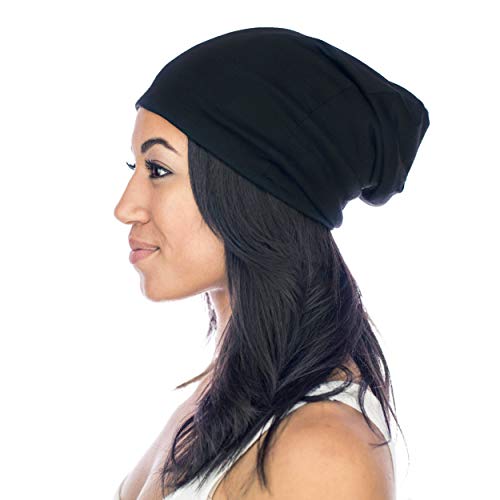 Check Price
Best Overall
GE Satin Bonnet for Sleeping, Women's Satin Lined Beanie Slap Cap (Black)
 Check Price
Best Value
BONNET QUEEN Very Soft Satin Lined Double Layer Bonnet with Tie Band (Black)
 Check Price
Best Silk Bonnet
ZIMASILK 22 Momme 100% Mulberry Silk Bonnet for Sleeping, Double Layer (Pink)
Written by HairGrowthReviews Editorial Team
Reviewed by Ernesta Malinauskytė, PhD, Director of Hair Research, TRI Princeton
Updated 2026-11-24 · Independently researched · How we review
We may earn a commission when you buy through our links, at no cost to you. As an Amazon Associate we earn from qualifying purchases. How we research
The Short Version
- Wet hair will not make you sick: colds and flu are caused by viruses, not by a damp head.
- Hair is at its weakest when wet, so friction against a pillow overnight can cause tangles, frizz and breakage.
- A warm, damp scalp and pillowcase may encourage yeast overgrowth and dandruff in people who are prone to it, although direct evidence is limited.
- If you must sleep with wet hair, blot it well, add a leave-in, put it in a loose braid or bun, and use a silk or satin pillowcase.
- Letting your hair air dry for even 30 to 60 minutes before bed, or using a dryer on a cool setting, reduces most of the risk.
On This Page · 10 sections
Is it bad to sleep with wet hair? It is one of those questions where everyone has heard a warning, usually from a parent, and most people do it anyway. Evening showers are convenient, blow drying takes time, and a hot dryer at bedtime is not appealing. So what actually happens if you go to bed with wet hair, and is any of the old advice true?
The short version is that the scary claims are mostly myths, but there are real, if modest, downsides. Sleeping with wet hair will not give you a cold or pneumonia. It can, however, damage fragile hair, leave you with a tangled, frizzy mess in the morning, and may contribute to scalp problems if you do it every night and are prone to dandruff.
Below we look at what the evidence says about sleeping with wet hair, who is most affected, whether you can put wet hair in a bonnet, and a practical step-by-step method for how to sleep with wet hair with minimal damage. If you want overnight protection for your hair generally, our guide to the best hair bonnet for sleeping compares the options we recommend.
Can Sleeping With Wet Hair Make You Sick?
Does sleeping with wet hair make you sick? No. Colds, flu and other respiratory infections are caused by viruses, which you catch from other people, usually through droplets in the air or from touching contaminated surfaces and then your face. Having a cold or wet head does not create those viruses, and going to bed or outside with wet hair cannot give you an infection you have not been exposed to.
The belief persists because colds really are more common in colder months, and because feeling chilled is unpleasant. Researchers have explored whether chilling the body might make an existing infection more likely to cause symptoms, perhaps by changing blood flow in the nose, and some small studies have hinted at this. The evidence is limited and does not show that wet hair specifically matters. At most, being cold may make you feel worse if you are already fighting something.
Having a cold or wet head does not create those viruses
So can going outside with wet hair make you sick, or can wet hair make you sick at night? Not on its own. You may feel cold and uncomfortable, and if your bedroom is chilly that is a good reason to dry your hair, but the reason is comfort, not infection.
What Happens to Your Hair When You Sleep With It Wet
The real concern with sleeping with wet hair is mechanical damage. When hair absorbs water, the strand swells and the protein structure inside it becomes more elastic and weaker. Wet hair stretches further before it breaks, but it also breaks more easily under repeated stress, and the cuticle, the protective outer layer, is softer and more easily roughed up.
Overnight, you move your head many times. Every turn rubs damp hair against the pillowcase. Cotton pillowcases in particular are absorbent and have a textured weave that creates friction. The result, for many people, is tangles and knots at the back of the head, frizz, a flattened or bent shape that is hard to restyle, and, over time, split ends and breakage. Long hair, fine hair, curly and coily hair, bleached and chemically treated hair are most vulnerable, because they are already more fragile or more prone to tangling.
The real concern with sleeping with wet hair is mechanical damage.
Some hair scientists have also described a process sometimes called hygral fatigue, the idea that hair repeatedly swelling with water and drying out again weakens the cuticle over time. It is a plausible mechanism, but the research is mostly laboratory work rather than studies of real-world habits like sleeping with wet hair. It is a reason not to leave hair soaking for long periods routinely, not a reason to panic about one damp night.
Wet hair also dries into whatever shape it is in. If you sleep on it loose and wet, expect odd kinks, a flat crown and frizz in the morning, which may tempt you to use more heat styling to fix it. Our article on whether heat styling causes hair loss covers the trade-offs there.
Does Sleeping With Wet Hair Cause Dandruff or Scalp Problems?
This is where the evidence is weakest, but the concern is reasonable. Your scalp is home to a yeast called Malassezia, which lives on everyone's skin and feeds on the oils in sebum. In people who are sensitive to it, overgrowth of Malassezia is linked to dandruff and seborrheic dermatitis, which cause flaking, itching and redness. Yeasts and other microbes generally thrive in warm, damp conditions.
A head of wet hair pressed against a pillow for hours creates exactly that: a warm, humid environment at the scalp. Dermatologists often advise people prone to dandruff not to sleep with wet hair routinely for this reason. However, we are not aware of good studies that directly measure whether sleeping with wet hair causes dandruff, so this is sensible caution rather than proven fact.
this is sensible caution rather than proven fact.
A damp pillowcase may also hold moisture and skin cells overnight. If you regularly go to bed with wet hair, change or wash your pillowcase more often, and let it dry fully between uses. If you notice itching, flaking, a sour smell or red, scaly patches on your scalp, see a doctor or dermatologist, because these can have several causes that need different treatments. Our guide to the best dandruff shampoo covers medicated options, and our article on whether an itchy scalp can cause hair loss explains when itch is worth investigating.
Occasional claims that sleeping with wet hair causes fungal infections of the scalp, such as ringworm, are not well supported. Scalp ringworm is a specific contagious infection that is caught from people, animals or objects, not something wet hair produces on its own.
Can Sleeping With Wet Hair Cause Hair Loss?
Sleeping with wet hair does not cause the kind of hair loss that comes from the follicle, such as pattern hair loss or shedding after stress or illness. Those are driven by genetics, hormones and changes in the hair growth cycle, not by water.
What it can cause is breakage. Hairs snapped partway along the shaft can look like hair loss, especially if you notice short broken pieces on your pillow or your hair seems to have stopped getting longer. Breakage is fixable with gentler habits. Our guide on how to prevent hair breakage covers the most common causes and fixes.
Sleeping with wet hair does not cause the kind of hair loss that comes from the follicle
Tight styles on wet hair are a separate risk. Pulling wet hair into a tight ponytail or bun and sleeping in it puts constant tension on the follicles at the hairline. Repeated over time, that kind of tension can contribute to traction alopecia, a form of hair loss caused by pulling, which can become permanent. If you tie wet hair up for bed, keep it loose. If you are worried about thinning, our article on how much hair loss is normal per day helps you judge, and a dermatologist can tell you what is going on.
Our #1 pick for hair bonnet for sleeping
GE Satin Bonnet for Sleeping, Women's Satin Lined Beanie Slap Cap (Black)
The bonnet we would buy first: a satin-lined beanie that stays on all night and looks good doing it.
Who Should Avoid Going to Bed With Wet Hair?
For people with short, healthy, straight hair and no scalp problems, sleeping with damp hair occasionally makes little difference beyond a bit of bedhead. Some groups have more reason to avoid it.
Curly, coily and 4c hair is more prone to tangling and breakage, and wet coils can mat overnight if left loose. Bleached, colored, relaxed or permed hair is chemically weakened and swells more with water. Long hair has more length to tangle. Fine hair is easily broken and frizzes. And anyone with dandruff, seborrheic dermatitis or a sensitive, itchy scalp may find symptoms worse if they regularly go to bed with a damp scalp.
Some groups have more reason to avoid it.
People with hair extensions should also be careful. Wet extensions and the bonds or tracks that hold them can tangle, mat and pull on the natural hair, so most extension brands recommend drying them fully before bed. Our guide to the best products for hair extensions covers care in more detail.
Can You Put Wet Hair in a Bonnet?
Can you put wet hair in a bonnet, or wear a bonnet with wet hair? Yes, damp hair in a satin bonnet is generally better than damp hair loose on a cotton pillow, because the smooth fabric reduces friction and keeps hair from tangling. The trade-off is that a bonnet traps moisture, so very wet hair will stay wet much longer, possibly all night, and keep the scalp warm and damp.
The best approach is to let your hair dry until it is damp rather than dripping before you put it in a bonnet. Blot it well with a microfiber towel or a cotton T-shirt, apply a leave-in conditioner, and, if possible, leave it to air dry for 30 minutes to an hour first. Many people with curly and coily hair put damp hair in a loose braid or twists, then cover it with a satin bonnet. If your scalp tends to itch or flake, a bonnet over soaking wet hair is the combination to avoid.
let your hair dry until it is damp rather than dripping before you put it in a bonnet.
A silk or satin pillowcase is an alternative if you find bonnets uncomfortable. It also reduces friction, though it does not keep long hair contained. Our guides to the best hair bonnet for sleeping and the best silk pillowcase for hair compare options.
How to Sleep With Wet Hair: Step by Step
Sometimes there is no way around it. If you have to go to bed with wet hair, these steps keep damage to a minimum.
Squeeze, do not rub.
1. Wash earlier if you can
The simplest fix is timing. Washing an hour or two before bed gives your hair time to air dry most of the way, which removes most of the downside.
2. Remove as much water as possible
Squeeze, do not rub. Press water out with your hands, then wrap or blot your hair with a microfiber towel or a soft cotton T-shirt, which absorb water with less friction than a regular towel. A few minutes with a hair dryer on a cool or low setting, held at a distance, can take hair from wet to damp quickly with little heat damage.
3. Condition and protect the ends
Apply a leave-in conditioner or detangler to the lengths, then comb gently with a wide-tooth comb so you go to bed tangle free. A few drops of a light hair oil on the ends add slip and reduce friction. Keep heavy products off the scalp.
4. Use a loose, protective style
Put long hair in a loose braid, a few twists or a loose bun on top of the head, sometimes called a pineapple for curly hair. This keeps strands together so they cannot tangle. Avoid tight elastics; use a soft scrunchie or a spiral hair tie.
5. Choose a smooth surface
Sleep on a silk or satin pillowcase, or cover your hair with a satin bonnet or scarf once it is damp rather than dripping. Smooth fabrics reduce friction compared with cotton.
6. Refresh in the morning
In the morning, take the style down gently, mist with water or a leave-in if needed, and finger-detangle before you brush. If your pillowcase is still damp, hang it up to dry or swap it.
Frequently Asked Questions
Is it bad to sleep with wet hair?
Occasionally, it is not harmful to your health. But wet hair is weaker, so pillow friction can cause tangles, frizz and breakage, and a damp scalp may worsen dandruff in prone people. Let your hair dry at least partly before bed when you can.
Does sleeping with wet hair make you sick?
No. Colds and flu are caused by viruses you catch from others. Going to bed or outside with wet hair can make you feel cold, but it does not cause an infection.
What happens if you sleep with wet hair every night?
Regularly sleeping with wet hair can lead to ongoing tangling, frizz, split ends and breakage, particularly in long, curly, fine or chemically treated hair. In people prone to dandruff, a frequently damp scalp may make flaking and itching worse.
Can you put wet hair in a bonnet?
Yes, but it is best on damp rather than soaking hair. A satin bonnet reduces friction and tangling, but it also traps moisture, so very wet hair can stay wet all night. Blot well and let hair air dry for a while first.
Does sleeping with wet hair cause dandruff?
It may contribute in people who are already prone to dandruff, because the yeast linked to it thrives in warm, damp conditions. Direct evidence is limited. If you have persistent flaking or itching, see a dermatologist and use a medicated shampoo.
Can sleeping with wet hair cause hair loss?
It does not cause hair to fall out from the root. It can cause breakage, which may look like thinning. Sleeping in tight ponytails or buns, wet or dry, can contribute to traction alopecia over time, so keep overnight styles loose.
How do you sleep with wet curly hair?
Apply a leave-in conditioner, scrunch out excess water with a T-shirt or microfiber towel, then put your curls in a loose pineapple on top of your head or in a few loose twists. Sleep on a silk or satin pillowcase or under a satin bonnet once hair is damp.
The Bottom Line
Sleeping with wet hair is not dangerous and will not give you a cold, but it is not ideal for your hair. Wet hair is weaker, so a night of friction against a pillow can cause tangles, frizz and breakage, and a warm, damp scalp may make dandruff worse in people prone to it. Whenever possible, wash earlier or dry your hair at least partly before bed. When you cannot, blot out as much water as you can, apply a leave-in, put your hair in a loose braid or bun and sleep on silk or satin or under a satin bonnet.
Related Questions
- How Often Should You Wash Your Hair? A Guide by Hair Type →
- How to Prevent Hair Breakage: Causes, Fixes and Daily Habits →
- Why Is My Hair So Frizzy? Causes and How to Fix It →
- Does Dandruff Cause Hair Loss? →
- Can an Itchy Scalp Cause Hair Loss? Causes and How to Fix It →
- How to Detangle Hair With Oil, Step by Step →
- Does Heat Styling Cause Hair Loss? →
Buyer's Guides
Hair Care
Best Silk Pillowcase for Hair
A silk pillowcase reduces the friction that tangles, frizzes and breaks fragile hair while you sleep, so you wake up to smoother hair and keep more of your length. Here is how to choose a great one, and when budget-friendly satin does the job.
Hair Care
Best Leave-In Conditioner
A good leave-in detangles, softens and cuts down on the breakage that makes hair look thinner than it is. Matching the formula to your texture is the secret. Here is how to pick, and the formulas we love most.
Hair Care
Best Hair Detangler
Most breakage happens while you detangle. The right detangler adds slip so knots slide apart instead of snapping, and the right tool spreads the pull across the hair. Here is what works for straight, curly, kinky and 4C hair, and for tender-headed kids.
Hair Care
Best Dandruff Shampoo
Dandruff shampoos are over-the-counter drugs, and the active ingredient in the Drug Facts box matters far more than the brand on the front. Here is how the four active classes differ, which bottle to buy for your scalp, how to rotate them, and why clearing flakes can also calm shedding.
Hair Tools
Best Hair Dryer
A good dryer protects your hair by getting the job done quickly at a moderate temperature. We ranked seven on airflow, heat control, weight and value, with extra weight on how kind they are to fine, fragile or thinning hair.
Hair Care
Best Anti-Frizz Serum
Frizz is what happens when hair takes on moisture unevenly. A good serum slows that down and smooths the surface, but the right one depends on how fine or thick your hair is and how humid your days are.
Hair Care
Best Products for Hair Extensions
Extensions are an investment, and the wrong products can loosen tape, break down keratin bonds and leave the hair matted within weeks. Here is the short list of products that actually help, where each one goes, and how to keep your natural hair healthy underneath.
Hair Care
Best Hair Products for Curly Hair
Curly hair needs more moisture, gentler cleansing and a product that holds the curl pattern without turning it stiff. These are the curl creams, gels, leave-ins and co-washes worth buying, matched to the curls they suit.