The Short Answer
No, heat styling does not cause true hair loss from the follicle. Flat irons, curling wands and blow-dryers damage the hair shaft, not the root, so the result is breakage, split ends and frizz that can make hair look thinner. The exception is tension: pulling hair tight while styling, repeated over time, can cause traction alopecia.
Top Picks: Best Heat Protectant Spray
 Check Price
Best Overall
Living Proof Perfect Hair Day Heat Styling Spray (5.5 oz)
 Check Price
Best for Flat Irons
CHI 44 Iron Guard Thermal Protection Spray (8 oz)
 Check Price
Best Budget
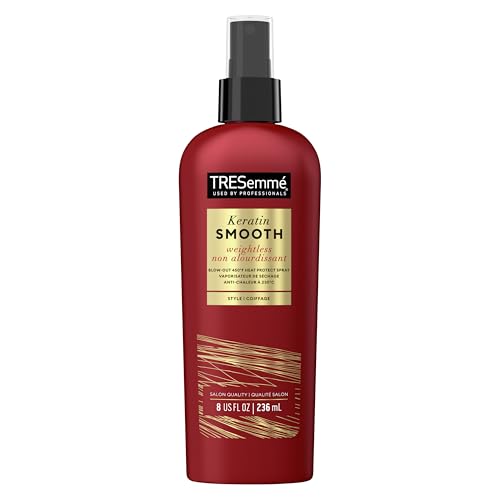
TRESemmé Expert Selection Heat Protection Spray, Keratin Smooth (8 oz)
Written by HairGrowthReviews Editorial Team
Reviewed by Ernesta Malinauskytė, PhD, Director of Hair Research, TRI Princeton
Updated 2026-10-14 · Independently researched · How we review
We may earn a commission when you buy through our links, at no cost to you. As an Amazon Associate we earn from qualifying purchases. How we research
The Short Version
- Heat damages the hair shaft above the scalp, not the follicle that grows the hair, so it does not cause pattern hair loss.
- Heat damage shows up as breakage: short, snapped pieces with no root bulb, split ends and frizz.
- Breakage can make fine or thinning hair look noticeably thinner, so protecting the strands you have still matters.
- Tight styles and hard pulling while styling can cause traction alopecia, which is real hair loss from the follicle.
- Lower temperatures, fewer passes and a heat protectant do more for your hair than any single product.
On This Page · 10 sections
Does heat styling cause hair loss? It is a reasonable question if you straighten, curl or blow-dry most days and keep finding short pieces of hair on the bathroom counter. Heat clearly does something to hair, and if your hair seems thinner than it used to be, your styling tools are an obvious suspect.
The answer depends on what you mean by hair loss. Heat does not damage the follicle, the living structure under the skin that grows each hair, so it does not cause pattern hair loss or the kind of shedding where hairs fall out from the root. What it does is damage the hair shaft, the part you can see. Damaged hair breaks, and broken hair can look a lot like thinning.
This guide explains the difference between breakage and true hair loss, how to tell which one you are seeing, and the one styling habit, pulling hair tight, that can cause genuine loss over time. It also covers the temperature and technique changes that make the biggest difference. If you are choosing a product, our guide to the best heat protectant spray compares the main options for fine, thick and color-treated hair.
Hair Shaft vs. Follicle: Where Heat Does Its Damage
Every hair has two parts. The follicle sits beneath the skin and is alive: it contains the cells that divide to produce new hair, and it controls the growth cycle. The shaft is the part above the skin, and it is no longer living tissue. It is a column of keratin protein wrapped in overlapping cuticle scales, a little like roof tiles.
Hot tools act on the shaft. A flat iron, curling wand or blow-dryer heats the hair you can see, and the scalp is largely insulated from that heat by distance and by the hair itself. The follicle, a few millimeters under the skin, is not heated enough by normal styling to be harmed.
Hot tools act on the shaft.
That is why heat does not cause the common types of hair loss. Pattern hair loss is driven by genetics and hormones that gradually shrink follicles. Telogen effluvium, the sudden diffuse shedding that follows illness, stress, childbirth or crash dieting, is a disruption of the growth cycle. Neither is triggered by styling the hair above the scalp.
The one real exception is an actual burn. A hot tool pressed against the scalp, or a severe burn from a styling accident, can injure the skin deeply enough to scar, and scarred skin may not regrow hair in that spot. This is uncommon with careful styling, but it is a good reason to keep irons and wands off the skin and to take extra care around the hairline.
Breakage or Hair Loss? How to Tell the Difference
The easiest way to tell is to look closely at the hairs you are finding. A hair shed from the follicle usually comes out whole, at full or near-full length, often with a tiny white or pale bulb at the root end. That is a normal resting hair, and losing a certain number of these each day is part of the normal hair cycle.
A broken hair is different. It snaps somewhere along its length, so the pieces are often short, uneven and have no bulb at either end. You may find them on your clothes, on the counter after styling or caught in your brush. The ends of your hair may look frayed, split or thinner than the hair closer to your scalp.
The pattern on your head differs too. Breakage tends to show up as frizz, flyaways at the crown or hairline, a ponytail that has become thinner at the end, and hair that will not grow past a certain length. Hair loss from the follicle shows up as a widening part, a receding hairline, a thinning crown or noticeably more scalp showing at the roots.
Many people have a mix of both. Fine or thinning hair is more fragile, so it breaks more easily under heat, and that breakage makes the thinning look worse. If you are seeing whole hairs with bulbs in larger numbers than usual, or more scalp at the roots, heat is not the cause and it is worth looking into what is.
| Breakage From Heat | Hair Loss From the Follicle | |
|---|---|---|
| What you find | Short, snapped pieces | Whole hairs, often with a pale bulb |
| Where it shows | Ends, frizz, flyaways, thin ponytail | Part, crown, hairline, scalp at the roots |
| Main causes | Heat, friction, bleaching, rough brushing | Genetics, hormones, illness, stress, iron or thyroid issues |
| Can it recover? | Only by growing out and trimming | Depends on the cause; often treatable |
| What helps | Less heat, protectant, gentle handling | Diagnosis and targeted treatment |
What Heat Actually Does to the Strand
Heat stresses the hair shaft in two main ways. High, direct heat dries and roughens the cuticle, so the scales lift and chip. Repeated heat also gradually changes the keratin inside the strand, leaving it weaker and less elastic. Weak, rough hair snaps more easily when it is brushed, tied up or simply rubbed against a pillow.
Water makes it worse. Hair holds moisture, and when a very hot iron clamps down on damp hair, that water can turn to steam inside the strand faster than it can escape. Researchers have documented bubbles and cracks inside hairs treated this way under the microscope. This is why using a flat iron or curling wand on wet or damp hair is one of the most damaging things you can do.
Because the shaft is not living tissue, it cannot heal.
The damage is cumulative and largely permanent. Because the shaft is not living tissue, it cannot heal. Conditioners and treatments can smooth and temporarily patch the surface, but the strand only truly recovers when it grows out and is cut off. A habit that damages a little every day eventually produces split ends, rough texture and snapping.
Bleaching, chemical straightening and frequent coloring add to heat damage, because they weaken the hair before the heat even reaches it. If your hair is processed, it needs more protection and lower temperatures than untreated hair of the same thickness.
Safer Temperatures and Technique
If you change only one thing, lower the temperature. Many flat irons and curling wands default to their highest setting, which is far hotter than most hair needs. Use the lowest setting that gets the result you want. As a rough rule of thumb, many stylists suggest staying at the lower end of the range, around 300°F (about 150°C) or below, for fine, thinning, damaged or color-treated hair, and reserving the top settings for very thick, coarse hair.
Technique matters as much as heat. One slow, steady pass over a small section does less damage than several quick passes over a thick chunk. If a section needs going over again, it was probably too large. Never use an iron or wand on wet or damp hair; dry it fully first.
If you change only one thing, lower the temperature.
With a blow-dryer, keep it moving and hold it a reasonable distance from your hair, rather than pressing the nozzle against one spot. A small laboratory study on hair samples, published in the Annals of Dermatology in 2011, found that surface damage increased as drying temperature rose and that a dryer kept around 15 cm away and moving continuously caused less damage than one used closer. Letting hair air-dry partway before blow-drying also cuts total heat time.
Use a heat protectant every time. Laboratory work on hair fibers suggests protectants reduce heat damage, though they do not prevent it. Mist it evenly through every section, focusing on the lengths and ends, and only then pick up a hot tool. Living Proof Perfect Hair Day Heat Styling Spray, our top pick, is light enough for fine hair.
Our #1 pick for heat protectant spray
Living Proof Perfect Hair Day Heat Styling Spray (5.5 oz)
The heat protectant fine and thinning hair will actually tolerate daily. Worth the premium if weight is what made you quit before.
Traction: The Styling Habit That Can Cause Real Hair Loss
Heat itself does not damage the follicle, but tension can. Traction alopecia is hair loss caused by repeated pulling on the hair over months or years. Tight ponytails, buns, braids, cornrows, extensions and weaves are the classic causes, but styling habits such as pulling hair taut with a hot round brush or wrapping it tightly around a curling wand at the root can add to the strain.
Traction alopecia usually appears where the pull is strongest, most often along the hairline and at the temples. Early signs include tenderness, small bumps around the follicles, broken hairs at the edges and gradual thinning along the hairline. Unlike breakage, this is genuine loss from the follicle.
Heat itself does not damage the follicle, but tension can.
In the early stages, traction alopecia is often reversible if the pulling stops and the follicles are given time to recover. If the tension continues for years, follicles can scar and stop producing hair permanently. That is why catching it early matters, and why a sore scalp after styling is a signal to loosen up rather than push through.
Prevention is simple. Use gentle tension when styling, avoid pulling hair tight at the root while it is hot, vary where you part and tie your hair, choose looser styles and soft fabric ties, and give fragile areas such as the hairline regular breaks. If you see thinning at the edges, see a dermatologist sooner rather than later.
Recovering From Heat Damage
Because heat damage sits in the shaft, the good news is that the hair growing from your scalp right now is undamaged. The goal is to protect that new growth while gradually removing the damaged lengths. Regular trims every couple of months take off split ends before they travel further up the strand and cause more breakage.
In the meantime, conditioning treatments can make damaged hair look and behave better. Conditioners and masks smooth the cuticle and reduce friction, which means fewer snapped hairs when you brush. Bond-building treatments are popular for bleached and heavily processed hair. None of these truly repair the strand, but they can make it stronger and easier to handle while it grows out.
the hair growing from your scalp right now is undamaged
Give your hair heat-free days. Air-drying, loose overnight braids or twists, and styles that work with your natural texture all reduce the total heat your hair receives each week. Even cutting hot-tool use from daily to every other day makes a meaningful difference over months.
Handle wet hair gently, because it is more fragile than dry hair. Blot rather than rub with a towel, detangle from the ends upward with a wide-tooth comb, and use soft, snag-free ties. These small changes reduce the everyday breakage that adds to heat damage and makes fine hair look thinner.
Heat Styling When Your Hair Is Already Thinning
If your hair is thinning, you do not have to give up hot tools, but you do have more to lose from breakage. Fine strands have less mass before they snap, and broken, frizzy hair reflects less light and lies less smoothly, so the scalp shows through more easily. Protecting each strand is one of the simplest ways to keep thin hair looking as full as possible.
Choose lighter products and keep them away from the root. Heavy creams and oils weigh fine hair down and make the scalp more visible. A fine mist protectant applied mainly to the lengths and ends protects without flattening. Let a blow-dry do most of the work and use irons only where you need them.
your straightener is almost certainly not to blame
If you use minoxidil or another scalp treatment, apply it to the scalp as directed and let it dry fully before styling. Heat protectant belongs on the hair, not massaged into the scalp, and applying it over wet minoxidil can make both less effective.
Most importantly, do not let styling distract from the real cause. If you are shedding more than usual, losing hair suddenly or in patches, or noticing a widening part or receding hairline, your straightener is almost certainly not to blame. See a doctor or dermatologist to check for causes such as pattern hair loss, low iron, thyroid problems or recent illness, many of which respond to treatment.
Frequently Asked Questions
Can straightening your hair every day make it fall out?
Daily straightening does not make hair fall out from the root, but it can cause significant breakage, especially at high temperatures or on damp hair. Breakage makes hair shorter, frizzier and thinner-looking. Use a protectant, the lowest effective temperature and one pass per section to limit the damage.
Does blow-drying cause hair loss?
No. Blow-drying does not damage the follicle or cause hair to fall out from the root. Very hot air held close to the hair can roughen the cuticle and lead to breakage. Keep the dryer moving, hold it a reasonable distance away, use a medium setting and finish on cool.
Can heat damage hair follicles?
Normal heat styling does not reach the follicle, which sits beneath the skin. The exception is a burn: pressing a hot tool against the scalp can injure the skin and, if it scars, stop hair regrowing in that spot. Keep irons and wands off the skin, especially near the hairline.
Will my hair grow back after heat damage?
Yes. Because heat damages the shaft rather than the follicle, new hair grows in healthy. The damaged lengths cannot be repaired, only smoothed with conditioners, so regular trims gradually remove them. Reducing heat and using a protectant keeps the new growth from being damaged in turn.
Does heat protectant prevent hair loss?
Heat protectant reduces heat damage and breakage to the hair shaft. It does not prevent or treat hair loss from the follicle, because heat is not what causes that. If you are losing whole hairs from the root, see a doctor to find the cause rather than relying on styling products.
What temperature is safe for thin or fine hair?
Use the lowest setting that works. As a rule of thumb, many stylists suggest around 300°F (about 150°C) or below for fine, thinning, damaged or color-treated hair, and higher settings only for very thick, coarse hair. Check your tool's manual and increase heat gradually if needed.
Can curling irons cause bald spots?
Not from the heat alone. Bald spots can come from a burn that scars the scalp, from repeated tight pulling at the root, or from unrelated conditions such as alopecia areata. Round, smooth patches of hair loss should be checked by a dermatologist, because they are not a styling problem.
The Bottom Line
Heat styling does not cause true hair loss, because it damages the hair shaft rather than the follicle. It does cause breakage, which can make fine or thinning hair look thinner. Lower your temperature, use fewer passes and a heat protectant, avoid pulling hair tight at the root, and if you are losing whole hairs from the root, look for the real cause with a doctor.