Our Picks at a Glance
- 1
 Check Price →
 - 2
 Check Price →
 - 3
 Check Price →
Best Gel for Humidity
Ouidad Advanced Climate Control Heat & Humidity Curl Gel, Long-Lasting Hold - 4
 Check Price →
Best for Fine and Wavy Hair
Bounce Curl Light Hold Creme Gel (8 oz) - 5
 Check Price →
Best Drugstore Styling Duo
Not Your Mother's Curl Talk Frizz Control Sculpting Gel & Defining Cream - 6
 Check Price →
Best Leave-In for Tight Curls
Mielle Organics Pomegranate & Honey Leave-In Conditioner (12 fl oz) - 7
 Check Price →
Best Co-Wash
As I Am Coconut CoWash Cleansing Conditioner (16 oz) and Leave-In Conditioner (8 oz) Set
The Short Version
- Curly hair needs moisture first, then hold: most curls look best with a leave-in or cream for softness and a gel or mousse on top for definition.
- SheaMoisture Curl Enhancing Smoothie is our best overall pick for medium to thick curls that want moisture and definition from one product.
- Cantu Coconut Curling Cream is the best value: a rich, inexpensive cream that suits thicker curls well.
- Fine waves and loose curls usually do better with light creme gels or mousse; heavy butters and creams weigh them down.
- Curly hair sheds into the curl pattern between washes, so wash day can look alarming. Real thinning needs a doctor, not a new curl cream.
On This Page · 12 sections
The best hair products for curly hair do three things: they add moisture that curls struggle to hold on their own, they help each curl clump together into a defined shape, and they hold that shape against frizz and humidity without leaving hair crunchy or greasy. No single product does all three for every curl. A rich cream that defines thick 3c curls can flatten fine 2b waves, and a firm gel that holds loose curls through a humid summer can feel too stiff on tight coils. So rather than one universal winner, this guide gives you the best product for each job and each kind of curl.
Curly hair behaves differently from straight hair for a structural reason. Natural scalp oil travels easily down a straight strand but struggles to move along the bends of a curl, so the lengths of curly hair tend to be drier. Each bend is also a point where the cuticle lifts slightly, which is why curls frizz in humidity and break more easily when handled roughly. Good curly hair products work with that structure: moisture first, gentle handling always, and enough hold to keep the curl shape.
We ranked the picks below on how well each formula suits the curl types most likely to buy it, the consistency of buyer feedback on definition and frizz, ease of use, and value. This is a research-based ranking, not hands-on testing. If your hair is type 4 coils, or you wear it relaxed or in protective styles, our guide to the best Black hair care products is built around those needs and is the better starting point. This page focuses on waves and curls, roughly types 2 and 3.
Curl Types, Porosity and What Your Curls Actually Need
Most curl advice uses the type system popularized by stylist Andre Walker: type 2 for waves, type 3 for curls and type 4 for coils, each with subcategories from a to c. It is imperfect, and most heads have more than one pattern, but it is a useful shorthand. Looser patterns need lighter products because they are more easily weighed down; tighter patterns need richer ones because they are drier and more fragile.
Density and strand thickness matter as much as pattern. You can have fine 3b curls that collapse under a butter, or thick 2c waves that drink up a rich cream. If you are not sure, look at a single strand: if you can barely feel it between your fingers, your hair is fine and lighter products will suit it. If it feels wiry and strong, your hair is coarse and can handle more.
Density and strand thickness matter as much as pattern.
Porosity, meaning how readily hair absorbs and releases water, is the third factor. High-porosity curls, often from coloring or heat, absorb products quickly and dry out quickly, so they benefit from richer creams and a gel to seal. Low-porosity curls resist absorbing products and can feel coated, so they usually do better with lighter formulas applied to soaking-wet hair.
Put those three things together and product choice becomes much easier. Fine, loose, low-porosity waves want light creme gels and mousses. Thick, tight, high-porosity curls want rich creams and leave-ins with a gel on top. Everything else sits somewhere in between.
The Curly Hair Routine: Cleanse, Condition, Style, Dry
A curly routine is built around protecting moisture and the curl pattern. Cleanse with a gentle, sulfate-free shampoo or a co-wash, focusing on the scalp. Condition generously and detangle in the shower while the conditioner is in, using your fingers or a wide-tooth comb and working from the ends up. This is when curls are least likely to snap.
Style on soaking-wet hair. Apply a leave-in or curl cream first for moisture, then a gel or mousse for hold, and scrunch upward to encourage curls to clump. Applying products to damp rather than wet hair is one of the most common reasons curls come out frizzy, because the curl clumps have already started to break apart.
Style on soaking-wet hair.
Drying matters as much as product. Rubbing curls with a terry towel roughens the cuticle and breaks up clumps. Blot or scrunch with a microfiber towel or cotton T-shirt instead, then let curls air-dry or use a diffuser on low heat. Avoid touching curls while they dry, then scrunch out any gel cast once they are fully dry.
Between wash days, curls can be refreshed with water and a little leave-in or cream. Sleeping on a satin or silk pillowcase, or loosely piling hair on top of your head, helps curls survive the night with less frizz.
| What It Does | Best For | |
|---|---|---|
| Leave-in | Moisture and slip | All curls, especially dry |
| Curl cream | Moisture and soft definition | Medium to thick curls |
| Creme gel | Light moisture and hold | Fine curls and waves |
| Gel | Hold and frizz control | All curls, humid climates |
| Mousse | Volume and light hold | Fine waves |
| Co-wash | Gentle cleansing | Dry, thick curls |
The 7 Best Hair Products for Curly Hair
Ranked on how well each product suits the curls most likely to use it, the consistency of buyer feedback on definition and frizz, and value. Most curly routines use two or three of these together: a leave-in or cream for moisture and a gel or creme gel for hold.
SheaMoisture Coconut & Hibiscus Curl Enhancing Smoothie (12 oz)
Curl Cream
Best for: Medium to thick 3a to 3c curls that want moisture, softness and definition from one product
- Type
- Leave-in curl cream
- Size
- 12 oz
- Curl type
- 3a to 3c, thicker 2c
- Hold
- Soft
SheaMoisture's Coconut & Hibiscus Curl Enhancing Smoothie is one of the most widely used curl creams in the world, and for good reason. It is a rich, shea butter based cream that moisturizes dry curls, helps them clump into defined ringlets, and calms frizz, all from a single product applied to wet hair. For many curly-haired women it is the product that first made their curls look intentional rather than frizzy.
It works best on medium to thick curls in the 3a to 3c range, where its richness is an asset. You can use it alone for soft, touchable definition, or layer a gel over it if you want curls that last through several days or a humid afternoon. It is sulfate-free and paraben-free, sold almost everywhere, and priced well below salon curl creams.
Skip it if your hair is fine or loosely wavy. On 2a and 2b waves it can weigh hair down and make it look greasy rather than defined. Some buyers also dislike the strong coconut scent, and a minority find shea butter formulas too heavy for low-porosity hair.
What We Liked
- Moisturizes and defines in one step
- Excellent frizz control on thicker curls
- Widely available and reasonably priced
- Works alone or under a gel
What We Didn't
- Too heavy for fine waves
- Strong scent
- Soft hold alone may not survive high humidity
The Bottom Line
The best single product for most medium to thick curls. Add a gel over it if you need longer-lasting hold.
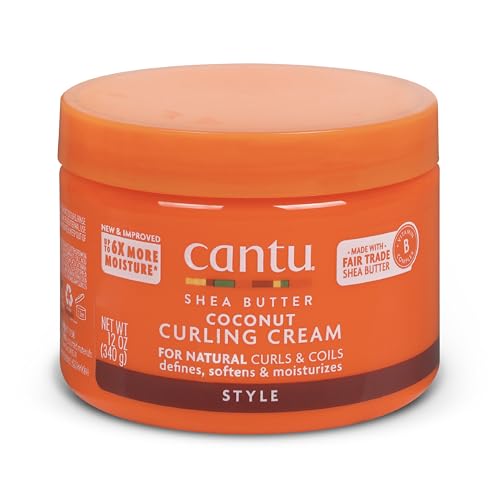
Cantu Coconut Curling Cream with Shea Butter (12 oz)
Curl Cream
Best for: Thick, dry curls on a budget, and anyone who goes through curl cream quickly
- Type
- Curl cream
- Size
- 12 oz
- Curl type
- 3b to 4a, thick hair
- Hold
- Soft
Cantu Coconut Curling Cream is the cheapest product on this list and one of the most popular curl creams sold, a combination that is hard to argue with. It is a thick, buttery cream built around shea butter and coconut oil that adds heavy moisture and defines thick, dry curls. Curly hair often needs a generous amount of product, and at this price you can use as much as your hair wants.
It shines on thick, coarse or high-porosity curls, from tighter 3b ringlets through 4a coils, where its richness helps curls clump and stay soft. Many buyers use it for wash-and-gos, twist-outs and refreshing second-day curls with a little water. It pairs well with a gel for more hold.
Skip it if your curls are fine, loose or low-porosity. The heavy texture can leave fine hair limp, greasy or coated, and it can build up over several days without clarifying. If you have a sensitive scalp, keep the cream on the lengths rather than at the roots.
What We Liked
- Lowest price per ounce on this list
- Rich moisture for thick, dry curls
- Versatile for wash-and-gos and twist-outs
What We Didn't
- Heavy for fine or loose curls
- Can build up without regular clarifying
- Soft hold on its own
The Bottom Line
The best budget curl cream for thick, thirsty curls. Fine-haired curlies should look at Bounce Curl instead.
Ouidad Advanced Climate Control Heat & Humidity Curl Gel, Long-Lasting Hold
Curl Gel
Best for: Curls that frizz out in humid weather and need a gel that holds definition all day
- Type
- Styling gel
- Hold
- Long-lasting (Stronger Hold version available)
- Curl type
- 2c to 3c
- Finish
- Defined, scrunch out the cast
Ouidad is a curl-focused salon brand, and its Advanced Climate Control Heat & Humidity Gel is its answer to the most common curly-hair complaint: curls that look perfect at home and frizz out the moment you step into humid air. The gel forms a cast as it dries that holds each curl in place; once fully dry, you scrunch the cast out to leave soft, defined curls that last.
It is a styling product, not a moisturizer, so it works best layered over a leave-in or curl cream. That combination of moisture underneath and hold on top is the approach most curly stylists recommend, and Ouidad's gel is one of the most reliable top layers for humid climates. It comes in a Long-Lasting Hold version and a Stronger Hold version for heavier or more frizz-prone curls.
Skip it if you want a single product that does everything, or if you dislike the process of letting a gel cast dry and scrunching it out. It costs more than drugstore gels, and on very fine waves even the lighter version can feel firm.
What We Liked
- Reliable hold against humidity and frizz
- Scrunches out to a soft finish when used correctly
- Two hold strengths to choose from
- From a curl-specialist brand
What We Didn't
- Needs a moisturizing product underneath
- Pricier than drugstore gels
- Cast can feel stiff until scrunched out
The Bottom Line
The gel to buy if humidity ruins your curls. Use it over a leave-in, not alone.
Bounce Curl Light Hold Creme Gel (8 oz)
Creme Gel
Best for: Fine curls and 2a to 2c waves that need definition without being weighed down
- Type
- Creme gel hybrid
- Size
- 8 oz
- Curl type
- 2a to 3a, fine to medium
- Hold
- Light
Bounce Curl's Light Hold Creme Gel solves a problem that most curl creams create: fine, wavy hair that goes flat and greasy under rich products. It is a lightweight hybrid of a cream and a gel, giving a little moisture and a soft, flexible hold that encourages waves and loose curls to form without stiffness.
It is especially popular with women who have only recently discovered their hair is wavy rather than straight, a common experience once people stop brushing dry hair and switch to curl-friendly routines. Applied to soaking-wet hair and scrunched in, it helps waves clump and lift at the root. It is vegan and gentle enough to use daily.
Skip it if your curls are thick, coarse or very dry; it will not give them enough moisture or hold on its own. It costs more per ounce than drugstore creams, and if you live somewhere very humid you may want a firmer gel on top.
What We Liked
- Light enough for fine curls and waves
- Flexible hold without crunch
- Helps waves lift rather than flatten
What We Didn't
- Not enough moisture for thick or dry curls
- Higher price per ounce
- Light hold may need backup in humidity
The Bottom Line
The best styler for fine curls and waves. Thicker curls will want something richer.
Not Your Mother's Curl Talk Frizz Control Sculpting Gel & Defining Cream
Curl Cream and Gel Set
Best for: Curlies who want a matched cream-and-gel routine at drugstore prices
- Type
- Two-product set: cream and gel
- Curl type
- 2b to 3c
- Hold
- Medium (gel)
- Approach
- Layer cream, then gel
Not Your Mother's Curl Talk line is one of the best-selling drugstore curl ranges, and this listing pairs its two core stylers: a defining cream and a frizz-control sculpting gel. Together they recreate the layered cream-then-gel approach that curl stylists recommend, without having to match products from different brands.
The cream adds light moisture and helps curls clump; the gel locks that definition in and controls frizz. Buyers consistently describe the combination as a strong value for wavy and curly hair, and the formulas are lighter than SheaMoisture or Cantu, which makes them a good middle ground for medium-density curls. There is also a fragrance-free version of the set for sensitive skin.
Skip it if your curls are very thick, coarse or dry, because the cream may not be moisturizing enough on its own. Some buyers with fine hair find the gel too firm. And if you only need one of the two products, buying the set means paying for one you may not use.
What We Liked
- Matched cream and gel for a layered routine
- Drugstore pricing
- Lighter than many butter-based creams
- Fragrance-free version available
What We Didn't
- Cream may be too light for very dry curls
- Gel can feel firm on fine hair
- Set includes two products whether you need both or not
The Bottom Line
An easy, affordable way to try the cream-plus-gel method with products made to work together.
Mielle Organics Pomegranate & Honey Leave-In Conditioner (12 fl oz)
Leave-In Conditioner
Best for: Tight 3c curls and coils that need a rich leave-in base before styling
- Type
- Cream leave-in conditioner
- Size
- 12 fl oz
- Curl type
- 3c to 4c
- Role
- Moisture base under a styler
Mielle's Pomegranate & Honey Leave-In Conditioner is a creamy, detangling leave-in from one of the most popular textured-hair brands in drugstores. It is designed as the first layer after washing: it softens tight curls, makes detangling easier, and gives a moisturized base for a cream, gel or twisting butter on top.
We include it because many curl routines skip the leave-in and then wonder why their curls feel dry by the afternoon. For tighter curls in the 3c range and beyond, a dedicated leave-in under your styler can make the difference between curls that stay soft and curls that frizz and tangle. Mielle's version has good slip and a pleasant scent, and it is priced like a drugstore product.
Skip it if your hair is wavy or loosely curly; it is designed for tighter textures and will likely be too heavy. If you have type 4 hair, see our Black hair care guide for a fuller routine built around coils.
What We Liked
- Rich, detangling leave-in for tight curls
- Creates a moisture base for any styler
- Drugstore pricing
What We Didn't
- Too heavy for waves and loose curls
- Not a styler on its own for most curl types
The Bottom Line
The leave-in to put under your styler if you have tight curls that dry out by the afternoon.
As I Am Coconut CoWash Cleansing Conditioner (16 oz) and Leave-In Conditioner (8 oz) Set
Co-Wash and Leave-In Set
Best for: Dry, thick curls that feel stripped by shampoo and want a gentler cleanse between shampoo days
- Type
- Cleansing conditioner plus leave-in
- Sizes
- 16 oz co-wash, 8 oz leave-in
- Curl type
- 3b to 4c, dry hair
- Use
- Between or instead of some shampoos
Co-washing means cleansing with a conditioner-based product instead of shampoo, and As I Am's Coconut CoWash is one of the best known. It cleans lightly without lather, removing some dirt and product while leaving moisture in, which is why many women with dry, thick or tightly curled hair prefer it to shampoo for most wash days. This set pairs it with the brand's leave-in conditioner.
The benefit is softer, less stripped curls, especially for hair that tangles or feels like straw after shampooing. The trade-off is that co-washes do not clean as thoroughly as shampoo. Used exclusively, they can let oil, product and dead skin build up on the scalp, which can lead to itching, flaking or limp curls. Most curl stylists suggest using a co-wash between regular shampoos rather than replacing shampoo entirely.
Skip it if your scalp is oily, if you get dandruff, or if your hair is fine. Those situations need a real shampoo. It ranks last here because it suits a narrower group than the stylers above.
What We Liked
- Gentle, moisturizing cleanse for dry curls
- Includes a matching leave-in
- Reduces the stripped feeling after shampoo
What We Didn't
- Does not clean as thoroughly as shampoo
- Can lead to scalp buildup if used exclusively
- Not suited to oily scalps, dandruff or fine hair
The Bottom Line
A good gentle cleanse for dry curls. Keep a sulfate-free shampoo in the rotation for your scalp.
Curl Cream vs. Gel: Do You Need Both?
Curl creams and gels do different jobs. Creams add moisture and softness and encourage curls to clump, but their hold is usually soft, so definition fades faster, especially in humidity. Gels provide hold by forming a light film or cast around curls as they dry, which keeps them defined and resists frizz, but on their own they can leave curls dry or crunchy.
That is why the most reliable curly routine for many people layers them: a leave-in or cream first, then a gel. The cream keeps curls soft; the gel keeps them in shape. Once the hair is completely dry, scrunching out the cast leaves soft curls that still hold. This is the method most curl specialists teach, and it is why our list includes both types.
The cream keeps curls soft; the gel keeps them in shape.
Not everyone needs both. Fine waves often do best with a single light creme gel or a mousse, because a cream underneath weighs them down. Thick, dry curls in a dry climate may be happy with a rich cream alone. Experiment with one product, then add the second only if your curls lack moisture or hold.
Amount matters too. Curly hair often needs more product than people expect, especially thick hair, and using too little is a common reason for frizz. Start with a moderate amount and increase it until curls clump, then back off if hair feels coated.
Sulfates, Co-Washing and Clarifying Curly Hair
Strong sulfate shampoos can strip curly hair of the little oil it holds, leaving it frizzy and rough. That is why sulfate-free shampoos have become the default for curly routines. They clean the scalp effectively while being gentler on the lengths. For most curly-haired people, a sulfate-free shampoo once or twice a week is a good baseline.
Co-washing goes a step further by cleansing with a conditioner-based product. It suits very dry, thick and tightly curled hair well. But it is not a full replacement for shampoo. A scalp cleansed only with co-wash can build up oil, product and dead skin, which may lead to itching, flaking and limp curls. Alternating co-wash days with shampoo days is a sensible compromise.
If your curls suddenly feel limp, coated or refuse to define, buildup is often the reason.
Curly routines rely heavily on leave-in products, which makes buildup inevitable. A clarifying shampoo every couple of weeks, or more often if you use heavy creams or live with hard water, resets the hair so products work properly again. If your curls suddenly feel limp, coated or refuse to define, buildup is often the reason.
Silicones are another debate. Some curl methods avoid them because certain silicones need a stronger shampoo to remove. That is a preference, not a rule. If you use silicone-containing products, clarifying occasionally solves the problem.
Why Curls Frizz and How to Control It
Frizz happens when the cuticle is lifted and the hair absorbs moisture from the air unevenly, swelling some parts of the strand more than others. Curly hair is naturally prone to this because each bend lifts the cuticle slightly. Damage from heat, color and rough handling makes it worse.
The first defense is moisture. Well-conditioned curls absorb less water from the air because they already hold what they need. A leave-in and a cream go a long way. The second defense is hold: a gel creates a film that keeps curls in their clumps and slows moisture from the air reaching the strand.
Well-conditioned curls absorb less water from the air
Humectants such as glycerin pull water into the hair. In moderate humidity that helps curls stay soft, but many curly-haired people find that in very humid or very dry weather, humectant-heavy products make frizz worse. If your curls behave differently by season, try a product with fewer humectants in extreme weather and a firmer gel in summer.
Habits matter too. Touching curls while they dry, brushing dry curls, and sleeping on rough cotton all break up curl clumps. A satin pillowcase, a microfiber towel and keeping your hands off drying curls prevent a surprising amount of frizz.
Breakage, Shedding and Curly Hair Health
Curly hair is more prone to breakage than straight hair because each bend in the strand is a weak point, and curls tangle easily. Most breakage happens during detangling, so the most protective habit is to detangle only when hair is saturated with conditioner, using fingers or a wide-tooth comb and starting from the ends.
Curly hair also tends to hold onto shed hairs. Everyone loses dozens of hairs a day as part of the normal hair growth cycle, but in curly hair those shed strands stay caught in the curls until you detangle. That is why wash day can produce what looks like an alarming amount of hair. It is usually several days of normal shedding coming out at once.
It is usually several days of normal shedding coming out at once.
If you see thinning, a widening part, or bald patches, that is different, and no curl product will treat it. Tight styles that pull on the hairline can cause traction alopecia, and pattern hair loss and telogen effluvium affect curly-haired people as often as anyone else. A dermatologist can tell the difference and recommend treatment.
For healthy curls, the fundamentals do more than any single product. Gentle cleansing, generous conditioning, careful detangling, low heat and regular trims keep curls defined and strong. Products help those habits work; they do not replace them.
Compared Side by Side
| Product | Type | Curl Type | Hold | Best For |
|---|---|---|---|---|
| SheaMoisture Curl Smoothie | Curl cream | 3a to 3c | Soft | Best overall |
| Cantu Coconut Curling Cream | Curl cream | 3b to 4a | Soft | Best value |
| Ouidad Climate Control Gel | Gel | 2c to 3c | Strong | Humid climates |
| Bounce Curl Light Creme Gel | Creme gel | 2a to 3a | Light | Fine curls and waves |
| NYM Curl Talk Duo | Cream and gel | 2b to 3c | Medium | Drugstore routine |
| Mielle Pomegranate Leave-In | Leave-in | 3c to 4c | None | Tight curls |
| As I Am CoWash Set | Co-wash | 3b to 4c | None | Gentle cleansing |
Ready to Buy? Our Picks Again
- 1Check Price →
- 2Check Price →
- 3Check Price →
Best Gel for Humidity
Ouidad Advanced Climate Control Heat & Humidity Curl Gel, Long-Lasting Hold - 4Check Price →
Best for Fine and Wavy Hair
Bounce Curl Light Hold Creme Gel (8 oz) - 5Check Price →
Best Drugstore Styling Duo
Not Your Mother's Curl Talk Frizz Control Sculpting Gel & Defining Cream - 6Check Price →
Best Leave-In for Tight Curls
Mielle Organics Pomegranate & Honey Leave-In Conditioner (12 fl oz) - 7Check Price →
Best Co-Wash
As I Am Coconut CoWash Cleansing Conditioner (16 oz) and Leave-In Conditioner (8 oz) Set
Common Mistakes to Avoid
Applying Products to Damp Instead of Wet Hair
Curls clump best when hair is soaking wet. By the time hair is merely damp, clumps have started to separate and products cannot pull them back together, which leads to frizz. Apply leave-ins, creams and gels in the shower or immediately after, while hair is still dripping, then scrunch upward.
Using Products Too Heavy for Your Curls
Rich butters and creams are designed for thick, dry, tight curls. On fine waves they flatten the pattern and make hair look greasy. If your curls look limp or separated, the product may be too heavy rather than too weak. Try a lighter creme gel or mousse before giving up on your curls.
Skipping Clarifying
Curly routines rely on leave-in products that accumulate over time, especially with sulfate-free shampoos and co-washes. Buildup leaves curls limp, coated and hard to define. Use a clarifying shampoo every couple of weeks, more often if you use heavy creams or have hard water, to reset your hair.
Brushing or Touching Dry Curls
Brushing dry curls breaks up the curl pattern into frizz, and touching curls while they dry does the same on a smaller scale. Detangle only when hair is wet and full of conditioner. Once your styling products are in, leave curls alone until they are completely dry, then scrunch out any gel cast.
Expecting a Curl Product to Fix Thinning
Some curl products are marketed with growth or strengthening claims, but no curl cream or gel treats hair loss. Curly hair also sheds into the curl pattern, so wash days look dramatic. If you see real thinning, a widening part or patches, see a dermatologist rather than switching products.
Frequently Asked Questions
What is the best hair product for curly hair?
For most medium to thick curls, SheaMoisture Coconut & Hibiscus Curl Enhancing Smoothie is the best single product because it moisturizes and defines at once. Fine curls and waves do better with Bounce Curl Light Hold Creme Gel, and anyone fighting humidity should add a gel like Ouidad Climate Control on top.
Should I use curl cream or gel?
Many curly-haired people use both: a cream or leave-in first for moisture, then a gel for hold. Cream alone gives soft definition that fades faster; gel alone can feel dry or crunchy. Fine waves often need only a light creme gel or mousse, while thick, dry curls may be happy with cream alone.
Is co-washing better than shampoo for curly hair?
Co-washing is gentler and suits very dry, thick or tightly curled hair, but it does not clean the scalp as thoroughly. Used exclusively, it can lead to buildup, itching and limp curls. Most people do best alternating co-washes with a sulfate-free shampoo and clarifying every couple of weeks.
Why does my curly hair frizz so much?
Curly hair frizzes because each bend lifts the cuticle, letting moisture from the air swell the strand unevenly. Dryness, damage, styling on damp rather than wet hair, rough towels and touching curls while they dry all make it worse. Moisture underneath and a gel on top is the most reliable fix.
Are sulfate-free shampoos necessary for curly hair?
Not strictly necessary, but usually helpful. Sulfates can strip the limited oil curly hair holds, leaving it rough and frizzy. Sulfate-free shampoos clean the scalp while being gentler on the lengths. If you use them, add an occasional clarifying wash so products do not build up.
Do curly hair products help hair grow?
No curl cream, gel or leave-in has evidence for making hair grow faster. What good products and habits do is reduce breakage, so curls keep more of their length. If you are experiencing real thinning, a widening part or bald patches, see a dermatologist, as products will not treat the cause.
How do I know my curl type?
Look at clean hair that has air-dried without product. Loose S-shaped waves are type 2, defined spirals and ringlets are type 3, and tight coils or zigzags are type 4. Most people have a mix. Strand thickness and porosity matter just as much as pattern when you choose products.
The Bottom Line
The best curly hair routine pairs moisture with hold, applied to soaking-wet hair. SheaMoisture Curl Enhancing Smoothie is the best all-rounder for medium to thick curls, Cantu Coconut Curling Cream is the best value, Bounce Curl suits fine waves, and a gel like Ouidad on top is the answer to humidity. Get the habits right and the products will do the rest.
More Buyer's Guides
Hair Care
Best Black Hair Care Products
Type 4 and relaxed hair grows like any other hair. What holds length back is dryness and breakage. These are the leave-ins, butters, stylers and treatments that do the most to keep the length you grow.
Hair Care
Best Hair Care Products for Women
Most women do not need a twelve-step routine. They need a gentle shampoo, a conditioner that suits their hair, one repair step, and protection from heat. These are the products we would build that routine around.
Hair Care
Best Hair Treatment for Damaged Hair
Bleach, color and heat break hair from the inside; dryness and friction rough it up from the outside. The right treatment depends on which kind of damage you have. These are the bond builders and masks worth buying for each.
Hair Care
Best Scalp Scrub
A good scalp scrub clears product buildup, excess oil and dead skin that shampoo leaves behind. It will not regrow hair, and the wrong one can irritate. These are the physical and chemical scalp exfoliants worth using, and who should skip them.
Hair Growth & Hair Loss
Best Hair Growth Oil
Oils are excellent at protecting hair from breakage and pleasant for scalp massage, but the evidence that any oil regrows hair is thin. Here is how to pick one that suits your hair, and what to expect from it.