The Short Answer
There is no good evidence that hard water causes hair loss. The calcium and magnesium in hard water can build up on hair, leaving it dull, rough, tangled and more prone to breakage, which can make it look thinner. A clarifying or chelating shampoo removes that buildup. Most shower filters reduce chlorine but do not soften water.
Top Picks: Best Shower Filter for Hair
 Check Price
Best Overall
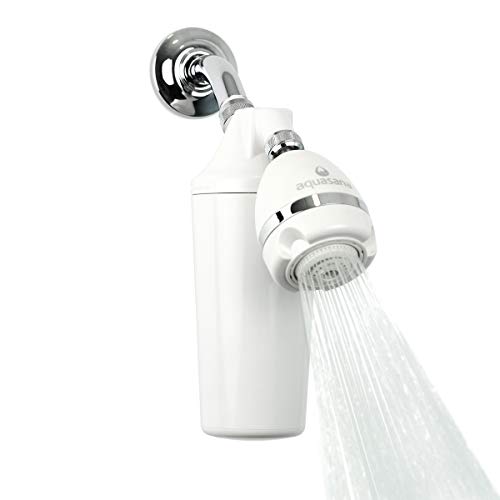
Aquasana AQ-4100 Shower Filter with Shower Head
 Check Price
Best Value
AquaBliss SF220 Daily Essential Shower Filter (Chrome)
 Check Price
Best Budget Inline
Culligan ISH-100 Inline Showerhead Filtration Attachment (10,000 Gallon)
Written by HairGrowthReviews Editorial Team
Reviewed by Ernesta Malinauskytė, PhD, Director of Hair Research, TRI Princeton
Updated 2026-10-14 · Independently researched · How we review
We may earn a commission when you buy through our links, at no cost to you. As an Amazon Associate we earn from qualifying purchases. How we research
The Short Version
- Hard water has not been shown to cause true hair loss at the follicle; pattern loss and shedding have other causes.
- Mineral buildup can make hair feel rough, look dull and tangle easily, which can lead to breakage that looks like thinning.
- A clarifying or chelating shampoo once a week or so is the cheapest, most direct way to remove mineral deposits.
- Most shower filters mainly reduce chlorine; softening hard water takes a whole-house ion-exchange system.
- If you are genuinely losing hair, look at genetics, hormones, iron, thyroid and recent triggers before blaming your water.
On This Page · 10 sections
Does hard water cause hair loss? It is a common worry, especially for people who move to a new city and suddenly find their hair feels different, or who see clumps in a shower drain ringed with white mineral scale. The short version is reassuring: there is no good evidence that hard water causes hair to fall out at the root.
That does not mean hard water does nothing. The minerals it carries can coat hair, change how shampoo lathers and rinses, and leave strands rough and tangle-prone. Rough, tangled hair breaks more easily, and broken hair looks thinner and shorter. So people who blame their water for thinning are often seeing something real, just not hair loss in the medical sense.
Below, we explain what hard water is, what the research does and does not show, how to tell mineral damage from true hair loss, and what actually helps, including what a shower filter can realistically do. If you are considering a filter, our guide to the best shower filter for hair explains which ones reduce chlorine and why few of them soften water.
What Hard Water Is
Hard water is water with a high level of dissolved minerals, mainly calcium and magnesium. It picks them up as it passes through rock such as limestone and chalk. How hard your water is depends almost entirely on where you live, which is why some regions are known for kettle scale and spotty glassware while others barely see it.
Hard water is safe to drink and bathe in. Its effects are mostly practical: white scale on taps and showerheads, soap that lathers poorly, a film on glass, and laundry that feels stiff. The same minerals that cause those problems can leave deposits on skin and hair.
Hard water is different from chlorinated water.
Hard water is different from chlorinated water. Most city water supplies are treated with chlorine or chloramine to keep them safe, and that disinfectant can make hair feel dry. A home can have hard water, chlorinated water, both or neither, and the fixes are different for each.
If you are not sure, it is easy to find out. Many water utilities publish an annual water quality report that lists hardness, and inexpensive test strips can give a rough reading at home. Signs like heavy scale on your showerhead and soap that struggles to lather are also good clues.
What the Evidence Says About Hard Water and Hair Loss
Research on hard water and hair is limited. A handful of small studies have compared hair washed in hard water with hair washed in softer or distilled water, looking at measures such as strength, thickness and elasticity. The results have been mixed: some found hard water made hair a little weaker, while others found no meaningful difference.
Just as important is what those studies did not show. None demonstrated that hard water causes the kind of thinning people worry about, such as a receding hairline, a widening part or diffuse shedding from the root. The studies were small, often looked at hair strands rather than people's scalps over time, and cannot be stretched to show a cause of hair loss.
Water hardness is not on it.
What causes true hair loss is well established. Pattern hair loss is driven by genetics and hormones. Shedding, called telogen effluvium, usually follows triggers such as illness, childbirth, surgery, crash diets, severe stress or new medications. Low iron, thyroid problems, alopecia areata and tight hairstyles round out the common list. Water hardness is not on it.
So the honest summary is this: hard water may affect how your hair feels and how easily it breaks, but there is no good evidence that it makes follicles stop producing hair. If you are seeing true thinning, the cause almost certainly lies elsewhere, and it is worth finding.
How Mineral Buildup Affects Your Hair
While hard water does not reach the follicle, it can change the hair you already have. Calcium and magnesium react with soap and some shampoo ingredients, and can leave a film on the hair surface. Over time, that residue builds up, especially on porous hair that has been colored, bleached or heat-styled.
People with mineral buildup often describe hair that feels coated, rough or straw-like, looks dull rather than shiny, tangles easily and does not hold a style. Some find it harder to rinse shampoo out fully, or that products seem to stop working. Hair color can fade faster or turn brassy, and very light hair may pick up tints from other metals in the water.
The link to apparent thinning is breakage.
The link to apparent thinning is breakage. Rough, tangled hair takes more force to comb and is more likely to snap, particularly when wet. If you are losing short pieces of hair with no white bulb at the end, that is breakage rather than shedding, and it can make hair look thinner at the ends and around the crown.
Scalp comfort can be affected too. Some people find that soap and mineral residue leave their scalp feeling dry or itchy, and that flakes become more noticeable. That is not the same as dandruff caused by seborrheic dermatitis, though the two can overlap, and neither one causes permanent hair loss on its own.
| Typical Sign | What Helps | |
|---|---|---|
| Dull, coated, rough hair | Mineral film on the hair surface | Clarifying or chelating shampoo |
| Tangles and short broken pieces | Breakage from rough strands | Conditioner, gentle detangling, less heat |
| Dry, tight or itchy scalp | Soap and mineral residue | Thorough rinsing; see a doctor if it persists |
| Shedding from the root | Not caused by hard water | Look for other causes; see a doctor |
Breakage or Hair Loss? How to Tell
Because hard water affects hair through breakage, it helps to know whether you are dealing with breakage or true hair loss. Look at the hairs you find. Hairs that shed naturally are usually full length with a small white bulb at the root. Broken hairs are shorter, have no bulb, and often have a frayed or blunt end.
Consider where the hair seems thinner. Breakage tends to show as shorter, frizzy pieces through the lengths, thin or see-through ends, and a halo of short hairs. True hair loss shows at the scalp: a widening part, more scalp visible on top, a receding hairline or bald patches.
Look at the hairs you find.
Think about timing too. If your hair changed soon after you moved to a hard-water area and the changes are mostly about feel and frizz, minerals may be part of the story. If you are shedding heavily from the root, think back two to three months for a trigger such as illness, childbirth, stress or a new medication.
Normal shedding of about 50 to 100 hairs a day, according to dermatologists, continues regardless of your water. Seeing that many hairs in a drain ringed with scale is not evidence that the water is causing it. If shedding is clearly heavier than usual for several weeks, it is worth seeing a doctor.
Our #1 pick for shower filter for hair
Aquasana AQ-4100 Shower Filter with Shower Head
The most credible all-round shower filter: clear chlorine claims, standard media and an easy install.
What Actually Helps With Hard Water Hair
The most direct fix is a clarifying or chelating shampoo. Clarifying shampoos are stronger cleansers that strip residue from products, oils and minerals. Chelating shampoos contain ingredients, such as EDTA, that bind to metal ions and help lift them off the hair. Using one once a week or so is usually enough, and it works regardless of what comes out of your shower.
Follow it with a good conditioner. Clarifying shampoos can be drying, so conditioning the lengths afterward helps restore smoothness and reduces tangles. A leave-in conditioner can help further if your hair is long, curly or color-treated. Regular conditioning also reduces the friction that leads to breakage.
Rinse thoroughly. Hard water makes shampoo harder to rinse out, so take a little longer to make sure there is no residue left on the scalp or hair. Some people like an acidic rinse, such as diluted apple cider vinegar, to help hair feel smoother; evidence is anecdotal, so treat it as a preference rather than a treatment.
Protect hair from other sources of breakage at the same time. Use a heat protectant, keep styling tools at moderate temperatures, detangle from the ends upward, and avoid rough towel drying. Mineral buildup is only one factor, and a gentler routine addresses the breakage it contributes to.
Do Shower Filters Help With Hard Water?
This is where many people spend money expecting a fix that does not come. Most shower filters are designed to reduce chlorine, using media such as KDF, a copper-zinc alloy, activated carbon, vitamin C or calcium sulfite. They can make chlorinated water feel less drying, which some people with fine, color-treated or damaged hair genuinely notice.
What most shower filters cannot do is soften hard water. Softening means removing or exchanging calcium and magnesium ions, which is done by ion-exchange water softeners, usually installed for the whole house. A shower cartridge has a small amount of media and only a few seconds of contact with the water, nowhere near enough to change hardness meaningfully, whatever the packaging implies.
What most shower filters cannot do is soften hard water.
If your water is heavily chlorinated, a filter is a reasonable buy. A well-established option such as the Aquasana AQ-4100, our top pick, reduces chlorine and includes a showerhead. Just buy it for chlorine, not for minerals, and do not expect it to change hair loss.
If your real problem is hardness, a clarifying shampoo is cheaper and more effective for your hair. If you want truly soft water throughout your home, talk to a water treatment specialist about a whole-house softener, and weigh the cost and maintenance against the benefits for your plumbing, appliances and skin as well as hair.
When to Look Beyond Your Water
If your hair is thinning at the scalp rather than breaking along the lengths, your water is very unlikely to be the cause. A widening part, more visible scalp on top, a receding hairline or a thinning crown point toward pattern hair loss, which is genetic and hormone-driven and responds to treatments such as minoxidil.
Sudden, heavy shedding across the whole scalp is usually telogen effluvium, which typically follows a trigger by about two to three months. It often settles on its own, but it is worth thinking about what happened before it started and checking iron and thyroid levels with a doctor if no trigger is obvious.
Matching the fix to the real cause is what makes the difference.
See a dermatologist if you notice smooth bald patches, scalp pain, redness, scaling or pus-filled bumps, or if shedding lasts more than a few months. These are signs of conditions that need specific treatment and are not explained by hard water.
Treating mineral buildup is still worthwhile for how your hair looks and feels. Just keep it in proportion: a clarifying shampoo can make hair smoother and less prone to breakage, but it will not regrow hair, and neither will a filter. Matching the fix to the real cause is what makes the difference.
Frequently Asked Questions
Can hard water make your hair fall out?
There is no good evidence that hard water makes hair fall out at the root. It can make hair rough and tangle-prone, so more strands may break during brushing, which can look like hair loss. If you see full-length hairs with white bulbs shedding heavily, look for another cause and consider seeing a doctor.
Will a water softener stop hair loss?
Probably not, because hard water is not a known cause of hair loss. A whole-house softener can make hair feel softer and reduce mineral buildup and breakage, which some people value. But it will not treat pattern hair loss, telogen effluvium or medical causes of shedding, which need their own approach.
Do shower filters help with hair loss?
No shower filter has been shown to treat or prevent hair loss. Most filters reduce chlorine, which can make hair feel less dry, but few meaningfully soften hard water. Buy one for chlorine if your water is heavily treated, and use proven treatments if you have true thinning.
How do I get hard water buildup out of my hair?
Use a clarifying or chelating shampoo, ideally once a week or so, and follow it with conditioner because these shampoos can be drying. Rinse thoroughly, since hard water makes products harder to wash out. Adjust frequency based on how your hair feels; overuse can leave it dry.
Can hard water cause dandruff or an itchy scalp?
Some people find that soap and mineral residue leave their scalp dry or itchy, and that flakes become more noticeable. Dandruff itself is usually caused by seborrheic dermatitis, which is linked to oil and yeast rather than water. If flaking persists, a medicated shampoo such as ketoconazole may help.
Is hard water bad for color-treated hair?
It can be. Mineral deposits can make color look dull or brassy and may help it fade faster, and porous, color-treated hair tends to collect buildup more easily. A color-safe clarifying or chelating shampoo used occasionally, plus regular conditioning, helps keep color looking fresher.
Is chlorine in tap water worse for hair than hard water?
They affect hair differently. Chlorine can dry hair out, while hard water minerals leave a coating that makes hair rough and dull. Neither has been shown to cause hair loss. A shower filter mainly addresses chlorine, while a clarifying or chelating shampoo is the practical answer to mineral buildup.
The Bottom Line
Hard water has not been shown to cause hair loss. Its minerals can build up on hair, making it rough, dull and prone to breakage that looks like thinning. Use a clarifying or chelating shampoo about once a week, condition well and handle hair gently. Shower filters mainly reduce chlorine, and true thinning at the scalp needs a different explanation.