Our Picks at a Glance
- 1
 Check Price →
Best Overall
Aquasana AQ-4100 Shower Filter with Shower Head - 2
 Check Price →
 - 3
 Check Price →
Best Budget Inline
Culligan ISH-100 Inline Showerhead Filtration Attachment (10,000 Gallon) - 4
 Check Price →
Best for Chloramine (Vitamin C)
AquaBliss SF100 Daily Revitalize Vitamin C Shower Filter (Chrome) - 5
 Check Price →
Best Premium Filtered Showerhead
Jolie Filtered Showerhead, High Pressure (Modern Chrome) - 6
 Check Price →
Best for Sulfur-Smelling Water
T3 Source Showerhead with Copper, Zinc and Calcium Mineral Chlorine Filter - 7
 Check Price →
Best Design-Led Pick
Canopy Filtered Shower Head, High Pressure (Nickel)
The Short Version
- Aquasana's AQ-4100 is our best overall pick: carbon and KDF media, a listed chlorine reduction claim and a showerhead included.
- Shower filters mainly reduce chlorine. Most do little or nothing to soften hard water, despite what the packaging implies.
- If your water company uses chloramine instead of chlorine, a vitamin C filter is the type most likely to help.
- There is no good evidence that hard water or chlorinated tap water causes hair loss, and no shower filter has been shown to grow hair.
- Replacement cartridges are the real cost. Budget for them before you buy the cheapest or prettiest unit.
On This Page · 12 sections
The best shower filter for hair is one that reliably reduces chlorine, fits your shower without a plumber, and has replacement cartridges you can afford to keep buying. That is a narrower job than most packaging suggests. Shower filters are sold with promises of softer water, removed heavy metals, healthier scalps and even hair growth, but the core thing most of them do well is reduce chlorine, and in some cases chloramine, from municipal water.
That still matters to some people. Chlorine is drying, and many people with fine, color-treated or already-damaged hair notice that their hair feels smoother and less straw-like after adding a filter. What a small cartridge in a shower arm generally cannot do is remove the calcium and magnesium that make water hard. Softening water takes ion exchange in a whole-house system, not a few inches of filter media and a few seconds of contact time.
We ranked the filters below on what their listings say they reduce, the filter media where it is stated, how easy they are to install, the ongoing cost of replacement cartridges and buyer feedback. This is research-based, not a lab test. If your problem is mineral buildup from hard water, you will get more from a clarifying shampoo than from any filter on this page; if your hair is already damaged, pair a filter with a proper repair routine.
What Shower Filters Actually Remove
Most shower filters are built to do one thing well: reduce the chlorine that water utilities add to keep water safe to drink. Chlorine at tap-water levels is not dangerous to hair, but it is a mild oxidizer and drying agent, and some people with fine, porous or color-treated hair notice it as roughness or a straw-like feel. Reducing it is a modest, real benefit.
The filter media determine what happens. KDF, a copper-zinc alloy, converts free chlorine into harmless chloride and works well in hot water. Activated carbon also removes chlorine but is less effective at high temperatures and short contact times. Vitamin C neutralizes both chlorine and chloramine very quickly. Calcium sulfite is another dechlorinating medium used in some cartridges.
if your utility uses chloramine, a vitamin C filter is the type most likely to make a difference
Chloramine is the catch many buyers miss. A growing number of utilities use it instead of free chlorine because it lasts longer in the pipes. It is harder for carbon and KDF to remove in the few seconds water spends in a shower filter, so if your utility uses chloramine, a vitamin C filter is the type most likely to make a difference. Your utility's annual water quality report will tell you which it uses.
Beyond chlorine, claims get vaguer. Many listings promise to remove heavy metals, fluoride, bacteria or dozens of contaminants. Some media can reduce certain metals, but a small cartridge with brief contact time has limits, and few listings back these claims with independent data. Treat broad removal claims with skepticism unless the brand publishes test results.
| Chlorine | Chloramine | Notes | |
|---|---|---|---|
| KDF (copper-zinc) | Good | Limited | Works in hot water |
| Activated carbon | Good | Limited | Less effective when hot |
| Vitamin C | Good | Good | Cartridges used up faster |
| Calcium sulfite | Good | Limited | Common in multi-stage cartridges |
Hard Water and Hair: What Filters Can't Fix
Hard water contains dissolved calcium and magnesium. It is safe, but those minerals can build up on hair, leaving it feeling rough, looking dull, and reacting differently to shampoo and color. Many people who move to a hard-water area notice their hair feels different, and that experience is real even though the effect varies a great deal from person to person.
What shower filters cannot do is soften that water in a meaningful way. Softening means removing or exchanging calcium and magnesium ions, which is done by ion-exchange water softeners, usually installed for the whole house. A shower cartridge has a small amount of media and a few seconds of contact, nowhere near enough to change hardness significantly, whatever the box says about "hard water".
The evidence that hard water causes hair loss is weak.
The evidence that hard water causes hair loss is weak. A handful of small studies have looked at hair strength and thickness in people using hard or soft water, with mixed results, and none show that hard water causes the kind of thinning people worry about. Hair loss is driven by genetics, hormones, nutrition, illness, stress and medical conditions, not by the mineral content of your shower.
The practical fix for mineral buildup is a clarifying or chelating shampoo once a week or so, followed by a good conditioner. That removes deposits directly from the hair, costs far less than a filter, and works regardless of what is coming out of your shower. If you want truly soft water, talk to a water treatment specialist about a whole-house softener.
The 7 Best Shower Filters for Hair
These picks cover the main choices: a credible all-rounder, budget inline filters that keep your showerhead, a vitamin C filter for chloramine and premium all-in-one heads. Claims are described as the listings state them. None of these will soften hard water meaningfully, and none is a hair loss treatment.
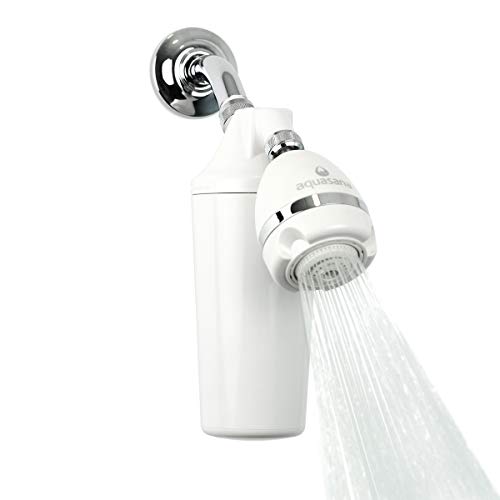
Aquasana AQ-4100 Shower Filter with Shower Head
Carbon + KDF Shower Filter
Best for: Anyone with chlorinated city water who wants a proven filter with a showerhead included
- Media
- Carbon and KDF (per cartridge listing)
- Listed claim
- Reduces 90% of chlorine
- Includes
- Filter and shower head
- Replacement
- AQ-4125 cartridge
Aquasana is best known for home water filtration, and its AQ-4100 is a straightforward shower filter that does the core job well. The listing claims it reduces 90 percent of chlorine, and its replacement cartridge listing describes carbon and KDF filtration media, the combination used in most serious shower filters. It comes with a shower head, so there is only one fitting to install.
What earns it the top spot is credibility rather than features. Aquasana publishes more detail about its filters than most beauty-brand competitors, the claim is specific rather than vague, and the unit avoids the more extravagant promises about hair growth and heavy metals that crowd this category. If you want a filter that reduces chlorine and leaves it at that, this is the most sensible place to start.
Skip it if you already love your showerhead; Aquasana sells a version without one. It costs about twice as much as AquaBliss, and its replacement cartridges are pricier too, so the gap widens over time. And like every filter here, it will not soften hard water.
What We Liked
- Carbon and KDF media, the standard combination for chlorine reduction
- Specific, measurable chlorine claim in the listing
- Shower head included for a single, simple install
- From an established water filtration brand
What We Didn't
- Replacement cartridges cost more than budget filters
- Does not soften hard water
- Included shower head is functional rather than luxurious
The Bottom Line
The most credible all-round shower filter: clear chlorine claims, standard media and an easy install.
AquaBliss SF220 Daily Essential Shower Filter (Chrome)
Multi-Stage Inline Shower Filter
Best for: Budget buyers who want to keep their own showerhead and try a filter cheaply
- Type
- Inline, fits between arm and showerhead
- Cartridge
- Replaceable multi-stage (per listing)
- Replacement
- SFC220 cartridge
- Finish
- Chrome
AquaBliss's SF220 is one of the best-selling shower filters on Amazon and, for most people, the best-value way to find out whether a filter makes a difference to their hair. It screws in between the shower arm and your existing showerhead, so you keep the spray you like, and it uses a replaceable multi-stage cartridge.
It costs about half as much as the Aquasana, and replacement cartridges are inexpensive, which keeps the long-term cost of ownership low. Buyer feedback generally reports softer-feeling hair and skin and a reduced chlorine smell in chlorinated areas, which is exactly what a filter of this type should deliver.
Some AquaBliss listings make broad claims about transforming eczema, acne and hair. Treat those as marketing. The realistic benefit is less chlorine. Skip it if your water is hard but not heavily chlorinated, since it will not remove much calcium or magnesium, or if your water company uses chloramine, where a vitamin C filter is the better bet.
What We Liked
- Low upfront cost and cheap replacement cartridges
- Inline design keeps your existing showerhead
- Simple tool-free install for most standard shower arms
- Large base of buyer feedback
What We Didn't
- Some marketing claims go well beyond the evidence
- Adds length to the shower arm, which can lower the head
- Not effective at softening hard water
The Bottom Line
The cheapest sensible way to test whether a filter helps your hair, while keeping your showerhead.
Culligan ISH-100 Inline Showerhead Filtration Attachment (10,000 Gallon)
Inline Shower Filter
Best for: Renters and anyone who wants a no-frills filter from a water-treatment brand
- Type
- Inline attachment
- Rated capacity
- 10,000 gallons (per listing)
- Replacement
- WHR-140 cartridge
- Finish
- White
Culligan is one of the oldest names in water treatment, and its ISH-100 is a simple inline filter that attaches behind your existing showerhead. The listing rates the cartridge at 10,000 gallons, which gives you a clear basis for working out when to replace it rather than guessing.
It is priced close to the AquaBliss SF220, and the WHR-140 replacement cartridge is one of the cheaper refills in the category. The design is plain white plastic and will not win any style awards, but it installs in minutes, comes off easily when you move out, and does the basic job of reducing chlorine.
Skip it if appearance matters to you or if you want a filter that also changes the spray pattern. Like the other carbon and KDF-style filters here, it is not designed to soften hard water, so do not expect it to stop mineral buildup on your hair.
What We Liked
- Rated capacity in gallons makes replacement timing clear
- Inexpensive replacement cartridges
- From a long-established water treatment brand
- Easy to remove when you move
What We Didn't
- Plain white plastic housing
- Does not soften hard water
- Adds length to the shower arm
The Bottom Line
A practical, low-cost filter for renters who just want less chlorine.
AquaBliss SF100 Daily Revitalize Vitamin C Shower Filter (Chrome)
Vitamin C Inline Shower Filter
Best for: People whose water utility treats with chloramine rather than chlorine
- Media
- Vitamin C (per listing)
- Type
- Inline, keeps your showerhead
- Replacement
- SFC100 cartridge
- Finishes
- Chrome, brushed nickel, matte black
Many water utilities now disinfect with chloramine, a more stable compound of chlorine and ammonia, rather than free chlorine. That matters because carbon and KDF media, which work well on chlorine, are generally less effective on chloramine in the brief contact time a shower allows. Vitamin C, in the form of ascorbic acid, neutralizes both chlorine and chloramine quickly, which is why vitamin C filters make sense in chloraminated areas.
AquaBliss's SF100 is a vitamin C shower filter in the same inline format as the SF220, priced similarly, and available in several finishes. You can find out whether your utility uses chloramine from its annual water quality report, often called a consumer confidence report, or by asking the utility directly.
Vitamin C cartridges tend to be used up faster than carbon-based ones, so you may replace them more often. The listing's mention of vitamin and mineral infusion is marketing; the benefit is dechlorination, not nourishment. Skip it if your water uses free chlorine and you would rather have the longer-lasting SF220 or Aquasana.
What We Liked
- Vitamin C neutralizes chloramine as well as chlorine
- Keeps your existing showerhead
- Affordable, with several finishes
What We Didn't
- Cartridges may need replacing more often
- "Vitamin infusion" claims are marketing, not a hair benefit
- Does not soften hard water
The Bottom Line
The right type of filter if your utility uses chloramine. Check your water report first.
Jolie Filtered Showerhead, High Pressure (Modern Chrome)
All-in-One Filtered Showerhead
Best for: Buyers who want a well-designed filtered showerhead and are happy to pay for the look
- Type
- Showerhead with built-in filter
- Spray
- High pressure (per listing)
- Replacement
- Jolie replacement filter
- Finishes
- Chrome, brushed steel, black, gold
Jolie helped make filtered showerheads a beauty-shelf product. The filter sits inside a sleek, solid-feeling showerhead rather than in a separate canister, so the result looks like a single fixture rather than an add-on. The listing emphasizes high pressure, and buyer feedback is generally positive about the spray and the finish.
The filter does the same core job as the cheaper options on this list: it reduces chlorine. What you are paying extra for is design, finish options and a fixture that looks at home in a renovated bathroom. Jolie costs roughly four times as much as the AquaBliss SF220, and its replacement filters are pricier as well, so the premium continues for as long as you use it.
Skip it if you are buying a filter purely for hair and want the most chlorine reduction per dollar. And do not expect it to soften hard water or treat hair loss; it is a better-looking chlorine filter, not a different kind of product.
What We Liked
- Attractive, integrated design with several finishes
- High-pressure spray per the listing
- Single fixture with no separate canister
What We Didn't
- Costs several times more than budget filters doing the same core job
- Pricier replacement filters
- Does not soften hard water
The Bottom Line
A good-looking filtered showerhead. You are paying for design, not better filtration for your hair.
T3 Source Showerhead with Copper, Zinc and Calcium Mineral Chlorine Filter
Adjustable Filtered Showerhead
Best for: People with chlorinated water that also smells of sulfur, who want an adjustable spray
- Media
- Copper, zinc and calcium minerals
- Listed claim
- Reduces free chlorine and hydrogen sulfide
- Spray
- Adjustable
- Replacement
- T3 Source replacement filter
T3 is best known for hair dryers and stylers, and the Source showerhead brings that hair-care focus to filtration. The listing describes a copper, zinc and calcium mineral filter that reduces free chlorine and hydrogen sulfide, the compound that gives some water a rotten-egg smell. Copper-zinc media is the same family as the KDF used in many filters.
The hydrogen sulfide claim is what sets it apart. If your water has that sulfur smell, a filter that addresses it can make showering more pleasant, though persistent sulfur odors are worth raising with your utility or, on a private well, a water treatment professional. The adjustable spray is also a step up from the basic heads bundled with cheaper filters.
It is one of the most expensive options here, and you are partly paying for the brand. Skip it if your water is simply chlorinated, since the Aquasana or AquaBliss do that job for far less. It is not designed to soften hard water.
What We Liked
- Listing claims reduction of both chlorine and hydrogen sulfide
- Adjustable spray settings
- From a well-known hair tool brand
What We Didn't
- One of the priciest filters on this list
- Brand premium for the same core job
- Does not soften hard water
The Bottom Line
Worth the premium only if your water smells of sulfur as well as chlorine.
Canopy Filtered Shower Head, High Pressure (Nickel)
All-in-One Filtered Showerhead
Best for: Design-focused buyers who like a filter subscription and understand the limits of the claims
- Type
- Showerhead with built-in filter
- Spray
- High pressure (per listing)
- Replacement
- Canopy filter multi-packs
- Finishes
- Nickel, black, chrome
Canopy is a design-led brand known for humidifiers, and its filtered showerhead follows the same approach: a clean, minimalist fixture with replacement filters sold in multi-packs. The listing describes a high-pressure head and the brand offers several finishes, so it fits neatly into a modern bathroom.
Its listing also says it can support hair growth and minimize breakage. There is no good evidence that a shower filter grows hair, and we would not buy it for that reason. What it can reasonably do, like the other filters here, is reduce chlorine, which some people find leaves their hair and skin feeling less dry.
Canopy costs about four times as much as the AquaBliss SF220 upfront, and the replacement packs add up. Skip it if you want the most filtration for your money, or if you were hoping a filter would fix hair thinning; for that, see a dermatologist and look at treatments with real evidence.
What We Liked
- Minimalist design in several finishes
- Built-in filter with no separate canister
- Replacement filters easy to buy in multi-packs
What We Didn't
- Hair growth claims in the listing are not supported by evidence
- High upfront and ongoing cost
- Does not soften hard water
The Bottom Line
A stylish chlorine filter. Buy it for the design, not for the hair growth claim.
Inline Filters vs. Filtered Showerheads vs. Handhelds
Inline filters, such as the AquaBliss SF220 and SF100 and the Culligan ISH-100, screw onto the shower arm and your existing showerhead screws onto them. They are the cheapest option, they let you keep a showerhead you already like, and they are easy to take with you when you move. The trade-off is that they add several inches to the arm, which lowers the head, and they can look bulky.
Filtered showerheads, such as the Jolie, Canopy and T3 Source, hide the filter inside the head itself. They look tidier and often come with a better spray, but you are replacing your showerhead, and you pay more upfront and usually more for refills. The Aquasana sits in between, with a separate filter body and an included head.
Handheld versions put the filter in the handle or the hose connection. They are useful if you rinse your hair separately from showering, wash children or pets, or want to direct water precisely when rinsing out treatments. Several brands, including Aquasana and Culligan, offer handheld models.
Almost every filter here fits a standard shower arm without tools beyond thread tape. Check that your arm has a standard thread, and that there is enough height for an inline filter if your shower is already low. If you rent, an inline filter you can remove without trace is the simplest choice.
| Inline | Filtered showerhead | Handheld | |
|---|---|---|---|
| Upfront cost | Lowest | Highest | Moderate |
| Keeps your showerhead | Yes | No | No |
| Looks | Bulkier | Tidiest | Varies |
| Best for | Budget, renters | Design-focused buyers | Targeted rinsing |
Reading the Claims: Certifications, Percentages and Hair Growth
Shower filter listings are some of the most over-promised products in hair care. Claims of "15-stage" or "20-stage" filtration often describe layers of similar media rather than distinct technologies, and long lists of removed contaminants are rarely backed by published tests. More stages does not automatically mean better chlorine reduction.
The most useful thing to look for is independent certification. NSF/ANSI Standard 177 covers shower filtration systems and tests their ability to reduce free available chlorine. A filter certified to it has been independently shown to do what most buyers want. If a listing mentions certification, check that it names the specific standard and the specific product, not just the brand.
More stages does not automatically mean better chlorine reduction.
Specific claims are more credible than sweeping ones. A listing that says a filter reduces a stated percentage of chlorine is making a testable claim; a listing that says it "transforms" eczema, acne or hair is making a marketing claim. Neither guarantees results in your water, which varies in temperature, pressure and treatment chemistry.
Be especially wary of hair growth claims. Some filter listings say they support hair growth or reduce hair loss. There is no good evidence that any shower filter grows hair, and if you are losing hair, a dermatologist visit and evidence-based treatments such as minoxidil will do far more than changing your showerhead.
The Real Cost: Replacement Cartridges
The unit is a one-time purchase; cartridges are forever. A filter is only working while its media are active, and once they are spent, the filter does little but restrict flow. That makes the replacement cartridge price and lifespan the most important cost in this category, and the one most buyers overlook.
Manufacturers rate cartridges in gallons, months or both. The Culligan ISH-100's listing gives 10,000 gallons, which is a clear benchmark; others give a number of months based on an assumed household use. A large family with long showers will get through a cartridge much faster than one person, so adjust the schedule to how much you actually shower.
The unit is a one-time purchase; cartridges are forever.
Budget inline filters such as the AquaBliss SF220 and Culligan ISH-100 have the cheapest refills. Premium heads such as Jolie and Canopy have noticeably more expensive filters, and some brands sell them as subscriptions or multi-packs. Over a few years, the refill cost can easily exceed what you paid for the unit.
Signs a cartridge is spent include a returning chlorine smell, lower water pressure and the dry, rough feel coming back to your hair and skin. Mark the replacement date on your calendar when you install a new one. A filter left in long past its life is costing you water pressure and delivering none of the benefit.
A Better Routine for Hair in Hard or Chlorinated Water
A filter works best as one part of a routine rather than the whole plan. If your water is hard, use a clarifying or chelating shampoo about once a week, or as often as buildup returns, to lift mineral deposits from the hair. Follow it with conditioner, since clarifying shampoos can leave hair feeling stripped.
On other days, use a gentle shampoo suited to your hair type and condition the lengths every time you wash. A lightweight leave-in conditioner helps fine or damaged hair resist the roughness that minerals and chlorine can cause. If your hair is already dry, brittle or chemically treated, a regular repair treatment does more than any filter.
If your hair is thinning or shedding, the shower is very unlikely to be the cause.
Rinse with water that is warm rather than very hot, which is easier on hair and skin and also helps carbon-based filters work better. Swimmers should wet their hair with tap water before getting into a pool and rinse promptly afterward, since pool chlorine is far stronger than anything in tap water.
Finally, keep the problem in proportion. If your hair feels rough, a filter and a clarifying shampoo are reasonable, inexpensive experiments. If your hair is thinning or shedding, the shower is very unlikely to be the cause. See a doctor or dermatologist to check for common causes such as low iron, thyroid problems or pattern hair loss.
Compared Side by Side
| Product | Type | Media / Claim (per listing) | Keeps Your Showerhead | Best For |
|---|---|---|---|---|
| Aquasana AQ-4100 | Filter with head | Carbon + KDF; 90% chlorine | No (head included) | Best overall |
| AquaBliss SF220 | Inline | Multi-stage cartridge | Yes | Best value |
| Culligan ISH-100 | Inline | 10,000-gallon cartridge | Yes | Renters, budget |
| AquaBliss SF100 | Inline | Vitamin C | Yes | Chloramine |
| Jolie Filtered Showerhead | Filtered showerhead | Chlorine filter | No | Premium design |
| T3 Source Showerhead | Filtered showerhead | Copper, zinc, calcium minerals | No | Sulfur smell |
| Canopy Filtered Shower Head | Filtered showerhead | Chlorine filter | No | Design-led buyers |
Ready to Buy? Our Picks Again
- 1Check Price →
Best Overall
Aquasana AQ-4100 Shower Filter with Shower Head - 2Check Price →
- 3Check Price →
Best Budget Inline
Culligan ISH-100 Inline Showerhead Filtration Attachment (10,000 Gallon) - 4Check Price →
Best for Chloramine (Vitamin C)
AquaBliss SF100 Daily Revitalize Vitamin C Shower Filter (Chrome) - 5Check Price →
Best Premium Filtered Showerhead
Jolie Filtered Showerhead, High Pressure (Modern Chrome) - 6Check Price →
Best for Sulfur-Smelling Water
T3 Source Showerhead with Copper, Zinc and Calcium Mineral Chlorine Filter - 7Check Price →
Best Design-Led Pick
Canopy Filtered Shower Head, High Pressure (Nickel)
Common Mistakes to Avoid
Expecting a Filter to Soften Hard Water
Shower filters reduce chlorine; they do not meaningfully remove calcium and magnesium. If mineral buildup is your problem, a weekly clarifying or chelating shampoo will help far more. If you want soft water throughout the home, you need an ion-exchange water softener, not a cartridge on the shower arm.
Buying a Carbon Filter for Chloraminated Water
Many utilities use chloramine, which carbon and KDF struggle to remove in the short contact time of a shower. Check your utility's water quality report before you buy. If it uses chloramine, a vitamin C filter such as the AquaBliss SF100 is the type most likely to make a difference.
Never Replacing the Cartridge
A spent cartridge does nothing for your hair and can reduce water pressure. Note the rated lifespan in gallons or months, adjust it for how much your household showers, and set a reminder. When the chlorine smell or rough feel returns, the cartridge is probably done.
Believing Hair Growth Claims
Some filter listings say they support hair growth or reduce hair loss. There is no good evidence that any shower filter grows hair. If you are shedding or thinning, see a dermatologist and look at treatments with real evidence, such as minoxidil, rather than relying on your showerhead.
Paying Extra for Stages and Looks Alone
A 20-stage filter is not necessarily better than a two-stage one, and a beautiful showerhead filters chlorine no better than a plain inline unit. Compare the specific claims, any NSF/ANSI 177 certification and the cost of replacement cartridges before paying a premium for numbers or design.
Frequently Asked Questions
What is the best shower filter for hair?
For most people, the Aquasana AQ-4100 is the best shower filter for hair: it uses carbon and KDF media, makes a specific chlorine reduction claim and includes a shower head. The AquaBliss SF220 is the best value if you want to keep your own showerhead. If your utility uses chloramine, choose a vitamin C filter.
Do shower filters actually help hair?
They can help hair feel softer and less dry if your water is heavily chlorinated, especially for fine, color-treated or damaged hair. The effect is modest and varies with your water. They do not soften hard water meaningfully, and they do not treat hair loss.
Can hard water cause hair loss?
There is no good evidence that it does. Hard water can leave mineral deposits that make hair feel rough and look dull, and small studies on hair strength have had mixed results. Hair loss is driven by genetics, hormones, nutrition, illness and medical conditions, so see a doctor if you are shedding.
Do shower filters soften hard water?
Not meaningfully. Softening requires removing or exchanging calcium and magnesium, which ion-exchange water softeners do, usually for the whole house. A shower filter cartridge has too little media and too little contact time to change hardness much. Use a clarifying shampoo to remove mineral buildup instead.
Are vitamin C shower filters better?
They are better for chloramine, which many utilities now use instead of chlorine, because vitamin C neutralizes chloramine quickly. For free chlorine, KDF and carbon filters work well and their cartridges often last longer. Check your utility's water quality report to see which disinfectant it uses.
How often should I change a shower filter cartridge?
Follow the manufacturer's rating in gallons or months, and adjust for your household. A family with long daily showers will use a cartridge up much faster than one person. A returning chlorine smell, lower pressure or the rough feel coming back to your hair are signs it is time to replace it.
Will a shower filter help color-treated hair last longer?
It may help a little in chlorinated areas, since chlorine is an oxidizer that can contribute to dryness and fading over time. But heat, sun, frequent washing and harsh shampoos usually matter more. Use color-safe shampoo, wash less often, rinse with cooler water and use heat protection alongside any filter.
The Bottom Line
Buy a shower filter to reduce chlorine, not to soften water or grow hair. The Aquasana AQ-4100 is the most credible all-rounder, the AquaBliss SF220 is the best value, and a vitamin C filter like the AquaBliss SF100 is the right choice if your water uses chloramine. For hard-water buildup, a clarifying shampoo does more.
More Buyer's Guides
Hair Care
Best Clarifying Shampoo
A clarifying shampoo is a reset button for hair weighed down by product, oil, minerals or pool water. Used every week or few weeks, it makes hair lighter and your other products work better. Used too often, it dries hair and fades color.
Hair Care
Best Hair Treatment for Damaged Hair
Bleach, color and heat break hair from the inside; dryness and friction rough it up from the outside. The right treatment depends on which kind of damage you have. These are the bond builders and masks worth buying for each.
Hair Care
Best Leave-In Conditioner
A good leave-in detangles, softens and cuts down on the breakage that makes hair look thinner than it is. The wrong one weighs fine hair flat or leaves curls thirsty. Here is how to pick by texture, and the formulas worth buying.
Hair Care
Best Shampoo for Thinning Hair
The right shampoo will not regrow hair, but it can make thinning hair look and feel noticeably fuller from the first wash. These are the thickening and volumizing shampoos worth buying, matched to hair type.
Hair Care
Best Hair Care Products for Women
Most women do not need a twelve-step routine. They need a gentle shampoo, a conditioner that suits their hair, one repair step, and protection from heat. These are the products we would build that routine around.
Hair Care
Best Scalp Scrub
A good scalp scrub clears product buildup, excess oil and dead skin that shampoo leaves behind. It will not regrow hair, and the wrong one can irritate. These are the physical and chemical scalp exfoliants worth using, and who should skip them.