Our Picks at a Glance
- 1
 Check Price →
 - 2
 Check Price →
Best Caffeine Shampoo
Alpecin C1 Caffeine Shampoo (8.45 fl oz) - 3
 Check Price →
Best Botanical Blend
PURA D'OR Original Gold Label Anti-Hair Thinning Biotin Shampoo (16 oz) - 4
 Check Price →
Best Premium Formula
DS Labs Revita Hair Density Shampoo for Thinning Hair (205 mL) - 5
 Check Price →
Best Clarifying Formula
REGENEPURE DR DHT Blocker Clarifying Shampoo, Saw Palmetto & Salicylic Acid - 6
 Check Price →
Best Multi-Ingredient Blend
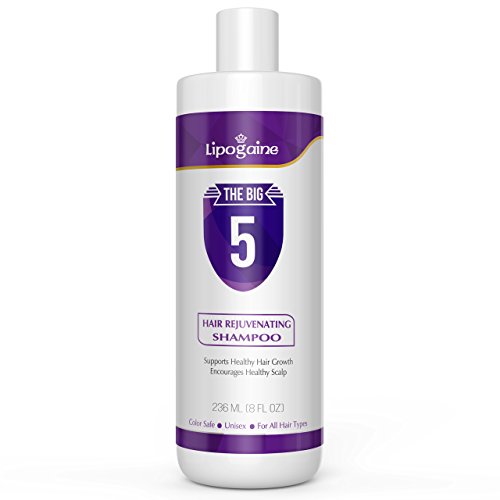
Lipogaine Big 5 Hair Stimulating Shampoo with Biotin, Caffeine and Saw Palmetto
The Short Version
- No shampoo is FDA-approved to block DHT or regrow hair. The proven DHT blocker, finasteride, is a prescription drug.
- Ketoconazole has the best human evidence of any common shampoo ingredient for hair loss, which is why Nizoral tops this list.
- Caffeine shampoos such as Alpecin C1 have lab research behind them but little clinical proof of regrowth.
- Saw palmetto has modest evidence as an oral supplement; there is little evidence it does much in a shampoo rinsed off after minutes.
- Use any DHT shampoo as an add-on to minoxidil or finasteride, never as your only treatment.
On This Page · 12 sections
Searching for the best DHT blocker shampoo puts you in one of the most heavily marketed corners of the hair loss aisle. Labels promise to block DHT with saw palmetto, caffeine, biotin, pumpkin seed oil and long lists of botanicals, and many of the products are pleasant to use. What they rarely mention is that a shampoo spends a few minutes on your scalp before going down the drain, and that the evidence for most of these ingredients working in a rinse-off product is thin.
That does not make the category useless. One common shampoo ingredient, ketoconazole, has small but genuine human studies suggesting a modest benefit for pattern hair loss. Caffeine has interesting laboratory research behind it. And a good scalp-care shampoo can be a sensible part of a routine built around proven treatments. So we ranked these products on the evidence behind their key ingredients first, then on formula, tolerability and value, and we say plainly where a claim outruns the science.
This guide is about shampoos sold on a DHT-blocking promise. If you mainly want ketoconazole for dandruff, our best ketoconazole shampoo guide goes deeper on Nizoral sizes and rotation shampoos. If you want an everyday shampoo for growth without the DHT angle, see the best hair growth shampoo, and for cosmetic volume, the best shampoo for thinning hair. Every product below links to its exact Amazon listing, matched by ASIN.
What DHT Is and Why It Matters for Hair Loss
Dihydrotestosterone, or DHT, is a hormone made from testosterone by an enzyme called 5-alpha reductase. In people with a genetic sensitivity, DHT binds to receptors in scalp hair follicles and gradually shrinks them. Each growth cycle produces a shorter, finer hair, until some follicles stop producing visible hair at all. This process, called miniaturization, is the core of male pattern hair loss.
That is why lowering DHT works. Finasteride, a prescription tablet, blocks 5-alpha reductase and reduces DHT levels, and it is one of only two drugs approved by the FDA for male pattern hair loss. The other, minoxidil, works differently, by supporting the growth phase of the follicle rather than lowering DHT. Neither is a shampoo, and both keep working only as long as you keep using them.
The phrase DHT blocker on a shampoo label borrows the credibility of finasteride.
In women, the role of DHT is less clear-cut. Female pattern hair loss involves androgens in some women but not all, and the treatment approach is different. Finasteride is not approved for women and must not be used during pregnancy because it can affect a male fetus.
The phrase DHT blocker on a shampoo label borrows the credibility of finasteride. The question worth asking is whether a shampoo, which spends a few minutes on the scalp before being rinsed away, can lower DHT in the follicle enough to make a difference.
Can a Shampoo Really Block DHT?
In short, not in any way that has been convincingly shown. To lower DHT in the follicle, an ingredient has to penetrate the scalp, reach the follicle in a meaningful concentration, and inhibit the enzyme or the hormone's effect for long enough to matter. A shampoo is lathered for a minute or two and then rinsed off, which gives it a very short window.
No shampoo has been approved by the FDA to block DHT or to regrow hair. Labels can use phrases like DHT blocker or for thinning hair because cosmetics are not required to prove drug-like effects in clinical trials, as long as they avoid explicit claims to treat a disease.
No shampoo has been approved by the FDA to block DHT or to regrow hair.
There are two honest exceptions to the gloom. Ketoconazole, an antifungal drug in shampoos such as Nizoral, has small human studies suggesting a modest benefit in pattern hair loss, possibly through local anti-androgen and anti-inflammatory effects. And caffeine has laboratory research showing it can move toward the follicle within a short contact time, though clinical proof of regrowth from a shampoo is lacking.
So the practical answer is that a DHT shampoo can be a reasonable part of a routine, especially if it contains ketoconazole, but it cannot stand in for finasteride or minoxidil. If a label implies otherwise, it is selling you hope rather than evidence. That is why we ranked on ingredient evidence first and treated everything else, from scent to bottle size, as secondary.
The 6 Best DHT Blocker Shampoos
We ranked these shampoos on the strength of the evidence behind their key ingredients, then on formula, tolerability and value. Only the top pick has meaningful human research for hair loss; the rest are best treated as pleasant daily shampoos to use alongside a proven treatment.
Nizoral Anti-Dandruff Shampoo with 1% Ketoconazole, Fresh Scent (14 fl oz)
1% Ketoconazole Shampoo
Best for: Anyone who wants the shampoo ingredient with the best hair loss evidence
- Key active
- 1% ketoconazole
- Evidence
- Small human studies
- Size
- 14 fl oz
- Use
- 2-3 times a week
Nizoral is not marketed as a DHT blocker, which is part of why it tops this list. It is an anti-dandruff shampoo containing 1% ketoconazole, an antifungal drug. But ketoconazole is also the shampoo ingredient with the most human research in pattern hair loss: small studies, mostly using the 2% prescription strength, have reported improvements in hair density, and researchers have proposed that it may have local anti-androgen and anti-inflammatory effects.
That evidence is modest and not strong enough for an approved hair loss claim. Still, it is more than any saw palmetto or caffeine shampoo can point to, and Nizoral is inexpensive per wash because you use it only two or three times a week. It is the shampoo most often paired with minoxidil and finasteride in hair loss routines.
The trade-offs are cosmetic. Ketoconazole can leave hair dry or rough, so condition the lengths, and it is not designed as a daily shampoo. Skip it if you are allergic to azole antifungals. For sizes, rotation shampoos and dandruff details, see our dedicated ketoconazole guide.
What We Liked
- Best human evidence of any common shampoo ingredient for hair loss
- Also treats dandruff and seborrheic dermatitis
- Low cost per wash at two or three uses a week
- Long-established over-the-counter brand
What We Didn't
- Not marketed or approved as a hair loss product
- Can leave hair dry or rough
- Only 1% over the counter; most studies used 2%
The Bottom Line
The only shampoo here with real human evidence for hair loss. Start here before paying for DHT marketing.
Alpecin C1 Caffeine Shampoo (8.45 fl oz)
Caffeine Shampoo
Best for: Men who want a daily shampoo with the best-studied cosmetic active
- Key active
- Caffeine
- Evidence
- Mostly lab research
- Size
- 8.45 fl oz
- Use
- Daily; leave on about 2 minutes
Alpecin C1 is the best-known caffeine shampoo in the world, made by Dr. Kurt Wolff, the German company that has been building its brand around caffeine for years. The pitch is that caffeine counteracts some of testosterone's effects on the hair follicle, and the brand advises leaving the lather on for about two minutes so the caffeine can reach the scalp.
The research picture is mixed. Laboratory studies, several funded by the manufacturer, suggest caffeine can penetrate toward the follicle and influence hair growth in cell and tissue models. What is missing is strong clinical evidence that a caffeine shampoo regrows hair or meaningfully slows pattern hair loss in people. So it is better described as a plausible, low-risk add-on than as a DHT blocker.
Where Alpecin wins is everyday usability. It is inexpensive, easy to find, gentle enough for daily use and pleasant to wash with, which makes it a natural daily shampoo on the days you are not using Nizoral. Skip it if you expect it to replace minoxidil or finasteride. If you like it, the larger bottles and multipacks Alpecin sells bring the cost per wash down further, which matters for a shampoo you use every day.
What We Liked
- Caffeine is the best-researched cosmetic hair loss active in shampoos
- Inexpensive and widely available
- Gentle enough for daily use alongside ketoconazole
What We Didn't
- Little clinical proof of regrowth in people
- Needs a couple of minutes of contact time each wash
- Brand marketing goes further than the evidence
The Bottom Line
A good daily shampoo with a plausible active. Pair it with Nizoral and a proven treatment.
PURA D'OR Original Gold Label Anti-Hair Thinning Biotin Shampoo (16 oz)
Botanical Anti-Thinning Shampoo
Best for: Buyers who prefer a botanical formula and value a pleasant wash
- Key actives
- Biotin and botanicals
- Evidence
- Weak for hair loss
- Size
- 16 oz
- Use
- Daily
Pura d'Or's Gold Label shampoo is one of the best-selling anti-thinning shampoos on Amazon. It combines biotin with a long list of botanical extracts and oils that the brand promotes for thinning hair, and it is often bought by people specifically looking for a natural DHT-blocking formula.
We rank it for what it does well: it is a nourishing, pleasant shampoo with a large buyer base, and the 16-ounce bottle is reasonable value for a botanical formula. What it cannot point to is good evidence that its ingredients block DHT or regrow hair from a rinse-off product. Biotin helps hair only in people who are genuinely deficient, and there is little evidence that applying it in a shampoo does anything at all.
Some users with sensitive scalps react to botanical blends and essential oils, so patch-test first if that is you. Skip it if you are buying it as a hair loss treatment rather than as a nice daily shampoo to use alongside one. If you do buy it, use it on the days between ketoconazole washes rather than instead of them, so you keep the one ingredient with real evidence in your routine.
What We Liked
- Large, loyal buyer base and a pleasant wash
- Big bottle at a reasonable price for a botanical formula
- Works as a daily shampoo between ketoconazole washes
What We Didn't
- Weak evidence that its ingredients block DHT from a shampoo
- Botanical blends can irritate sensitive scalps
- Marketing implies more than the evidence supports
The Bottom Line
A popular, pleasant botanical shampoo. Buy it for how it feels, not as a DHT blocker.
DS Labs Revita Hair Density Shampoo for Thinning Hair (205 mL)
Hair Density Shampoo
Best for: Buyers who want a premium, color-safe scalp shampoo from a hair loss brand
- Key active
- Caffeine-based blend
- Evidence
- Weak for hair loss
- Size
- 205 mL
- Color safe
- Yes
DS Laboratories has a long history in the hair loss market, and Revita is its flagship density shampoo. It uses a caffeine-based blend alongside other ingredients the brand promotes for hair density, in a color-safe formula aimed at men and women with thinning hair.
Revita is well formulated and well liked by buyers who want something more refined than a drugstore shampoo. As with every product on this list except Nizoral, though, there is no strong clinical evidence that it blocks DHT or regrows hair. You are paying for a premium formula and feel, not for a proven treatment.
Skip it if budget matters. Alpecin offers a similar caffeine-led approach for much less, and Nizoral offers better evidence. Revita makes the most sense for people who already have a proven routine in place and want a higher-end daily shampoo to go with it. Its color-safe formula is also a point in its favor for women and anyone with dyed hair, who are often poorly served by harsh clarifying shampoos.
What We Liked
- From an established hair loss brand
- Color-safe formula suitable for men and women
- Refined texture and feel compared with drugstore options
What We Didn't
- Expensive for the size
- No strong evidence it blocks DHT or regrows hair
The Bottom Line
A polished premium shampoo, but not a better DHT blocker than cheaper options.
REGENEPURE DR DHT Blocker Clarifying Shampoo, Saw Palmetto & Salicylic Acid
Saw Palmetto Clarifying Shampoo
Best for: Oily scalps with build-up that want a clarifying DHT-marketed shampoo
- Key actives
- Saw palmetto, salicylic acid
- Evidence
- Weak for hair loss
- Role
- Clarifying
- Use
- A few times a week
Regenepure DR has been a fixture in hair loss forums for years. Its current listing describes it as a DHT blocker clarifying shampoo built around saw palmetto and salicylic acid. The salicylic acid is the part with a clear, practical job: it helps loosen oil, scale and product build-up on the scalp.
The saw palmetto is the DHT claim, and it is the weak link. Oral saw palmetto has small trials suggesting a modest effect on male pattern hair loss, well short of finasteride. There is little evidence that saw palmetto in a shampoo, rinsed away after a few minutes, reduces scalp DHT enough to matter.
Treat Regenepure DR as a clarifying scalp shampoo for oily or congested scalps, used a few times a week. Skip it if your scalp is dry or sensitive, because salicylic acid can be drying, or if you are looking for ketoconazole: the current listing does not claim to contain it.
What We Liked
- Salicylic acid helps clear oil and build-up
- Long reputation in hair loss communities
- Works well as a weekly clarifying wash
What We Didn't
- Little evidence saw palmetto works in a shampoo
- Can be drying on sensitive scalps
- Pricier than drugstore clarifying shampoos
The Bottom Line
A decent clarifying shampoo with a DHT label. Buy it for the scalp care, not the DHT claim.
Lipogaine Big 5 Hair Stimulating Shampoo with Biotin, Caffeine and Saw Palmetto
Saw Palmetto and Caffeine Shampoo
Best for: Buyers who want saw palmetto, caffeine and biotin in one bottle
- Key actives
- Saw palmetto, caffeine, biotin
- Evidence
- Weak for hair loss
- Extras
- Argan and castor oils
- Use
- Daily
Lipogaine Big 5 puts most of the popular DHT-shampoo ingredients into one formula: biotin, caffeine, saw palmetto, argan oil and castor oil. Lipogaine is better known for its minoxidil products, and this shampoo is pitched as a companion to them, for men and women with thinning hair and breakage.
Combining ingredients does not combine evidence. Caffeine has lab research, saw palmetto has modest oral evidence, and biotin helps only people who are deficient; none has strong proof of regrowing hair from a shampoo. The oils may help hair feel softer and less prone to breakage, which is a real if cosmetic benefit.
If you like the idea of a single bottle that covers the popular ingredients, Big 5 is a reasonable choice and priced in the middle of this list. Skip it if you have a sensitive scalp or oily hair that oil-rich formulas tend to weigh down. As with every shampoo here, it works best as a companion to minoxidil, never as a substitute for it.
What We Liked
- Covers caffeine, saw palmetto and biotin in one product
- Oils help with softness and breakage
- Suitable for men and women
What We Didn't
- No strong evidence for any of its actives in a shampoo
- Oils can weigh down fine or oily hair
The Bottom Line
A convenient all-in-one DHT-style blend. Pleasant, but not proven.
DHT Blocker Ingredients: What the Evidence Says
Ketoconazole has the strongest case. Its evidence comes from small studies rather than large trials, and most used the 2% prescription strength, but it is the only common shampoo active with human data in pattern hair loss. It also treats dandruff and seborrheic dermatitis, which often accompany thinning hair.
Caffeine comes second. Laboratory and tissue studies suggest it can stimulate hair follicles and counter some effects of testosterone, and there is some early clinical work on leave-on caffeine liquids. A shampoo rinsed after two minutes is a different thing, and convincing clinical evidence for caffeine shampoos is still missing.
Saw palmetto has modest evidence as an oral supplement, where small trials suggest it may slow male pattern hair loss somewhat, though less than finasteride. There is little evidence that it does much in a shampoo. Biotin only helps hair in people who are deficient, and topical biotin has no meaningful evidence. Pumpkin seed oil, nettle, green tea and similar botanicals have limited or preliminary data at best.
The pattern is clear: the ingredient most labels lead with is rarely the one with the best evidence. If you only buy one shampoo for hair loss, make it one with ketoconazole. Saw palmetto, if you want to try it, has a stronger case as an oral supplement, which our saw palmetto guide covers.
| Evidence for Hair Loss | Best Form | Verdict | |
|---|---|---|---|
| Ketoconazole | Small human studies | Shampoo | Worth using |
| Caffeine | Mostly lab research | Leave-on or shampoo | Plausible add-on |
| Saw palmetto | Modest, oral only | Oral supplement | Weak in shampoo |
| Biotin | Only if deficient | Oral, if deficient | Little value topically |
| Botanical blends | Limited or preliminary | Varies | Mostly marketing |
How to Get the Most From a DHT Blocker Shampoo
Contact time is the single biggest variable you control. Whatever shampoo you use, massage it into the scalp rather than the lengths and leave it on for a few minutes before rinsing. Alpecin, for example, advises about two minutes; ketoconazole benefits from several.
A sensible routine combines two shampoos. Use Nizoral two or three times a week for its ketoconazole, and a gentle daily shampoo, such as a caffeine formula, on the other days. That gives you the ingredient with the best evidence without the dryness of using ketoconazole every day. Condition the lengths, not the scalp, if your hair feels rough after medicated washes.
Contact time is the single biggest variable you control.
If you use minoxidil, wash first, let your scalp dry fully, then apply minoxidil to the dry scalp. Avoid washing soon after applying it, because shampooing rinses away the dose before it has time to absorb.
Give any shampoo routine a fair trial of several months, and track progress with photos in consistent light. If you notice no change in shedding or density after six months of a full routine including minoxidil, the shampoo is not the part to tweak; talk to a dermatologist about prescription options.
The DHT Blockers That Actually Work
If lowering DHT is your goal, the most effective tool is finasteride, a prescription tablet that blocks 5-alpha reductase. Large clinical trials show it slows or stops hair loss in most men who take it, and many see some regrowth. It is available through doctors and telehealth services, often at low cost as a generic.
Finasteride has side effects worth discussing with a doctor. A small minority of men report sexual side effects, and some report mood changes. It is not approved for women, and women who are or may become pregnant should not handle crushed or broken tablets. Topical finasteride is also prescribed by some clinicians as an alternative intended to reduce whole-body exposure.
the most effective tool is finasteride, a prescription tablet that blocks 5-alpha reductase
Dutasteride, a stronger 5-alpha reductase inhibitor, is sometimes prescribed off-label for hair loss. For women with female pattern hair loss, doctors may consider anti-androgens such as spironolactone. All of these require a prescription and medical supervision.
Minoxidil does not block DHT, but it is the only FDA-approved over-the-counter topical for regrowing hair, and it combines well with finasteride. A routine of finasteride, minoxidil and ketoconazole shampoo is popular for a reason: it pairs the two proven drugs with the one shampoo ingredient that has some evidence behind it.
Who Should Buy a DHT Blocker Shampoo?
A DHT shampoo makes the most sense for someone who already has a proven treatment in place and wants to add a low-risk extra. In that role, a ketoconazole shampoo is the best choice, and a caffeine shampoo is a reasonable daily companion.
It also makes sense if you have dandruff, an oily scalp or build-up and want a shampoo that addresses those while fitting a hair loss routine. Clarifying formulas with salicylic acid and antifungal shampoos genuinely help with scalp comfort, which matters when you are applying minoxidil every day.
Spending months on a saw palmetto shampoo while your hair loss progresses is a common and costly detour.
It makes less sense as a first step for someone noticing early thinning. Spending months on a saw palmetto shampoo while your hair loss progresses is a common and costly detour. Hair that miniaturizes for years is harder to recover, so start with the treatments that have the strongest evidence and add shampoos later. A DHT shampoo bought on day one is fine; a DHT shampoo bought instead of minoxidil is not.
If you are not sure what kind of hair loss you have, especially if it is sudden, patchy or accompanied by scalp symptoms, see a dermatologist before buying anything. Pattern hair loss is common, but it is not the only cause of thinning. Iron deficiency, thyroid problems, stress-related shedding and scalp conditions can all look similar at first, and none of them responds to a DHT shampoo.
Compared Side by Side
| Product | Key Active | Evidence | Use | Best For |
|---|---|---|---|---|
| Nizoral 1% (14 oz) | Ketoconazole | Small human studies | 2-3x a week | Best evidence |
| Alpecin C1 | Caffeine | Mostly lab | Daily | Daily caffeine wash |
| Pura d'Or Gold Label | Biotin, botanicals | Weak | Daily | Botanical fans |
| DS Labs Revita | Caffeine blend | Weak | Daily | Premium feel |
| Regenepure DR | Saw palmetto, salicylic acid | Weak | Few times a week | Oily scalps |
| Lipogaine Big 5 | Saw palmetto, caffeine, biotin | Weak | Daily | All-in-one blend |
Ready to Buy? Our Picks Again
- 1Check Price →
- 2Check Price →
Best Caffeine Shampoo
Alpecin C1 Caffeine Shampoo (8.45 fl oz) - 3Check Price →
Best Botanical Blend
PURA D'OR Original Gold Label Anti-Hair Thinning Biotin Shampoo (16 oz) - 4Check Price →
Best Premium Formula
DS Labs Revita Hair Density Shampoo for Thinning Hair (205 mL) - 5Check Price →
Best Clarifying Formula
REGENEPURE DR DHT Blocker Clarifying Shampoo, Saw Palmetto & Salicylic Acid - 6Check Price →
Best Multi-Ingredient Blend
Lipogaine Big 5 Hair Stimulating Shampoo with Biotin, Caffeine and Saw Palmetto
Common Mistakes to Avoid
Using a Shampoo Instead of a Real Treatment
No shampoo is approved to block DHT or regrow hair. If your hair is thinning, a shampoo alone will at best support your scalp while the loss continues. Build your routine around minoxidil and, for men, a conversation with a doctor about finasteride, then add a shampoo as an extra rather than the foundation.
Choosing by the Label's Ingredient List
The longer the list of botanicals, the more impressive a DHT shampoo looks, but most of those ingredients have little evidence in a rinse-off product. The one common shampoo ingredient with human data in hair loss is ketoconazole, and it usually appears on anti-dandruff shampoos rather than products labeled as DHT blockers.
Rinsing Too Quickly
A shampoo cannot do much in ten seconds. Whatever you use, work it into the scalp and leave it on for a few minutes before rinsing. Without contact time, even the ingredients with some evidence behind them have little chance to reach the skin, and you are paying for an expensive cleanser.
Paying Premium Prices for Unproven Blends
Some DHT shampoos cost several times more than a bottle of Nizoral while offering weaker evidence. If budget is limited, spend it on minoxidil, which is proven, and a ketoconazole shampoo, which has some support. A premium daily shampoo is a nice extra only once those are covered.
Waiting Too Long to See a Doctor
Months spent hoping a shampoo will stop progressing hair loss are months of follicles shrinking. If you have been using a DHT shampoo without results, or your hair loss is sudden or patchy, see a dermatologist. Prescription options such as finasteride work far better when started early.
Frequently Asked Questions
What is the best DHT blocker shampoo?
The best DHT blocker shampoo by evidence is a ketoconazole shampoo such as Nizoral 1%. It is not marketed as a DHT blocker, but ketoconazole is the only common shampoo ingredient with human studies in pattern hair loss. Alpecin C1 is the best caffeine option for daily use alongside it.
Do DHT blocking shampoos actually work?
Mostly not in the way their labels imply. A shampoo stays on the scalp for minutes, and there is little evidence most DHT-blocker ingredients lower follicle DHT from a rinse-off product. Ketoconazole has small studies suggesting a modest benefit. No shampoo is FDA-approved to block DHT or regrow hair.
Does saw palmetto shampoo block DHT?
There is little evidence that it does. Oral saw palmetto has small trials suggesting a modest effect on male pattern hair loss, well short of finasteride. Saw palmetto in a shampoo is rinsed away after a few minutes, and there is no good evidence it meaningfully lowers DHT in the follicle.
Does caffeine shampoo help hair loss?
Possibly a little, but it is unproven. Laboratory studies suggest caffeine can reach the follicle and stimulate growth in tissue models, and there is some early research on leave-on caffeine products. Convincing clinical evidence that caffeine shampoos regrow hair is lacking, so treat them as a low-risk add-on.
What is the strongest DHT blocker?
Among approved treatments for male pattern hair loss, finasteride is the standard DHT blocker, and it is a prescription drug. Dutasteride, a stronger inhibitor, is sometimes prescribed off-label. Both require a doctor. No shampoo comes close to their effect on DHT levels.
Can women use DHT blocker shampoo?
Yes, most DHT-marketed shampoos are cosmetic and suitable for women, though the evidence is just as thin. For women with pattern hair loss, minoxidil is the proven over-the-counter treatment. Women who are pregnant or breastfeeding should check with a doctor before using medicated shampoos.
How often should I use a DHT blocker shampoo?
Most caffeine and botanical DHT shampoos are designed for daily use. Ketoconazole shampoo is best used two or three times a week, with a gentle shampoo on other days. Whatever you use, leave the lather on the scalp for a few minutes before rinsing.
The Bottom Line
The best DHT blocker shampoo is the one with evidence: a ketoconazole shampoo like Nizoral, used two or three times a week. Caffeine shampoos such as Alpecin C1 make reasonable daily companions, and botanical blends are pleasant but unproven. None of them blocks DHT the way finasteride does, so use them to support minoxidil and a doctor-guided plan, not to replace one.
More Buyer's Guides
Hair Growth & Hair Loss
Best Ketoconazole Shampoo
Ketoconazole is a proven dandruff fighter with a small but intriguing body of evidence for hair loss. Over the counter, one brand dominates, so the smarter questions are which size to buy, how to use it, and what to rotate it with.
Hair Growth & Hair Loss
Best Saw Palmetto for Hair Loss
Saw palmetto has more real evidence for hair than almost anything else in the supplement aisle. It is also clearly weaker than finasteride. Buying the right extract at the right dose is the difference between giving it a fair trial and wasting six months.
Hair Growth & Hair Loss
Best Hair Growth Shampoo
A shampoo cannot regrow hair by itself, but the right one keeps your scalp healthy, reduces breakage and fits around treatments that do work. Here is how the best-selling growth shampoos compare.
Hair Growth & Hair Loss
Best Minoxidil for Men
Every product here contains 5% minoxidil, the only topical hair regrowth drug the FDA has approved for men. What separates them is the vehicle, the irritation risk, and what you pay per month for the next decade.
Hair Growth & Hair Loss
Best Hair Growth Products for Men
Male pattern hair loss has two treatments with strong evidence and a long tail of add-ons with weaker support. We picked the best product in each category and ranked them in the order you should actually spend your money.
Men's Grooming
Best Shampoo for Men
Men's shampoos are mostly marketed on fragrance and packaging, but what actually matters is whether a formula suits an oily, dry or flaky scalp and how often you wash. These are the everyday shampoos that get it right.