Our Picks at a Glance
The Short Version
- Evidence that collagen supplements grow hair is limited. Collagen is best understood as a convenient protein source, not a hair loss treatment.
- Vital Proteins Collagen Peptides is the best overall pick: a widely available, easy-mixing bovine collagen powder from an established brand.
- Orgain Hydrolyzed Collagen Peptides is the best value, and Sports Research Marine Collagen is the best choice if you prefer a fish source.
- Collagen is an incomplete protein. Total protein intake, iron, vitamin D and thyroid health matter more for hair than collagen specifically.
- Marine collagen is unsuitable for fish allergies, multi-source blends may contain egg, and no collagen is vegan.
On This Page · 12 sections
If you are looking for the best collagen for hair growth, the most important thing to know first is that the evidence is limited. Collagen is a protein, hair is built from protein, and there is a reasonable biological case that adequate protein supports healthy hair. What is missing is strong clinical proof that taking a collagen supplement makes hair grow faster, thicker or fuller in people who already eat enough protein. Small studies and brand-funded research exist, but large, independent, placebo-controlled trials isolating collagen's effect on hair do not.
That does not make collagen useless. It is a convenient, easily mixed protein that many people take for skin, joints or general nutrition, and if your diet is low in protein, it can help close the gap. It does mean you should buy it the way you would buy any protein: on quality, source, purity and cost per serving, not on hair-growth promises printed on the tub. This page is about collagen specifically. If you want a broader hair supplement, including multivitamin formulas and ingredients like biotin, iron and vitamin D, see our guide to the best hair growth vitamins.
We ranked the products below on the factors that genuinely differ: the collagen source (bovine, marine or multi-source), how clearly the label states what is in each serving, whether the product is a single ingredient or a blend with extras, how well it mixes, the cost per serving based on typical listing prices, and the consistency of verified buyer feedback. We did not reward hair claims, because no collagen product has strong evidence for them. Every pick links to its exact Amazon listing by ASIN.
Does Collagen Help Hair Grow? What the Evidence Says
The honest answer is that we do not know, and the best available evidence is not strong. There are laboratory and animal studies suggesting collagen-derived peptides may affect the environment around hair follicles, and a small number of human studies, often funded by supplement makers, report modest improvements in hair appearance with formulas that include collagen. What is missing is large, independent, placebo-controlled trials that isolate collagen itself and measure real hair outcomes over months.
Many studies cited in collagen marketing actually looked at skin, such as elasticity or hydration, not at hair. Others tested multi-ingredient formulas, which makes it impossible to know whether collagen or another ingredient was responsible for any effect. Some measured how hair looked or felt, rather than hair counts. Those are reasonable early steps, but they are not the same as evidence that a collagen powder grows hair.
There is no good evidence that collagen slows or reverses it.
It is also important to separate hair loss conditions. The most common cause of thinning in men and women is androgenetic alopecia, also called pattern hair loss, which is driven by genetics and hormones. There is no good evidence that collagen slows or reverses it. The only topical drug approved by the FDA for regrowing hair in pattern hair loss is minoxidil. Collagen is a supplement, and supplements are not reviewed by the FDA for effectiveness before sale.
Where collagen may plausibly help is in people whose diet is low in protein, because inadequate protein intake can contribute to hair shedding. In that situation, the benefit comes from fixing a protein shortfall, and any good protein source could do the same. For people who already eat enough protein, there is no clear reason to expect a collagen supplement to change their hair.
The Protein Rationale: Amino Acids, Keratin and Digestion
Hair is made mostly of keratin, a tough structural protein produced by cells in the hair follicle. Building it requires a steady supply of amino acids, and hair follicles are among the most actively dividing tissues in the body, which is why severe protein deficiency, crash dieting and rapid weight loss can trigger hair shedding. That is the core of the case for collagen: it is a protein, and it provides amino acids.
But collagen and keratin are very different proteins. Collagen is unusually rich in glycine, proline and hydroxyproline, while keratin is notable for its high content of cysteine, a sulfur-containing amino acid that collagen supplies little of. Collagen also lacks tryptophan, an essential amino acid, which makes it an incomplete protein. Your body cannot build hair, or anything else, from collagen alone.
Your body cannot build hair, or anything else, from collagen alone.
It also helps to understand what happens after you swallow it. Collagen supplements are hydrolyzed, meaning the protein has been broken into smaller peptides so it dissolves easily. In the gut, these are broken down further into amino acids and very small peptides before absorption. There is no evidence that swallowed collagen travels intact to the scalp or is routed preferentially to hair follicles. Some research suggests certain collagen-derived peptides circulate and may act as signals in tissues, but that has not been shown to translate into hair growth.
The practical takeaway is that collagen is best treated as one contributor to your total protein intake. A varied diet with enough protein from foods such as eggs, dairy, fish, poultry, meat, legumes and soy covers the amino acids hair needs, including the ones collagen lacks. If you take collagen, take it in addition to a balanced diet, not as a replacement for complete protein.
The 6 Best Collagen Supplements for Hair
These products are ranked as what they are: protein supplements. We compared source, label clarity, mixability, cost per serving and buyer feedback. None has strong evidence for growing hair, so we did not rank on hair claims.
Vital Proteins Collagen Peptides Powder, Unflavored (24 oz)
Bovine Collagen Peptides Powder

Best for: Most people who want an easy daily collagen powder from a trusted brand
- Source
- Bovine
- Form
- Unflavored powder
- Size
- 24 oz tub
- Hair evidence
- Limited (as for all collagen)
Vital Proteins is the brand most people picture when they think of collagen powder, and its unflavored Collagen Peptides is the product we would recommend to most buyers. It is a bovine collagen powder that dissolves easily in hot or cold drinks, and buyer feedback consistently praises its neutral taste and how well it mixes into coffee, smoothies and oatmeal without clumping. The large 24-ounce tub keeps the cost per serving reasonable for a brand-name product.
Like every collagen on this list, it should be thought of as a protein supplement, not a hair growth treatment. What you are paying for is a consistent, well-known product that is easy to take every day, and consistency is the only way any supplement has a chance of making a difference. Check the current label for the serving size and any added ingredients, since formulations vary between Vital Proteins products.
Skip it if you avoid beef products for dietary or religious reasons, or if you want the absolute lowest cost per gram; Orgain is often comparable or cheaper. And if you are already eating plenty of protein, a collagen supplement is unlikely to change your hair at all.
What We Liked
- Mixes easily into hot and cold drinks with little taste
- Established brand with consistent buyer feedback
- Large tub keeps cost per serving reasonable
What We Didn't
- Bovine source is not suitable for everyone
- Hair benefits are unproven, as for all collagen
- Several similar Vital Proteins products make it easy to buy the wrong one
The Bottom Line
The easiest collagen to take every day. Buy it as a convenient protein, not a hair growth cure.
Orgain Hydrolyzed Collagen Peptides Powder, Unflavored (1 lb)
Bovine Collagen Peptides Powder

Best for: Budget-conscious buyers who want a generous serving at a low cost
- Source
- Bovine
- Serving
- 20 g collagen (per listing)
- Form
- Unflavored powder
- Size
- 1 lb tub
Orgain's Hydrolyzed Collagen Peptides is the best value pick for most people. The listing advertises 20 grams of collagen per serving, a generous scoop that makes a meaningful contribution to daily protein intake, and at typical prices it is one of the least expensive mainstream collagen powders per gram. Orgain is a widely sold nutrition brand, and buyer feedback is generally positive about taste and mixability.
If your reason for taking collagen is that your diet is light on protein, this is a sensible way to add some. A 20-gram serving is a real amount of protein, but remember that collagen is an incomplete protein, so it should add to, not replace, protein from foods such as eggs, dairy, fish, meat, legumes and soy.
The large serving means a one-pound tub runs out faster than you might expect, so compare the number of servings rather than the tub size. As with every product here, there is no strong evidence that it grows hair, and people avoiding bovine products should look at the marine option instead.
What We Liked
- Low cost per gram for a well-known brand
- Large 20-gram serving adds meaningful protein
- Unflavored and easy to mix
What We Didn't
- Large servings mean the tub runs out quickly
- Bovine source
- No proven hair benefit
The Bottom Line
The best value collagen powder. A cost-effective way to add protein if your diet falls short.
Sports Research Wild-Caught Marine Collagen Peptides Powder (34 Servings)
Marine Collagen Peptides Powder

Best for: Pescatarians and people who avoid beef or pork products
- Source
- Wild-caught fish (marine)
- Form
- Powder
- Size
- 34 servings
- Allergen note
- Fish
Sports Research's Wild-Caught Marine Collagen is our pick for anyone who prefers a fish source. Marine collagen is derived from fish skin or scales and is mainly type I collagen, the same type that dominates in skin. It is a common choice for pescatarians and for people who avoid beef or pork for dietary or religious reasons. Sports Research is an established supplement brand with a broad range of collagen products and generally strong buyer feedback.
There is no good evidence that marine collagen is better for hair than bovine collagen. Marketing often claims marine collagen is better absorbed, but once digested, both provide similar amino acids and small peptides, and the difference that matters for hair, if any, has not been shown. Choose marine for dietary reasons, not because it promises more.
Marine collagen typically costs more per gram than bovine powders, and some buyers notice a faint taste in plain water. Anyone with a fish allergy must avoid it, and people with shellfish allergies should check the allergen statement carefully.
What We Liked
- Fish-derived option for pescatarians and those avoiding beef or pork
- Established brand with consistent buyer feedback
- Easy-mixing powder format
What We Didn't
- Not suitable for fish allergies
- Usually costs more per gram than bovine collagen
- No evidence it beats bovine collagen for hair
The Bottom Line
The best collagen for people who prefer a fish source. Choose it for diet, not for better hair results.
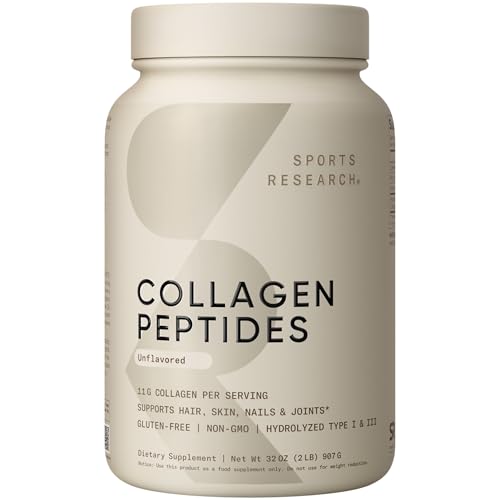
Sports Research Collagen Peptides Protein Powder, Unflavored (2 lb)
Bovine Collagen Peptides Powder
Best for: Daily users who want a large supply and fewer reorders
- Source
- Bovine
- Form
- Unflavored powder
- Size
- 2 lb tub
- Hair evidence
- Limited (as for all collagen)
Sports Research's unflavored Collagen Peptides is a straightforward bovine collagen powder, and the two-pound tub is the reason it is on this list. If you have decided collagen is part of your daily routine, a large tub means fewer reorders and less chance of a gap, which matters because any nutritional effect on hair depends on months of consistent intake.
The powder is unflavored and, according to buyer feedback, dissolves well in coffee and smoothies. It is a single-purpose product without the hair, skin and nails extras that some brands add, which we see as a plus: you know what you are taking, and you can get vitamins elsewhere if you need them.
At typical prices it costs a little more per pound than Orgain or the large Vital Proteins tub, so it is not the cheapest way to buy collagen. Buy it if you prefer the brand or want the biggest single container. Otherwise, the value pick is the better deal.
What We Liked
- Large two-pound tub reduces reorders
- Simple, unflavored powder without unnecessary extras
- Mixes well according to buyer feedback
What We Didn't
- Usually slightly more expensive per pound than the value pick
- Bovine source
- Large upfront cost if you are only trying collagen
The Bottom Line
A good large-tub option for committed daily users. Try a smaller tub first if you are new to collagen.
Ancient Nutrition Multi Collagen Protein Powder, Hydrolyzed Peptides, Unflavored
Multi-Source Collagen Powder

Best for: People who want collagen from several sources in one scoop
- Source
- Multiple animal sources
- Form
- Unflavored powder
- Allergen note
- Check for fish and egg
- Hair evidence
- Limited (as for all collagen)
Ancient Nutrition's Multi Collagen Protein blends collagen from several animal sources in one powder, with the idea of providing multiple collagen types rather than just the type I and III found in bovine collagen. It is one of the best-known multi-collagen products and has a large base of buyer feedback, much of it positive about mixing and taste.
Be clear about what the multi-source approach does and does not offer. Once digested, collagen is broken down into amino acids and small peptides, and there is no good evidence that a blend of collagen types does more for hair than a single source. You may prefer it for variety or for the brand, but it is not a stronger hair product.
Because it draws on several sources, the allergen picture is more complicated. Multi-source blends can include fish and egg-derived ingredients, so check the current label carefully if you have a fish or egg allergy. It also usually costs more than single-source bovine powders, which is the main reason it ranks below them.
What We Liked
- Several collagen sources in a single scoop
- Well-known product with extensive buyer feedback
- Unflavored version mixes into most drinks
What We Didn't
- No evidence a blend beats single-source collagen for hair
- More complex allergen profile; check for fish and egg
- Usually more expensive per serving than bovine powders
The Bottom Line
A popular multi-collagen if you like the concept. Not a better hair product than simpler powders.
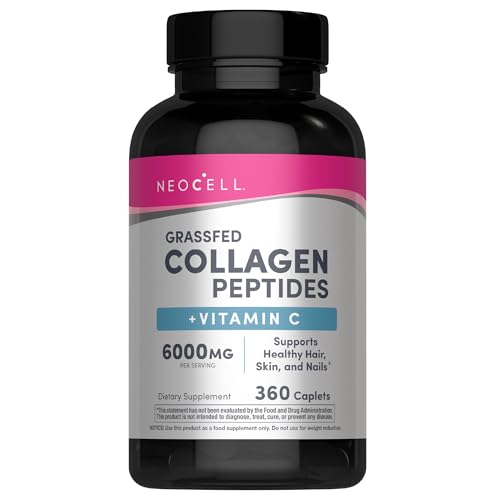
NeoCell Collagen Peptides Pills with Vitamin C (360 Caplets)
Collagen Caplets
Best for: People who dislike powders and want collagen in pill form
- Form
- Caplets
- Added nutrient
- Vitamin C (per listing)
- Count
- 360 caplets
- Hair evidence
- Limited (as for all collagen)
NeoCell is one of the longest-established collagen brands, and its caplets are the pick for people who simply do not want to mix a powder every day. The listing pairs collagen peptides with vitamin C, which the body needs to make its own collagen, and a large 360-count bottle lasts a good while at the labeled dose.
The trade-off is quantity. Pills can only hold a small amount, so even a multi-caplet serving delivers a few grams of collagen at most, far less than a single scoop of powder, which typically provides 10 to 20 grams. If your goal is to add meaningful protein to your diet, caplets are an inefficient way to do it. Check the label for the exact amount per serving and the number of caplets that requires.
Choose it for convenience, travel, or because you will genuinely take pills more consistently than powder. Skip it if you are trying to raise your protein intake, and note that NeoCell sells other collagen pills with added biotin; this listing does not advertise biotin, but check the label if you need to avoid it before blood tests.
What We Liked
- No mixing; easy to take anywhere
- Includes vitamin C according to the listing
- Large bottle from an established brand
What We Didn't
- Delivers far less collagen per serving than powder
- Several caplets needed per serving
- Inefficient way to add protein to your diet
The Bottom Line
The most convenient way to take collagen, but the least collagen per serving. Powders are better value for protein.
Marine vs. Bovine vs. Multi-Collagen
Bovine collagen comes from cattle, usually hides, and provides mainly type I and type III collagen. It is the most common and usually the least expensive option, and most unflavored collagen peptide powders, including the top picks here, are bovine. Some brands specify grass-fed or pasture-raised sources, which matters to some buyers for ethical or environmental reasons but has not been shown to affect hair results.
Marine collagen comes from fish skin or scales and is mainly type I. It is the choice for pescatarians and for people who avoid beef or pork. It is often marketed as better absorbed because of smaller peptide size, but hydrolyzed collagen from either source is broken down in digestion, and there is no good evidence that marine collagen produces better hair results. It usually costs more per gram.
do not pay extra for a type number promised to target hair
Multi-collagen products blend several sources, such as bovine, chicken, fish and eggshell membrane, to provide multiple collagen types in one scoop. The idea is appealing, but there is no evidence that a blend of types matters for hair once digestion has broken everything down. These products also have more complex allergen profiles, so read the label carefully.
Collagen types also matter less than marketing suggests for oral supplements. Type numbers describe how collagen is structured in the body's tissues, and that structure is largely gone once the protein is hydrolyzed and digested. Choose a source based on your diet, allergies, budget and values, and do not pay extra for a type number promised to target hair.
| Bovine | Marine | Multi-Source | |
|---|---|---|---|
| Main source | Cattle | Fish skin or scales | Several animal sources |
| Main types | I and III | Mostly I | Several |
| Typical cost | Lowest | Higher | Higher |
| Allergen concern | Few for most people | Fish | Fish, egg and others; check label |
| Better for hair? | No evidence | No evidence | No evidence |
Who Might Benefit, and Who Should Look Elsewhere
The people most likely to notice any hair-related benefit from collagen are those whose diets are genuinely low in protein: people eating very little, those on restrictive diets, some older adults with small appetites, and people recovering from illness or rapid weight loss. For them, adding protein in any convenient form may support healthy hair along with everything else. Even then, a complete protein source would cover more amino acids than collagen alone.
If your hair is thinning in a pattern, such as a receding hairline or thinning crown in men, or a widening part in women, the likely cause is androgenetic alopecia, and collagen is not the right tool. Minoxidil, and for men finasteride under medical supervision, have far stronger evidence. Our guides to minoxidil and to hair growth products for men and women cover the options that actually work.
collagen is not the right tool
If you are shedding much more hair than usual over a few months, the cause is often telogen effluvium, a temporary shed triggered by stress, illness, childbirth, surgery, crash dieting or a medication change. Shedding can also be linked to iron deficiency, thyroid problems or low vitamin D. A doctor can check these with simple blood tests, and fixing a real deficiency will do far more than any supplement taken blindly.
Collagen is reasonable to try if you like it, want a convenient protein, or take it for other reasons and hope for a small bonus. It is not reasonable to rely on it as your hair loss plan, or to spend money on it instead of seeing a doctor about sudden, patchy or rapid hair loss.
Safety, Allergies and Quality
Collagen supplements are generally well tolerated. The most commonly reported side effects are mild digestive complaints such as bloating, fullness or an upset stomach, and some people dislike the taste or texture. Taking it with food or splitting the serving often helps.
Allergies are the main safety issue. Marine collagen is unsuitable for people with fish allergies, and anyone with a shellfish allergy should check the source and allergen statement. Multi-source blends can contain fish, egg or other animal-derived ingredients. Collagen is always animal-derived, so it is not suitable for vegetarians or vegans. Products marketed as vegan collagen are typically collagen boosters made from plant ingredients and vitamins, not collagen.
Collagen is always animal-derived, so it is not suitable for vegetarians or vegans.
People with kidney disease, or who have been told to limit protein, should talk to a doctor before adding a protein supplement. Pregnant or breastfeeding women should check with their clinician before starting any new supplement. Check labels for added ingredients too. Some hair, skin and nails products add biotin, which can interfere with certain lab tests, including some thyroid and heart tests, so tell your doctor if you take it.
Quality varies between brands because the FDA does not review supplements for effectiveness or verify their contents before sale. Choosing an established brand, and where possible a product carrying an independent testing seal such as NSF or USP, reduces the risk of products that do not match their labels. Treat structure and function claims like "supports healthy hair" as marketing language, not evidence.
How to Take Collagen, and How Long to Give It
Collagen powders are easiest to take every day by stirring a scoop into something you already drink or eat, such as coffee, tea, a smoothie, oatmeal or yogurt. Hydrolyzed collagen dissolves in hot and cold liquids. Timing does not appear to matter, so take it whenever you are most likely to remember. Consistency is far more important than any particular time of day.
There is no established dose for hair, because there is no established hair benefit. Powders commonly provide around 10 to 20 grams per serving, and following the label is sensible. Taking more is unlikely to help, and it adds cost. If you are using collagen to raise your protein intake, count it toward your daily total alongside food.
There is no established dose for hair, because there is no established hair benefit.
Be realistic about time. Scalp hair grows roughly half an inch a month, and the hair cycle is slow, so any change in hair takes months to see. If you want to judge collagen fairly, take it consistently for at least three to six months, and take photos in the same lighting at the start and every couple of months. If nothing has changed by then, it is reasonable to stop and spend the money elsewhere.
Collagen can be combined with a balanced multivitamin or a hair supplement, but check that you are not doubling up on biotin or other ingredients. It can also be used alongside minoxidil or other hair loss treatments, which do the real work for pattern hair loss. Think of collagen as a nutritional add-on, not the foundation of a hair routine.
Compared Side by Side
| Product | Source | Form | Main Strength | Best For |
|---|---|---|---|---|
| Vital Proteins Collagen Peptides | Bovine | Powder | Trusted, easy to mix | Best overall |
| Orgain Collagen Peptides | Bovine | Powder | 20 g serving, low cost | Value |
| Sports Research Marine Collagen | Fish | Powder | Beef-free source | Pescatarians |
| Sports Research Collagen Peptides | Bovine | Powder | Large 2 lb tub | Daily users |
| Ancient Nutrition Multi Collagen | Multiple | Powder | Several sources | Multi-collagen fans |
| NeoCell Collagen Caplets | See label | Caplets | No mixing | Pill takers |
Ready to Buy? Our Picks Again
Common Mistakes to Avoid
Treating Collagen as a Hair Loss Cure
Collagen has limited evidence for hair and none for reversing pattern hair loss. If your hairline is receding, your crown is thinning, or your part is widening, collagen will not fix it. Use proven treatments such as minoxidil, and see a doctor about prescription options, rather than waiting months on a supplement.
Replacing Real Protein With Collagen
Collagen is an incomplete protein: it lacks tryptophan and supplies little cysteine, an amino acid that is abundant in keratin. Replacing eggs, dairy, fish, meat or legumes with collagen shakes can leave gaps. Use collagen to add to a balanced diet, not to substitute for complete protein sources.
Ignoring the Real Causes of Shedding
Sudden or heavy shedding is often caused by stress, illness, childbirth, crash dieting, iron deficiency, thyroid problems or medication changes. Collagen will not correct any of those. If you are losing more hair than usual, see a doctor for blood tests before spending months and money on supplements.
Not Checking the Source for Allergies
Marine collagen comes from fish, and multi-source blends can include fish, egg or other animal ingredients. If you have a fish, shellfish or egg allergy, read the source and allergen statement on the current label every time you buy, because formulations and sourcing can change between batches.
Paying Extra for Hair Marketing
Products labeled for hair, skin and nails often cost more and add biotin or other extras with weak evidence. Biotin can also interfere with some lab tests. A plain, unflavored collagen powder from an established brand provides the same collagen for less, without ingredients you may not want or need.
Frequently Asked Questions
What is the best collagen for hair growth?
For most people, Vital Proteins Collagen Peptides is the best collagen for hair growth support because it is easy to mix and widely trusted. Orgain is the best value, and Sports Research Marine Collagen suits people who prefer a fish source. Keep in mind that evidence for collagen growing hair is limited.
Does collagen actually help hair grow?
There is no strong evidence that it does in people who already eat enough protein. Small and often industry-funded studies suggest possible modest effects, but large, independent trials are lacking. Collagen may help if your diet is low in protein, because protein shortfalls can contribute to shedding.
Is marine or bovine collagen better for hair?
Neither has been shown to be better for hair. Both are broken down into amino acids and small peptides during digestion. Bovine collagen is usually cheaper, while marine collagen suits pescatarians and people who avoid beef. Choose based on diet, allergies and budget, not hair claims.
How long does collagen take to work for hair?
If collagen helps at all, it would take months to see, because hair grows slowly. Take it consistently for three to six months and compare photos taken in the same lighting. If you see no change by then, it is reasonable to stop and put the money toward proven treatments or a doctor's visit.
Is collagen better than biotin for hair?
Neither has strong evidence for hair growth in people without a deficiency. Biotin deficiency is rare, and biotin can interfere with some lab tests. Collagen at least adds protein, which can matter if your diet is low in it. For pattern hair loss, minoxidil has far stronger evidence than either.
Can I take collagen with hair growth vitamins?
Generally yes, but check both labels to avoid doubling up on biotin and other ingredients. Collagen provides protein, while hair vitamins provide micronutrients, so they do not overlap much. Ask a doctor first if you are pregnant, breastfeeding, have kidney disease or take regular medication.
Is there a vegan collagen for hair?
No. Collagen is an animal protein, so true collagen supplements always come from animals or fish. Products marketed as vegan collagen are usually collagen boosters made from plant ingredients and vitamins such as vitamin C. Vegans can support hair by getting enough complete protein from foods such as soy, legumes and grains.
The Bottom Line
Collagen is a convenient protein supplement, not a proven hair growth treatment. If you want to try it, Vital Proteins Collagen Peptides is the best overall pick and Orgain is the best value, with Sports Research Marine Collagen for those who prefer fish. Take it alongside a protein-rich diet, give it a few months, and rely on proven treatments for pattern hair loss.
More Buyer's Guides
Hair Growth & Hair Loss
Best Hair Growth Vitamins
Hair growth vitamins are one of the most heavily marketed products in beauty, and one of the least understood. The ones worth buying either correct a measured deficiency or have at least some placebo-controlled evidence behind them.
Hair Growth & Hair Loss
Best Postpartum Hair Loss Products
Postpartum hair loss looks alarming but is almost always temporary. The right products will not speed up the calendar, but they can make thinning less obvious, cut breakage and keep you away from treatments that are not suitable while breastfeeding.
Hair Growth & Hair Loss
Best Hair Growth Products for Women
Female hair thinning has more possible causes than male pattern loss, and only one over-the-counter drug approved to treat it. We picked the best product in each category and ranked them by what the evidence says they can do.
Hair Growth & Hair Loss
Best Hair Growth Products for Men
Male pattern hair loss has two treatments with strong evidence and a long tail of add-ons with weaker support. We picked the best product in each category and ranked them in the order you should actually spend your money.
Hair Growth & Hair Loss
Best Saw Palmetto for Hair Loss
Saw palmetto has more real evidence for hair than almost anything else in the supplement aisle. It is also clearly weaker than finasteride. Buying the right extract at the right dose is the difference between giving it a fair trial and wasting six months.
Hair Growth & Hair Loss
Best Minoxidil for Women
Minoxidil is the only topical drug the FDA has approved to regrow hair in women. It comes in two women's forms, a 2% solution used twice a day and a 5% foam used once, and the choice between them matters more than the brand on the box.