Our Picks at a Glance
- 1
 Check Price →
- 2
 Check Price →
Best Ammonia-Free Coverage
Clairol Nice'n Easy Permanent Hair Dye, 5 Medium Brown (1 Pack) - 3
 Check Price →
Best for Resistant Grays
Madison Reed Radiant Hair Color Kit, 6.5NNA Medium Neutral Brown (1 Pack) - 4
 Check Price →
Best for Dry or Coarse Gray
Garnier Olia Ammonia-Free Permanent Hair Color, 6.0 Light Brown (1 Count) - 5
 Check Price →
- 6
 Check Price →
Best Permanent Root Touch-Up
Clairol Root Touch-Up Permanent Hair Dye, 5 Medium Brown (1 Pack) - 7
 Check Price →
Best Temporary Root Spray
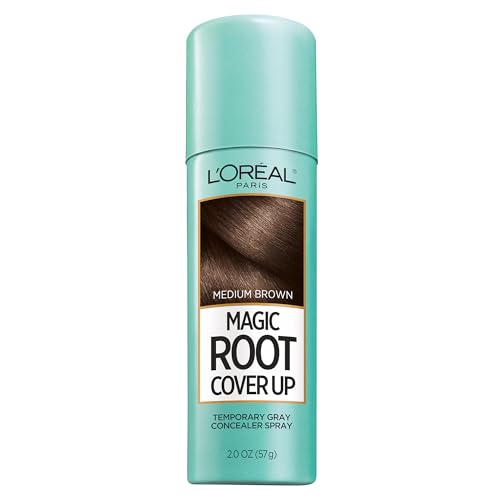
L'Oreal Paris Magic Root Gray Hair Cover Up Spray, Medium Brown (2 oz)
The Short Version
- L'Oreal Paris Excellence Creme is our best hair dye to cover gray: a thick, controllable permanent creme with dependable 100% gray coverage per the listing.
- Permanent color covers gray completely; demi-permanent color blends it and fades gradually. Choose permanent if you are more than about half gray and want it gone.
- Resistant gray covers best with a natural or neutral shade, applied first to the most stubborn areas and left for the full processing time.
- Each kit listing shows one example shade. Pick your own at your natural level or one lighter; dye usually comes out darker than the box photo.
- Do the skin allergy test 48 hours before every coloring, and a strand test before trying a new shade. PPD-free does not mean allergy-proof.
On This Page · 12 sections
The best hair dye to cover gray is a permanent creme color in a natural or neutral shade at, or one level lighter than, your natural color, and for most people that means L'Oreal Paris Excellence Creme. Permanent dye is the only type that reliably gives 100% coverage, because it is the only one that forms color inside the hair rather than staining the outside. Demi-permanent color is the better choice if you want gray blended rather than erased, and root touch-up kits and sprays stretch the time between full colorings. Choosing the right tool for the amount of gray you have matters more than the brand on the box.
Gray hair is also harder to color than people expect. It has no natural pigment for the dye to build on, and many grays are coarse and resistant, especially at the temples and hairline. That is why some boxes promise coverage for resistant grays, why colorists often reach for neutral shades on gray clients, and why the same dye can look perfect on brown hair and translucent on a wiry silver strand. We explain what helps, from shade choice to application order.
We ranked the products below on how completely they cover gray in buyer feedback, how predictable the shade results are, how easy they are to apply alone, how gentle they are on dry or fragile hair, and value per application. This is research-based, not a hands-on test. Each kit links to one shade of its Amazon listing; that shade is only an example, so choose your own shade on the listing page. Every oxidative dye here needs a skin allergy test 48 hours before each use. For a broader ranking that includes demi-permanent color, see our guide to the best at-home hair color, and if you would rather brighten gray than cover it, see our guide to the best shampoo for gray hair.
Permanent vs. Demi-Permanent for Gray Coverage
The type of color decides how much gray it can cover. Permanent hair color uses an alkaline agent, traditionally ammonia, plus a hydrogen peroxide developer. Together they open the cuticle and let small dye molecules react inside the hair to form larger color molecules that stay put. Because the color forms inside the strand, permanent dye can cover gray completely, and it grows out with a visible line rather than washing out. Every product on this list that promises 100% gray coverage is a permanent dye.
Demi-permanent color uses a milder developer and usually no ammonia. It deposits color without lifting your natural shade and fades gradually over several weeks. On gray, it blends rather than erases: gray strands pick up a softer, translucent version of the color, which reads as subtle highlights against darker hair. Many people prefer that, because there is no harsh regrowth line and the chemistry is gentler.
The practical rule is about how much gray you have. If you are up to roughly a quarter or a third gray and want it softened, demi-permanent color is the gentler choice. If you are more than about half gray, or you want gray gone completely, you will almost certainly need permanent color, at least at the roots. Semi-permanent color, with no developer at all, only tints gray and washes out within a handful of shampoos.
Root products fill the gap between colorings. A permanent root touch-up gives full coverage on new growth only, which keeps developer off your older lengths. A temporary root spray or powder covers gray for a few days without any dye chemistry. Many people get the best results, and the healthiest hair, by combining them: permanent color at the roots, a demi or gloss on the lengths when they fade, and a spray for the last week before the next appointment.
| Permanent | Demi-Permanent | Root Spray | |
|---|---|---|---|
| Gray coverage | Full | Blends | Temporary cover |
| Best for | Half gray or more | Up to about a third gray | Regrowth between colorings |
| How it ends | Grows out | Fades over weeks | Washes out |
| Stress on hair | Highest | Moderate | Minimal |
| Patch test | Every time | Every time | Follow label |
Why Some Grays Resist Color, and How to Cover Them
Resistant gray is the coarse, wiry, glassy-looking gray that seems to repel dye or fade back to silver within a couple of weeks. Many people find it concentrated at the temples, hairline and part, which is exactly where it is most visible. Gray strands can have a tighter, smoother cuticle than pigmented hair, and they have no natural pigment for the dye to sit alongside, so any weakness in coverage shows.
Shade choice is the first fix. Natural and neutral shades, often marked N or NN on the box, give the most reliable coverage on heavy gray because they contain a balanced mix of pigments. Very ashy shades can look flat or greenish on gray, and very warm or golden shades can look brassy or translucent. If you love a warm or cool tone, many colorists mix it with a neutral shade for gray clients, and at home the easier route is simply choosing a neutral version of your color.
Use enough product to saturate every gray strand; a thin smear is the most common reason gray shows through.
Application is the second. Start with the most resistant areas, usually the hairline, temples and part, so they get the longest processing time. Use enough product to saturate every gray strand; a thin smear is the most common reason gray shows through. Leave the dye on for the full time on the box, and do not rinse early because your scalp tingles unless it actually burns. Products that specifically claim coverage for resistant grays, such as Madison Reed Radiant, are worth trying if standard kits have failed you.
If gray still will not cover, a salon is the next step. Colorists can pre-soften very resistant gray before coloring and adjust developer strength and formula in ways a box cannot. That is often worth one visit to get a reliable formula, which you can then maintain at home with root touch-ups.
The 7 Best Hair Dyes to Cover Gray
Five permanent kits for full coverage, one permanent root touch-up and one temporary root spray. Each listing shows one example shade; choose your own on the listing page, and do the 48-hour skin allergy test before every use of an oxidative dye.
L'Oreal Paris Excellence Creme Permanent Hair Dye, 5 Medium Brown (1 Kit)
Permanent Creme Hair Color
Best for: Anyone covering a lot of stubborn gray at home who wants a forgiving creme
- Type
- Permanent
- Gray coverage
- 100% gray coverage (per listing)
- Format
- Thick creme with pre-color serum and conditioner
- Listing shade
- 5 Medium Brown; choose yours on the listing
L'Oreal Paris Excellence Creme is our best hair dye to cover gray because it combines the two things gray coverage depends on most: a permanent formula and a texture that makes thorough application easy. The listing promises 100% gray coverage, and buyer feedback is consistently strong on exactly that, including from people who are mostly gray. Its thick creme stays where you put it, so you can saturate the part, temples and hairline, where gray is usually densest and most resistant, without dye running down your neck.
The kit follows L'Oreal's Triple Care approach: a protective serum for the lengths before coloring, the dye itself, and a conditioner afterward, and the current listing adds hyaluronic acid. The protective step helps when your ends are more porous than your roots, which is common in anyone who has colored before, because porous ends grab color fast and can turn darker than the new growth.
The listing shown is 5 Medium Brown, one shade of a wide range; choose your own shade on that page. It is a conventional permanent dye, so it is not the gentlest option here, and it has the strong smell typical of permanent color. Skip it if your hair is breaking or you only want to soften a few grays. Patch test 48 hours before every use.
What We Liked
- Dependable full coverage on stubborn gray in buyer feedback
- Thick creme is easy to control at the hairline and part
- Pre-color serum helps porous ends color evenly
- Wide shade range at a drugstore price
What We Didn't
- Conventional permanent dye, harder on fragile hair than a demi
- Strong smell during processing
- Long or thick hair may need two kits
The Bottom Line
The most forgiving way to get full gray coverage from a box. Our first choice for most people.
Clairol Nice'n Easy Permanent Hair Dye, 5 Medium Brown (1 Pack)
Permanent Hair Color
Best for: Full gray coverage with a milder smell and a natural-looking finish
- Type
- Permanent
- Ammonia
- Zero ammonia (per listing)
- PPD
- PPD-free (per listing)
- Listing shade
- 5 Medium Brown; choose yours on the listing
Clairol Nice'n Easy is one of the best-known box dyes in the country, and the current listing describes a reformulated version with zero ammonia, no PPD, 100% gray coverage and a bonding system. For gray coverage, the important part is that it is still a permanent color, so it forms color inside the hair and grows out rather than washing out. Buyer feedback praises how natural the shades look on gray roots and how evenly they cover.
The ammonia-free formula mainly makes the job more comfortable. Processing is far less pungent, which many people appreciate when they are coloring every four to six weeks. The bonding system is a reasonable idea, but the evidence for it comes from the brand, so treat it as a bonus. Because packaging can lag behind a reformulation, check the ingredient panel on the box you receive if the ammonia-free and PPD-free claims matter to you.
The PPD-free claim needs a clear caution. Dyes without PPD usually rely on related molecules that many PPD-allergic people also react to, so this is not a safe workaround if you have reacted to hair dye before. The listing shown is 5 Medium Brown; choose your own shade on that page, and patch test 48 hours before every use.
What We Liked
- Full gray coverage in a permanent formula
- Ammonia-free per the listing, so processing smells milder
- Natural-looking shades in buyer feedback
What We Didn't
- PPD-free does not make it safe for people with a dye allergy
- Bonding claims rest on brand data
- Older stock may differ from the current formula
The Bottom Line
Permanent gray coverage that is more pleasant to apply. Still patch test it every time.
Madison Reed Radiant Hair Color Kit, 6.5NNA Medium Neutral Brown (1 Pack)
Permanent Hair Color Kit
Best for: Coarse, stubborn gray and people who want salon-style tone control at home
- Type
- Permanent
- Gray claim
- 100% coverage for resistant grays (per listing)
- Made without
- Ammonia, PPD, resorcinol (per brand)
- Listing shade
- 6.5NNA Medium Neutral Brown; choose yours
Madison Reed is the closest thing on this list to professional hair color to cover gray, and its listing specifically claims 100% gray coverage for resistant grays. That matters if your gray is the coarse, glassy kind that soaks up box dye unevenly or fades to translucent within a couple of weeks. The kit is more complete than a typical box, and the shade codes describe both depth and tone in detail, the way salon color does.
The shade on this listing, 6.5NNA Medium Neutral Brown, shows why that helps with gray. Double-neutral shades are the kind colorists often choose for heavy gray, because gray has no pigment of its own and a balanced neutral base covers it without turning too warm or too ashy. Buyer feedback is strong on coverage and on natural-looking results. Choose your own shade on the listing page; the brand also offers shade-matching help online.
It costs several times more per application than the drugstore kits here. The brand markets it as made without ammonia, PPD and resorcinol, but like other PPD-free permanents it uses related dye molecules, so it is not hypoallergenic, and its own directions call for a skin test. Skip it if budget is the priority. Buy it if resistant gray has beaten cheaper kits.
What We Liked
- Listing specifically targets resistant gray
- Neutral, salon-style shade codes suit heavy gray
- Complete, beginner-friendly kit
- Ammonia-free and PPD-free per the brand
What We Didn't
- Several times the cost of drugstore box dye
- Not hypoallergenic despite its exclusions
- Large shade range can be confusing at first
The Bottom Line
The best kit for gray that refuses to cover. Worth the premium if cheaper dyes leave you translucent.
Garnier Olia Ammonia-Free Permanent Hair Color, 6.0 Light Brown (1 Count)
Permanent Hair Color
Best for: Gray hair that is dry, wiry or textured and feels rough after conventional dye
- Type
- Permanent
- Ammonia
- Ammonia-free (per listing)
- Base
- Oil-powered formula (per listing)
- Listing shade
- 6.0 Light Brown; choose yours on the listing
Garnier Olia uses an oil-powered formula to carry its color, and the listing describes it as an ammonia-free permanent dye with 100% gray coverage. For gray hair that has turned dry, wiry or frizzy with age, that oil base is the appeal: buyer feedback often says hair feels softer and shinier right after coloring than it does with many conventional box dyes, and that the smell during processing is milder.
That makes Olia a good match for coarse gray, curly and textured hair, and anyone whose hair feels like straw after permanent color. It is also a sensible option on black and dark brown hair with a lot of gray, where shine makes dark shades look richer rather than flat. The listing shown is 6.0 Light Brown; choose your own shade on that page.
The oilier texture takes a little more care to spread evenly, especially along the hairline where gray is most visible, and shades can come out slightly richer than expected, so a strand test is worth doing. Ammonia-free does not mean free of oxidative dyes, so the 48-hour patch test still applies. Skip it if your hair is very fine and easily weighed down.
What We Liked
- Oil-based formula leaves dry gray hair softer
- Ammonia-free with a milder smell
- Noticeable shine, especially on dark shades
What We Didn't
- Oilier texture is a little harder to apply evenly
- Shades can come out richer than expected
- Can feel heavy on very fine hair
The Bottom Line
The box dye for gray that is dry and coarse as well as visible. Softer results, same testing rules.
Revlon ColorSilk Beautiful Color Permanent Hair Dye with Keratin, 30 Dark Brown
Permanent Hair Color
Best for: Frequent colorers with healthy hair who need good gray coverage at a low price
- Type
- Permanent
- Gray coverage
- 100% gray coverage (per listing)
- Ammonia
- Ammonia-free, with keratin (per listing)
- Listing shade
- 30 Dark Brown; choose yours on the listing
Revlon ColorSilk is one of the least expensive permanent dyes from a major brand, and it covers gray far better than its price suggests. The listing describes it as ammonia-free with keratin and 100% gray coverage, and buyer feedback consistently reports full, glossy coverage that holds up between colorings. If gray regrowth sends you back to the box every four to six weeks, the savings add up quickly.
The low price also makes it practical to buy two boxes for long or thick hair, which is often the difference between full coverage and patchy coverage. Running short and stretching one kit too thin is one of the most common reasons gray shows through after coloring, especially at the back of the head.
The trade-off is texture. ColorSilk is thinner than a creme, so it can run and is messier to apply precisely along the hairline and part. Work in small sections, protect your skin and clothes, and apply to the roots first. The listing shown is 30 Dark Brown; choose your own shade on that page. Low price does not change the allergy risk, so patch test every time.
What We Liked
- Very low cost for full gray coverage
- Glossy, long-lasting results in buyer feedback
- Easy to buy two boxes for long or thick hair
What We Didn't
- Runny formula is messier than a creme
- Harder to control at the hairline for beginners
- Fewer extras in the box
The Bottom Line
The best value for permanent gray coverage, if you can handle a runnier formula.
Clairol Root Touch-Up Permanent Hair Dye, 5 Medium Brown (1 Pack)
Permanent Root Color
Best for: Covering gray regrowth at the roots without re-coloring the lengths
- Type
- Permanent, roots only
- Applicator
- Brush
- Use
- Gray regrowth at the part and hairline
- Listing shade
- 5 Medium Brown; choose yours on the listing
Gray regrowth shows long before the rest of your color fades, and Clairol Root Touch-Up is the most hair-friendly way to deal with it. It is a permanent dye packaged for small areas: you brush it onto the new growth at the part, hairline and temples, where gray appears first, and leave your previously colored lengths alone. That gives the same full coverage at the roots as a full kit, without dragging developer through older, more fragile hair every few weeks.
For anyone with fine or thinning hair, that difference matters. Repeated full-head permanent color is one of the main causes of dry, breaking lengths, and breakage makes thin hair look thinner. Alternating a root touch-up with an occasional full coloring, or using it between salon visits, protects the hair you have.
It is designed for an inch or so of regrowth, not a full-head color change. Choose the shade that matches the color your roots should be, not your faded ends. The listing shown is 5 Medium Brown; choose your own shade on that page. It is a permanent oxidative dye, so the 48-hour patch test applies just as it does to a full kit.
What We Liked
- Permanent coverage exactly where gray shows first
- Spares fragile lengths from repeated coloring
- Brush applicator makes the part and hairline easy
What We Didn't
- Only for small areas of regrowth
- Matching faded lengths can be tricky
- Still needs a patch test every time
The Bottom Line
The smartest way to keep gray roots covered between full colorings.
L'Oreal Paris Magic Root Gray Hair Cover Up Spray, Medium Brown (2 oz)
Temporary Root Spray
Best for: Hiding gray roots for a few days, or anyone who cannot use oxidative dye
- Type
- Temporary spray
- Lasts
- Until your next shampoo
- Dye chemistry
- Not an oxidative dye
- Listing shade
- Medium Brown; choose yours on the listing
L'Oreal Magic Root Cover Up is not hair dye in the chemical sense. It is a temporary pigment spray that coats the surface of the hair and washes out with your next shampoo. That makes it the right tool for the week or two before your next coloring, when a line of gray at the part is the only thing giving you away, and for people who have reacted to permanent dye or whose hair is too fragile to color often.
It also helps at a thinning part. A light mist close to the scalp in a shade near your own softens the contrast between hair and skin, which makes both gray and a wide part less obvious. Buyers like how quickly it dries and how well it stays put once set. The listing shown is Medium Brown; choose your own shade on that page.
It can transfer onto collars, pillowcases and hats, especially in heat or rain, and it builds up if you spray heavily. It will not convincingly cover large areas or long lengths. Keep it away from your eyes and stop if your scalp itches. Skip it if you want color that lasts beyond a wash.
What We Liked
- Instant gray cover that washes out
- No oxidative dye chemistry
- Softens hair-to-scalp contrast at a thinning part
What We Didn't
- Can transfer onto fabric in heat or rain
- Only suitable for small areas
- Must be reapplied after each shampoo
The Bottom Line
A reliable stopgap for gray roots between colorings, and the best option when dye is not.
How to Choose the Best Hair Dye to Cover Gray in Your Shade
Every kit on this list links to one specific shade, such as 5 Medium Brown or 6.0 Light Brown. That shade is only an example. All of these brands sell their dye in a range of shades, and you choose yours on the listing page. Picking the right one is the biggest factor in whether covered gray looks natural.
Find your natural level first. Box numbers run from about 1 for black to 10 or higher for the lightest blonde. Look at the hair that is not gray, at the roots, in daylight. Then choose a shade at that level or one level lighter, because dye almost always comes out darker than the box photo, especially on porous ends and on gray, which has nothing to lighten it.
Going a little lighter has another advantage when you are mostly gray: regrowth shows less.
Going a little lighter has another advantage when you are mostly gray: regrowth shows less. The bigger the contrast between your dyed color and your gray roots, the sooner you see a line. Many people who are heavily gray find that moving one or two levels lighter than their youthful color looks softer, flatters skin that has changed with age, and stretches the time between touch-ups.
Tone comes next. Natural and neutral shades cover gray most predictably. If your skin looks sallow in cool colors, a neutral or slightly warm shade is usually more flattering; if you tend to turn brassy, a neutral or slightly ash shade keeps it in check. When in doubt, choose neutral and do a strand test before coloring your whole head.
The Best Way to Cover Gray for Brunettes and on Black Hair
For brunettes, the best way to cover gray depends on how much there is. With scattered early gray, a demi-permanent brown at your natural level blends it into soft highlights and fades without a harsh line. Once gray is a third or more of your hair, a permanent shade in a natural or neutral brown, at your level or one lighter, gives clean coverage. Many brunettes who are heavily gray also like a slightly lighter brown, because medium and light browns make gray regrowth far less obvious than dark brown.
On black hair, the main risk is going too dark. Jet black and blue-black shades can look harsh against changing skin tones, and they create the strongest possible contrast with gray regrowth, so a line appears within a couple of weeks. A soft black or darkest brown usually looks more natural and grows out more gracefully. Most of the box dye lines on this list sell black and soft black shades; choose them on the listing page.
Textured and coily hair needs extra care, because it is often drier and more fragile to begin with. An oil-based formula such as Garnier Olia, or a gentler demi for blending, is easier on the hair than repeated full-head permanent color. Apply in small sections so dye reaches every strand. Do not color in the same week as a relaxer or perm; check the box directions and ask your stylist about spacing the two services apart.
Darker shades are also where allergy caution matters most. Dark permanent shades tend to rely more heavily on PPD and related dye precursors, so the 48-hour patch test is especially important for brunettes and anyone using black dye. A root touch-up for regrowth keeps the total amount of dye on your scalp lower over time.
| Under a Third Gray | A Third to Half Gray | Mostly Gray | |
|---|---|---|---|
| Brunettes | Demi to blend | Permanent, natural brown | Permanent, one level lighter |
| Black hair | Demi in soft black | Permanent soft black or darkest brown | Permanent, avoid jet black |
| Between colorings | Usually not needed | Root touch-up or spray | Root touch-up plus spray |
Professional Hair Color to Cover Gray vs. Box Dye
Professional hair color to cover gray is not a different kind of chemistry from a good box dye. Both are permanent oxidative colors. The difference is control. A salon colorist mixes color and developer separately, can blend shades to fine-tune tone, can choose developer strength for your hair, and can treat resistant areas differently from the rest. They also apply color to your roots with an accuracy that is hard to match with a mirror behind your head.
Box dye is pre-matched: the developer, color and ratio are set for an average result. For most people covering gray at their natural level or a shade lighter, that average result is very good, and kits such as L'Oreal Excellence Creme and Madison Reed Radiant are designed with gray coverage in mind. Madison Reed in particular borrows professional conventions with detailed shade codes that describe both depth and tone.
The difference is control.
A salon is worth it when you want a large change in color, when you want to go lighter by more than a level or two, when resistant gray will not cover with any box you have tried, or when you want dimension such as lowlights and highlights to blend gray rather than cover it solidly. It is also the safer choice if you have ever had a reaction to dye, because a professional can talk through options with you and your dermatologist.
A common, cost-effective pattern is to get a professional formula once or twice a year and maintain it at home with a permanent root touch-up in a matching shade. Bring the box or a photo of the shade to your appointment so your colorist can tell you whether it is a good match for their formula.
Patch Test, Strand Test and Steps for Full Coverage
Start with the skin allergy test, 48 hours before every coloring. Para-phenylenediamine (PPD) and related dye precursors are among the most common causes of allergic contact dermatitis on the scalp, and an allergy can develop after years of trouble-free use. Follow the method in your kit, usually applying a small amount to the skin behind the ear or inside the elbow and leaving it undisturbed. Itching, redness, burning or swelling means do not use it. A severe reaction during coloring, such as swelling of the face or trouble breathing, needs urgent medical care. Never use hair dye on eyebrows or eyelashes.
Next, do a strand test, especially with a new shade or brand. Snip or section a small piece of hair from underneath, ideally one that includes some gray, apply the mixed color, and time it as the box directs. It shows how dark the shade comes out on your hair, how well it covers your gray, and whether your processing time needs to run the full length.
Start with the skin allergy test, 48 hours before every coloring.
On coloring day, use hair that has not been washed for a day or so, protect your hairline and ears with a barrier cream, and wear the gloves. Section your hair into four quadrants and apply to the roots first, starting with the most resistant gray at the hairline, temples and part. Saturate thoroughly. Only pull color through the lengths in the final minutes if they have faded, and never leave dye on longer than the box says.
Rinse with lukewarm water until it runs clear, then use the conditioner in the kit. Wait a couple of days before shampooing and use a gentle shampoo for color-treated hair afterward. Hair dye does not cause pattern hair loss, but repeated full-head permanent color can make fragile lengths break, so color roots rather than ends whenever you can. If you use minoxidil, ask your doctor about pausing it around coloring day.
Compared Side by Side
| Product | Type | Gray Coverage | Listing Shade | Best For |
|---|---|---|---|---|
| L'Oreal Excellence Creme | Permanent creme | Full | 5 Medium Brown | Best overall |
| Clairol Nice'n Easy | Permanent | Full | 5 Medium Brown | Milder smell |
| Madison Reed Radiant | Permanent kit | Full, resistant grays | 6.5NNA Medium Neutral Brown | Stubborn gray |
| Garnier Olia | Permanent, oil-based | Full | 6.0 Light Brown | Dry or coarse gray |
| Revlon ColorSilk | Permanent | Full | 30 Dark Brown | Lowest cost |
| Clairol Root Touch-Up | Permanent, roots only | Full at roots | 5 Medium Brown | Regrowth |
| L'Oreal Magic Root | Temporary spray | Until next wash | Medium Brown | Quick cover |
Ready to Buy? Our Picks Again
- 1Check Price →
- 2Check Price →
Best Ammonia-Free Coverage
Clairol Nice'n Easy Permanent Hair Dye, 5 Medium Brown (1 Pack) - 3Check Price →
Best for Resistant Grays
Madison Reed Radiant Hair Color Kit, 6.5NNA Medium Neutral Brown (1 Pack) - 4Check Price →
Best for Dry or Coarse Gray
Garnier Olia Ammonia-Free Permanent Hair Color, 6.0 Light Brown (1 Count) - 5Check Price →
- 6Check Price →
Best Permanent Root Touch-Up
Clairol Root Touch-Up Permanent Hair Dye, 5 Medium Brown (1 Pack) - 7Check Price →
Best Temporary Root Spray
L'Oreal Paris Magic Root Gray Hair Cover Up Spray, Medium Brown (2 oz)
Common Mistakes to Avoid
Using a Demi-Permanent and Expecting Full Coverage
Demi-permanent color blends gray into soft highlights; it does not hide it completely. If you are more than about half gray and want it gone, you need permanent color, at least at the roots. Choosing the wrong type is the most common reason people say a dye did not cover their gray.
Buying the Shade Shown on the Listing Without Checking Yours
Each kit links to one example shade. Choose your own at your natural level or one lighter, in a natural or neutral tone if you have a lot of gray. Dye usually comes out darker than the box photo, and it is far easier to go darker next time than to lift color that is too dark.
Skipping the 48-Hour Patch Test
Hair dye allergies can appear after years of trouble-free use, and dark shades rely more heavily on PPD and related dyes. Do the skin test exactly as the box describes, 48 hours before every coloring. PPD-free products are not a safe workaround if you have reacted before; see a dermatologist first.
Applying Too Little Dye to Resistant Gray
A thin layer is the main reason gray shows through after coloring, especially at the temples and back of the head. Saturate every gray strand, start where gray is most resistant, and buy a second box for long or thick hair. Process for the full time rather than rinsing early.
Re-Dyeing Your Whole Head Every Time Roots Show
Repeated full-head permanent color makes older lengths porous, dark and prone to breaking, which makes fine or thinning hair look thinner. Apply permanent color to the regrowth, use a root touch-up between full colorings, and use a temporary spray for the last few days before your next color.
Frequently Asked Questions
What is the best hair dye to cover gray?
L'Oreal Paris Excellence Creme is our best hair dye to cover gray because it is a permanent creme with dependable 100% gray coverage per the listing, and its thick texture makes the part and hairline easy to saturate. Madison Reed Radiant is the best choice for resistant grays, and Revlon ColorSilk is the best budget option.
What is the best way to cover gray hair?
For complete coverage, use a permanent dye in a natural or neutral shade at your natural level or one lighter, applied to the most resistant areas first. Maintain it with a permanent root touch-up on regrowth and a temporary root spray between colorings. If you want gray softened rather than hidden, demi-permanent color is gentler.
Is permanent or demi-permanent better for gray coverage?
Permanent is better for full coverage, especially if you are more than about half gray, because the color forms inside the hair. Demi-permanent blends gray into soft highlights and fades gradually without a harsh regrowth line. It is gentler and suits people who are up to roughly a third gray.
What is the best way to cover gray hair for brunettes?
Brunettes with scattered gray can blend it with a demi-permanent brown at their natural level. With a third or more gray, choose a permanent natural or neutral brown at your level or one lighter. A slightly lighter brown makes regrowth less obvious, and a root touch-up handles the part between colorings.
What is the best way to cover gray on black hair?
Choose a soft black or darkest brown rather than jet black or blue-black. Softer shades look more natural and show less contrast with gray regrowth. Use permanent color for full coverage, apply in small sections, and patch test 48 hours before every use, because dark shades rely more heavily on PPD and related dyes.
How often should I touch up gray roots?
Most people see gray regrowth every four to six weeks, depending on how fast their hair grows and how much gray they have. A permanent root touch-up on new growth only is the gentlest way to keep it covered. A temporary spray or powder can stretch a week or two longer between colorings.
Why won't my gray hair take color?
Resistant gray is often coarse with a tight cuticle and no natural pigment. Choose a natural or neutral shade, apply it first to the temples and hairline, use enough to saturate every strand, and process for the full time. Kits made for resistant grays can help, and a colorist can pre-soften very stubborn gray.
The Bottom Line
The best hair dye to cover gray is a permanent creme in a natural shade at your level or one lighter. L'Oreal Paris Excellence Creme is the most forgiving choice, Madison Reed Radiant is best for resistant grays, and Revlon ColorSilk is the budget pick. Keep regrowth covered with Clairol Root Touch-Up or a Magic Root spray, choose your own shade on each listing, and do the 48-hour patch test every time.
More Buyer's Guides
Hair Care
Best At-Home Hair Color
Box dye has come a long way, but the basics have not changed: pick the right type of color, match the shade honestly, and do the patch test every time. We ranked eight kits on coverage, ease of use, gentleness and value.
Hair Care
Best Shampoo for Gray Hair
Gray, silver and white hair has two common problems: it turns yellow or dull, and it often feels drier and coarser than it used to. No single shampoo fixes both. Here is the two-bottle routine that does, plus an honest look at gray-reducing shampoo for people who would rather blend their gray than brighten it.
Men's Grooming
Best Hair Dye for Men
Men's hair color has split into three camps: full coverage, gray blending and gradual shampoos. The right pick depends on how much gray you want to keep, and on a skin allergy test most men skip.
Hair Care
Best Shampoo for Color-Treated Hair
Every wash takes a little color with it. The right shampoo slows that down by cleaning gently and leaving the cuticle smooth, but how you wash matters as much as what you wash with. These are the color-protecting shampoos worth buying, and the routine that makes them work.
Hair Care
Best Hair Treatment for Damaged Hair
Bleach, color and heat break hair from the inside; dryness and friction rough it up from the outside. The right treatment depends on which kind of damage you have. These are the bond builders and masks worth buying for each.
Hair Care
Best Hair Fibers for Thinning Hair
Hair fibers are the closest thing to an instant fix for thinning hair. They do not grow anything, but a well-matched fiber, applied properly and locked in place, can make scalp show-through disappear for the whole day.