Our Picks at a Glance
- 1
 Check Price →
Best Overall
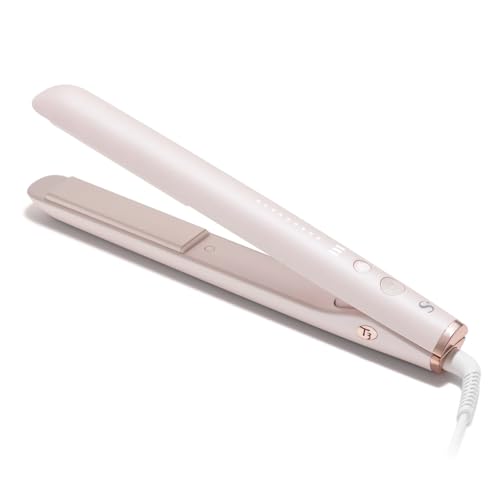
T3 SinglePass StyleMax Professional 1-Inch Ceramic Flat Iron with Custom Heat Automation - 2
 Check Price →
Best Premium Pick
ghd Platinum+ Styler 1-Inch Flat Iron Hair Straightener (Black) - 3
 Check Price →
- 4
 Check Price →
Best for Precise Heat Control
BaBylissPRO Nano Titanium Ultra Thin Flat Iron, 50 Heat Settings, 1-Inch - 5
 Check Price →
Best Cordless
Dyson Corrale Hair Straightener - 6
 Check Price →
The Short Version
- Fine and thin hair heats up and burns faster than thick hair. Choose an iron with adjustable temperature that goes low, and start at the bottom.
- The T3 SinglePass StyleMax is our best overall pick: ceramic plates, nine heat settings and guidance toward a sensible setting for your hair.
- Plates 1 inch wide or narrower suit thin hair best. They get closer to the root and handle short or layered cuts.
- Make one slow pass per section on fully dry hair with a heat protectant. Multiple fast passes add more heat exposure than one good pass.
- Flat irons damage the hair shaft, causing breakage that can look like thinning, but they do not kill follicles. Real thinning needs a different fix, such as minoxidil or a dermatologist.
On This Page · 12 sections
The best flat iron for thin hair is one with adjustable temperature that goes genuinely low, smooth 1-inch or narrower plates, and a design that straightens each section in a single pass. Our top pick, the T3 SinglePass StyleMax, ticks all three boxes, with nine heat settings, ceramic plates and a heat-guidance feature that steers you toward a sensible setting for your hair type. The CHI Original Digital is the best value, and the ghd Platinum+ is the best premium option if your hair is fine but not fragile.
Fine and thin hair are not quite the same thing. Fine describes the width of each strand; thin usually describes how many strands you have, or how dense the hair looks. Many people have both, and both change how you should straighten. A fine strand has less mass to absorb heat, so it reaches damaging temperatures faster than a thick one. Thin, low-density hair has less hair to hide damage, so every broken end and frizzy patch shows. An iron that is fine for someone with thick, coarse hair can fry fine hair at the same setting.
We ranked six irons on temperature control and how low they go, plate material and width, how easily they straighten in one pass, safety features and value. This is research-based, not a hands-on test: we relied on manufacturer specifications, listing details, guidance from dermatologists and stylists on heat damage, and patterns in buyer feedback. For a broader look at straighteners, see our guide to the best flat iron; for protecting your hair while you style, see our guide to the best heat protectant spray.
Why Fine and Thin Hair Needs a Different Flat Iron
A flat iron works by heating hair enough to temporarily reshape it. The same heat that straightens a strand can also damage it: the outer cuticle lifts and cracks, moisture is driven out, and the protein structure inside weakens. Every hair type takes some damage from heat, but fine hair crosses the line sooner, because a thinner strand has less mass to absorb heat and reaches high temperatures faster.
That is why fine hair often straightens beautifully at settings that would barely touch thick hair, and why it can look fried after a few weeks at the temperature a friend with coarse hair uses. Signs that your iron is too hot include a sizzling sound or steam on dry hair, a burnt smell, ends that feel rough or straw-like, and more short broken pieces than usual.
You do not need the hottest, most powerful iron on the market.
Thin, low-density hair has a different problem. When you do not have much hair to begin with, breakage and frizz are more visible, and the hair can look stringy rather than sleek. Over-straightening can also make thin hair look flatter, emphasizing the scalp. A good iron for thin hair lets you smooth the hair at low heat while keeping some movement, and narrow plates help you lift at the root instead of pressing hair flat against your head.
The good news is that fine and thin hair usually straightens easily. You do not need the hottest, most powerful iron on the market. You need control, gentle plates and good technique, and those are often available at mid-range prices.
What Temperature to Flat Iron Fine Hair
There is no single correct temperature, because hair varies so much even within one category. The best rule is to use the lowest setting that straightens a section in one slow pass. That said, stylists and heat-tool makers commonly cite rough ranges, and they are a useful starting point: for fine, thin or damaged hair, somewhere around 250°F to 300°F is a frequently suggested range, with healthy fine hair sometimes going a little higher.
Medium-textured hair is commonly placed in a middle range, often around 300°F to 375°F, and thick or coarse hair higher still. Treat these as guidance rather than rules. Bleached, highlighted or chemically straightened hair is more fragile and should start at the very bottom of the range, while healthy, uncolored fine hair may need a little more heat to hold a style.
The best rule is to use the lowest setting that straightens a section in one slow pass.
To find your setting, start at your iron's lowest temperature and straighten one small section with one slow pass. If it is not smooth, raise the temperature by a small step and try a new section. Stop at the first setting that works. It is better to make one pass at a slightly higher setting than three passes at a lower one, because repeated passes add up to more total heat exposure.
This is why adjustable temperature matters so much. An iron with only an on switch, or a dial with vague markings, makes it hard to repeat a gentle setting every time. A digital display, many small steps or a guided heat feature makes the low-heat habit easy to keep.
| Commonly Cited Range | Start Here | |
|---|---|---|
| Fine, thin or damaged hair | About 250°F to 300°F | Lowest setting on your iron |
| Fine hair that is healthy | Low to moderate | Low, then small steps up |
| Medium hair | About 300°F to 375°F | Lower end of the range |
| Bleached or processed hair | Bottom of your hair type's range | Lowest setting, extra protectant |
The 6 Best Flat Irons for Thin and Fine Hair
We favored irons with adjustable temperature that goes low, gentle plate materials and 1-inch plates, then ranked them on how easily they straighten fine hair in one pass, safety features and value. Every pick should be used with a heat protectant on fully dry hair.
T3 SinglePass StyleMax Professional 1-Inch Ceramic Flat Iron with Custom Heat Automation
Ceramic Flat Iron
Best for: Fine, thin or color-treated hair that needs a guided low setting
- Plates
- 1-inch ceramic, longer plates (per listing)
- Temperature
- 9 heat settings (per listing)
- Smart control
- Custom Heat Automation
- Price tier
- Premium
T3's SinglePass StyleMax is built around the habit that matters most for fine hair: straighten each section once, at a moderate temperature, and move on. The listing describes nine heat settings and what T3 calls Custom Heat Automation, which is designed to suggest a setting based on your hair. For people who have always turned the dial to the top, that nudge toward a lower temperature is the most useful feature on this list.
The 1-inch ceramic plates are a good fit for thin hair. Ceramic heats more gently than titanium and is more forgiving if you hold the iron in one place a second too long. The listing also mentions longer plates, which cover more of each section per pass and can cut down the total time your hair spends clamped under heat. Nine settings give fine hair a real low option to start from.
It costs more than the CHI or Conair, and very thick or coarse hair may need extra passes at its lower settings, which is why it is not our pick for that hair type. Skip it if your budget is tight and you straighten only occasionally. Buy it if your hair is fine or thin, you straighten regularly and you want an iron that makes the gentle approach the easy one.
What We Liked
- Heat guidance steers you toward a sensible setting
- Forgiving ceramic plates suit fine hair
- Longer plates cover more hair per pass
What We Didn't
- Premium price
- Can be slow on thick, coarse sections
- Smart features are less useful if you already know your setting
The Bottom Line
The best flat iron for thin hair overall: gentle ceramic plates, real low settings and a design that rewards one careful pass.
ghd Platinum+ Styler 1-Inch Flat Iron Hair Straightener (Black)
Smart Flat Iron
Best for: Fine-to-medium hair that is healthy and needs a fast, polished finish
- Plates
- 1-inch
- Temperature
- Single styling temperature, 365°F (per ghd)
- Smart control
- Adjusts power to hold temperature
- Price tier
- Premium
The ghd Platinum+ takes the temperature dial away altogether. ghd says the iron holds one styling temperature, 365°F (185°C), and monitors and adjusts its power as you work so the plates stay at that temperature rather than spiking or dropping. For anyone who habitually straightens at the highest setting, a fixed moderate temperature is a real step toward less damage.
Buyers consistently describe smooth, shiny results in few passes, and the 1-inch plates suit most fine and medium hair. If your fine hair is healthy, uncolored or only lightly colored, and straightens well at moderate heat, this is one of the most polished irons you can buy. It is quick, simple and consistent from one use to the next.
The single temperature is also why it is not our top pick for this page. Commonly cited guidance for very fine, fragile, bleached or damaged hair is to stay below that range, and the ghd cannot go lower. Skip it if your hair is very fine, highly processed or already breaking; the T3 or CHI gives you lower options. Buy it if your hair is fine but resilient and you want a premium iron that removes the guesswork.
What We Liked
- Fixed moderate temperature prevents accidental overheating
- Consistent heat across the plates
- Smooth, fast results on healthy fine hair
What We Didn't
- No lower setting for very fragile hair
- Premium price
- No temperature choice at all
The Bottom Line
A premium, no-guesswork iron for fine hair that is healthy. Choose a lower-heat iron if your hair is fragile or processed.
CHI Original Digital Ceramic Hair Straightener 1-Inch Flat Iron
Ceramic Flat Iron
Best for: Fine-to-medium hair, on a mid-range budget, with a visible temperature readout
- Plates
- 1-inch ceramic, tourmaline (per listing)
- Temperature
- Adjustable, digital display
- Brand
- Long-running salon tool brand
- Price tier
- Mid-range
CHI's Original ceramic iron has been a best-seller for years, and the digital version adds the feature that matters most for fine and thin hair: adjustable temperature with a display. Being able to see your setting sounds basic, but it is what makes a consistent low-heat routine possible. With a dial and no numbers, it is easy to drift upward a little every time you style.
The 1-inch ceramic plates, which the listing describes as tourmaline, heat evenly and glide well, so you are less likely to snag or need repeat passes. Tourmaline is often marketed as reducing frizz and static; that claim has limited independent evidence, but the smooth ceramic surface is a genuine plus for fine hair. For most people with normal fine-to-medium hair, this is all the iron you need.
It lacks the smart heat control of the T3 and ghd, so if you work in large sections the plates can cool slightly, which tempts some people to turn it up. Use small sections instead. Skip it if you want premium build or guided settings. Buy it if you want a reliable ceramic iron, a clear temperature readout and a fair price.
What We Liked
- Digital display makes a low setting easy to repeat
- Smooth ceramic plates glide with less snagging
- Mid-range price from an established brand
What We Didn't
- No smart power control
- Tourmaline benefits are mostly marketing
- Build is solid rather than luxurious
The Bottom Line
The best value flat iron for fine thin hair: adjustable, visible temperature and smooth ceramic plates at a fair price.
BaBylissPRO Nano Titanium Ultra Thin Flat Iron, 50 Heat Settings, 1-Inch
Titanium Flat Iron
Best for: Experienced stylers with fine hair who want to dial in an exact low setting
- Plates
- 1-inch nano titanium
- Temperature
- 50 heat settings (per listing)
- Design
- Ultra thin body
- Price tier
- Mid-range
BaBylissPRO's Nano Titanium Ultra Thin iron is a salon staple, and it earns a place here for two reasons: 50 heat settings and a slim body. Fifty settings, per the listing, means you can find the exact lowest temperature that straightens your hair rather than choosing between a few broad steps. The ultra thin design makes it easy to get close to the root, smooth a short cut and flip the ends, which is handy on fine hair that is often worn shorter or layered.
The caution is the plate material. Titanium heats quickly and transfers heat efficiently, which is why it is so popular for thick, coarse hair. On fine hair, that efficiency means it is easy to apply more heat than you need, faster than you realize. Our main flat iron guide rates it as a thick-hair iron for that reason. It belongs on a fine-hair list only if you use the low end of its range.
Start at the bottom of the settings, test a single section, and raise the temperature a few degrees at a time only if the hair does not straighten in one pass. Skip it if you are new to flat irons or your hair is damaged; a ceramic iron like the T3 or CHI is more forgiving. Buy it if you are comfortable with heat tools and want precise control and a slim iron.
What We Liked
- 50 settings allow very precise temperature choice
- Slim body works close to the root and on short hair
- Fast, efficient heating
What We Didn't
- Titanium is less forgiving on fine hair
- Easy to overheat if you do not start low
- Better known as a thick-hair iron
The Bottom Line
Excellent control for careful stylers with fine hair, but only if you stay at the low end of its range.
Dyson Corrale Hair Straightener
Flexing-Plate Straightener
Best for: Frequent stylers with fine or damaged hair who want cordless convenience
- Plates
- Flexing plates
- Temperature
- 3 heat settings
- Power
- Cordless or corded
- Price tier
- Premium
Dyson's Corrale is the most unusual iron here. Instead of rigid plates, it has flexing plates that shape around a section of hair to gather it and apply more even tension. Dyson says this lets you style at lower temperatures with less damage. Independent evidence for that specific claim is limited, but the principle of more even contact, fewer passes and lower heat is sound, and it suits fine hair that breaks easily.
It works cordless or plugged in, which buyers value for quick touch-ups and travel, and it offers three heat settings so you can stay at the lower end. For someone who straightens fine or already damaged hair most days and wants a gentler routine, the design makes sense.
The drawbacks are price, size and fewer settings. It costs far more than conventional irons, the body is bulkier and heavier, and it is less precise at the root and on very short hair than a slim 1-inch iron. Three settings also give you less fine-tuning than the T3 or BaBylissPRO. Skip it if you are on a budget or have a short cut. Buy it if cordless styling and a gentler plate design are worth a premium.
What We Liked
- Flexing plates gather hair for more even contact
- Cordless or corded use
- Low heat setting suits fine hair
What We Didn't
- Very expensive
- Bulkier and heavier than a standard iron
- Only three heat settings
The Bottom Line
A clever, gentle cordless straightener for fine hair if the high price does not matter to you.
Conair InfinitiPRO Tourmaline Ceramic 1-Inch Flat Iron, 5 Heat Settings
Ceramic Flat Iron
Best for: Occasional straightening of fine or thin hair on a tight budget
- Plates
- 1-inch tourmaline ceramic
- Temperature
- 5 heat settings (per listing)
- Use
- Straighten or curl (per listing)
- Price tier
- Budget
Conair's InfinitiPRO tourmaline ceramic iron is a low-cost iron that still has the essential feature for fine hair: adjustable temperature. The listing gives it five heat settings, so you can choose a lower option instead of being stuck with one hot setting, and the 1-inch tourmaline ceramic plates are the right width for thin hair.
If you straighten only occasionally, for an event or a few times a month, a budget iron like this is a sensible choice. The difference in total damage between it and a premium iron is small when you use a heat protectant, a low setting and one careful pass. The listing also says it can curl, which is useful if you want soft bends or flipped ends without buying a second tool.
With five steps, you have less fine control over temperature than with the CHI or BaBylissPRO, and the plates are not as refined as the premium irons, so you may need an extra pass. Skip it if you straighten every day; better plates are worth the money for frequent use. Buy it if you want an inexpensive iron with adjustable heat for occasional styling.
What We Liked
- Very affordable with adjustable heat
- 1-inch plates suit thin hair
- Can also curl or flip ends
What We Didn't
- Only five heat steps
- Plates less refined than premium irons
- Not ideal for daily use
The Bottom Line
A good budget flat iron for thin hair if you straighten occasionally and keep the heat low.
What to Look For in the Best Flat Iron for Thin Hair
Adjustable temperature is the non-negotiable feature. Look for an iron that goes genuinely low and shows you the setting, either with a digital display or clearly marked steps. More steps give you finer control, and guided features like the T3's are helpful if you are unsure where to start. A fixed-temperature iron like the ghd can work for healthy fine hair but leaves no room to go lower.
Plate width comes next. For thin hair, 1-inch plates are the most versatile size: wide enough to be efficient, narrow enough to get close to the root and handle layered or shoulder-length cuts. If your hair is short, a pixie or a bob with bangs, an iron with plates narrower than 1 inch can be easier to control. Wide plates of 1.5 or 2 inches suit long, thick hair and are clumsy on thin hair.
Plate material changes how heat is delivered. Ceramic heats evenly and relatively gently, which makes it forgiving for fine hair. Tourmaline-coated ceramic is marketed for less frizz, though the evidence is mostly from manufacturers. Titanium heats fast and transfers heat efficiently, which is great for thick hair and less forgiving on fine strands unless you keep the temperature low.
Finally, look for smooth, well-aligned plates that close evenly, since gaps and rough spots snag hair and force extra passes, and for an automatic shut-off if you are ever rushed in the morning. Floating or flexing plates that adjust to a section can also help give even contact without pressing hard.
| Good for Thin Hair | Less Ideal | |
|---|---|---|
| Temperature | Adjustable with low settings and a display | One high setting or vague dial |
| Plate width | 1 inch or narrower | 1.5 to 2 inches |
| Plate material | Ceramic or tourmaline ceramic | Titanium used at high heat |
| Plate finish | Smooth, even closure | Gaps, rough edges, snagging |
How to Straighten Thin Hair Without Damage
Start with completely dry hair. Never use a flat iron on wet or damp hair. Clamping hot plates on water-filled strands can make the water boil inside the hair, a form of heat damage that dermatologists describe as bubble hair, which leaves weak spots that snap easily. Blow-dry on a moderate setting or let hair air dry fully first.
Apply a heat protectant to every section before you straighten. Heat protectants form a film that helps slow heat transfer and reduce moisture loss; they do not make hair heatproof, but they are an easy, inexpensive layer of defense. Choose a lightweight spray rather than a heavy cream, since rich products can weigh down fine hair and make it look greasy.
Never use a flat iron on wet or damp hair.
Work in small sections, about the width of your plates or a little narrower. Small sections heat evenly, so one pass is enough. Clamp gently near the root, without pressing hard, and glide down at a steady, slow pace. Do not stop and hold the iron in one place. If a section is still not straight, let it cool and do one more pass rather than going back and forth repeatedly.
Limit how often you straighten. Daily straightening adds up even at low heat. If you can, alternate with heat-free days, refresh with dry shampoo and a brush instead of re-straightening, and trim regularly to remove damaged ends. Keep your conditioner and a weekly mask in rotation to support the hair between styling sessions.
Do Flat Irons Cause Hair Loss? Breakage vs. Real Thinning
This is one of the most common worries among people with thin hair, and the answer is reassuring with an important caveat. A flat iron heats the hair shaft, which is made of non-living keratin. It does not reach the follicle, which sits beneath the skin and is where hair actually grows. Normal use of a flat iron, even frequent use, is not known to cause pattern hair loss or stop follicles from producing hair.
What heat does cause is breakage. Damaged strands snap partway along their length, often at the ends or around the crown and face where hair is styled most. Breakage can look like thinning: the hair gets shorter and sparser, and the ends look see-through. The difference is that broken hair is still growing from healthy follicles, so the problem is reversible with gentler styling and time.
What heat does cause is breakage.
The caveat is that a scalp burn, or styling that pulls the hair tight for long periods, can damage follicles. Burns from hot tools are uncommon but can cause scarring, and repeated tension from tight styles can lead to traction alopecia along the hairline. Keep the plates off the scalp, do not clamp too close to the skin, and avoid pulling hard at the root.
If your hair is getting thinner at the part, crown or hairline, a gentler flat iron will help the hair you have look better but will not change the underlying cause. Topical minoxidil is the only over-the-counter treatment approved to regrow hair, and a dermatologist can discuss prescription options such as finasteride. See a doctor promptly for sudden, patchy, scarring or painful hair loss.
The Best Hair Styling Tools for Fine Hair Beyond Flat Irons
A flat iron is not the only way to smooth fine hair, and sometimes it is not the best one. Fine hair often looks fuller with a bit of volume, and pressing it flat between two plates removes exactly that. Depending on the look you want, a different tool may give a better result with less heat on the ends.
A hot air or dryer brush smooths and adds lift at the same time, and many people with fine hair find it gives a softer, fuller finish than a flat iron. It still uses heat, so the same rules apply: moderate settings and a heat protectant. Our guides to the best hair dryer brush and the best hair straightening brush compare options. Heated rollers are another gentle option for body and bend, since they hold heat in a larger surface and are not clamped tightly.
Fine hair often looks fuller with a bit of volume, and pressing it flat between two plates removes exactly that.
If you want curls or waves, a small-barrel curling iron or a 1-inch flat iron used with a twisting motion works on fine hair, but fine hair holds curls less well, so many people overcompensate with heat. A light texturizing spray applied before styling helps the shape last without higher temperatures. Our guide to the best curling iron covers barrel sizes.
For day-to-day volume, the gentlest styling tool for fine hair is often a good blow-dry: rough-dry, then lift at the root with a round brush or your fingers on a moderate setting. Pair it with a lightweight shampoo and conditioner made for fine or thin hair, and save the flat iron for the days you want a truly sleek finish.
Compared Side by Side
| Product | Plates | Heat Control | Price Tier | Best For |
|---|---|---|---|---|
| T3 SinglePass StyleMax | 1-inch ceramic | 9 settings, guided | Premium | Best overall |
| ghd Platinum+ | 1-inch | Fixed 365°F | Premium | Healthy fine hair |
| CHI Original Digital | 1-inch ceramic | Adjustable, digital | Mid-range | Best value |
| BaBylissPRO Ultra Thin | 1-inch titanium | 50 settings | Mid-range | Precise control |
| Dyson Corrale | Flexing plates | 3 settings | Premium | Cordless use |
| Conair InfinitiPRO | 1-inch tourmaline ceramic | 5 settings | Budget | Occasional use |
Ready to Buy? Our Picks Again
- 1Check Price →
Best Overall
T3 SinglePass StyleMax Professional 1-Inch Ceramic Flat Iron with Custom Heat Automation - 2Check Price →
Best Premium Pick
ghd Platinum+ Styler 1-Inch Flat Iron Hair Straightener (Black) - 3Check Price →
- 4Check Price →
Best for Precise Heat Control
BaBylissPRO Nano Titanium Ultra Thin Flat Iron, 50 Heat Settings, 1-Inch - 5Check Price →
Best Cordless
Dyson Corrale Hair Straightener - 6Check Price →
Common Mistakes to Avoid
Using the Highest Setting Because It Is Faster
Maximum heat straightens fine hair quickly and damages it quickly too. Fine strands reach damaging temperatures faster than thick ones, so start at the lowest setting and go up in small steps until one slow pass works. Stop there, even if a higher setting feels a little faster.
Straightening Damp Hair
Even slightly damp hair should not go between hot plates. Water trapped in the strand can boil and create weak spots, a form of damage known as bubble hair, and the steam itself is a sign of too much heat. Dry your hair fully on a moderate setting before you reach for the iron.
Going Back and Forth Over the Same Section
Several quick passes add more total heat exposure than one slow, steady pass. Use small sections that heat evenly, glide down at a consistent pace, and let a section cool before trying again. If you regularly need many passes, your sections are too large or your plates are not making good contact.
Skipping Heat Protectant or Using a Heavy One
A heat protectant is cheap insurance against breakage, but heavy creams and oils can flatten fine hair and leave it looking greasy. Use a lightweight spray on every section, let it dry for a moment, and avoid applying oils right before straightening, since hot oil on the plates can add heat.
Blaming the Iron for Thinning That Has Another Cause
Heat damage causes breakage, not pattern hair loss. If your part is widening or your crown is thinning, a gentler iron will not fix it. Minoxidil is the only over-the-counter treatment approved to regrow hair, and sudden, patchy or painful hair loss should be checked by a dermatologist.
Frequently Asked Questions
What is the best flat iron for thin hair?
The T3 SinglePass StyleMax is our best overall pick for thin and fine hair because it combines gentle 1-inch ceramic plates, nine heat settings and a heat-guidance feature that steers you toward a sensible temperature. The CHI Original Digital is the best value, and the Conair InfinitiPRO is a good budget choice for occasional use.
What is the best straightening iron for thin hair on a budget?
The CHI Original Digital gives you adjustable temperature with a display and smooth ceramic plates at a mid-range price. If you straighten only occasionally, the Conair InfinitiPRO tourmaline ceramic iron is cheaper and still has five heat settings, which is the essential feature for fine hair.
What temperature should I use to flat iron fine hair?
Use the lowest setting that straightens a section in one slow pass. Commonly cited guidance for fine, thin or damaged hair is around 250°F to 300°F, with healthy fine hair sometimes needing a little more. Start at your iron's lowest setting and raise it in small steps only if needed.
How do you straighten thin hair without damage?
Dry your hair completely, apply a lightweight heat protectant, and work in small sections at a low temperature. Glide the iron down once, slowly, without stopping or pressing hard. Avoid repeated passes, take heat-free days when you can, and trim damaged ends regularly.
Is ceramic or titanium better for fine thin hair?
Ceramic is usually better for fine thin hair because it heats evenly and gently and is more forgiving if you linger. Titanium heats fast and transfers heat efficiently, which suits thick, coarse hair. Fine hair can use titanium, such as the BaBylissPRO, only if you keep it at the low end of its settings.
Can a flat iron cause hair loss?
Normal flat iron use damages the hair shaft and causes breakage, which can look like thinning, but it does not reach the follicle or cause pattern hair loss. Scalp burns and tight, pulling styles can damage follicles. If your hair is thinning at the part or crown, see a dermatologist and consider minoxidil.
What size flat iron is best for thin hair?
A 1-inch flat iron is the most versatile size for thin hair. It gets close to the root, handles layered and medium-length cuts, and can also flip ends or make soft waves. For very short hair or bangs, plates narrower than 1 inch are easier to control. Wide 2-inch plates are better for long, thick hair.
The Bottom Line
The best flat iron for thin hair gives you real control over low heat, smooth 1-inch plates and the ability to straighten in one pass. The T3 SinglePass StyleMax is our top pick, the CHI Original Digital is the best value, and the ghd Platinum+ suits healthy fine hair. Whatever you buy, dry fully, use heat protectant and start low.
More Buyer's Guides
Hair Tools
Best Flat Iron
A flat iron presses hot plates directly onto your hair, which makes it the most damaging tool most people own. The right one gets you straight in a single pass at the lowest temperature that works. We ranked seven on exactly that.
Hair Care
Best Heat Protectant Spray
A heat protectant cannot make a 450°F iron harmless, but it measurably reduces the damage that turns fine or thinning hair into broken, frizzy ends. Here is what to buy for your hair type and how to use it so it actually works.
Hair Care
Best Shampoo and Conditioner for Thin Hair
A good shampoo and conditioner pair can make thin hair look fuller, feel lighter and break less. It cannot regrow hair. Here is how to tell fine hair from thinning hair, which pairs suit each, and when you need an actual treatment instead.
Hair Care
Best Hair Thickening Products
Thickening stylers will not grow a single hair, but the right mousse, cream or root spray can make fine or thinning hair look noticeably fuller from the moment you blow-dry it. The trick is matching the product to your hair and using it properly.
Hair Tools
Best Hair Straightening Brush
A heated straightening brush smooths dry hair in a few passes with less clamping and tension than a flat iron. It will not give you glass-straight hair, but used at the right temperature it is one of the gentler ways to tame frizz. Here is what to buy.
Hair Tools
Best Hair Dryer Brush
A hair dryer brush dries and styles in one step, which can mean less total heat than a dryer followed by a flat iron. We ranked seven, from the budget Revlon One-Step to multi-stylers like the Shark FlexStyle and Dyson Airwrap, on volume, heat control and value.
Hair Tools
Best Curling Iron for Short Hair
Short hair curls beautifully, but only with the right tool. A barrel that is too big just bends the ends, and a bulky iron puts hot metal close to your neck and ears. Here is how to match the barrel to your length, plus six irons, wands and one flat iron worth buying.
Hair Tools
Best Hair Dryer
A good dryer protects your hair by getting the job done quickly at a moderate temperature. We ranked seven on airflow, heat control, weight and value, with extra weight on how kind they are to fine, fragile or thinning hair.
Hair Tools
Best Curling Iron
The best curling iron gives you curls that hold at a moderate temperature, so you are not cranking the heat to make fine hair cooperate. We ranked seven irons and wands on heat control, barrel size, ease of use and value.